ADVERTISEMENT
ADVERTISEMENT


India-China Relations in Changing Geopolitical Order: Conflict, Competition, Trust Deficit
In the aftermath of 1962, for a long period of time, a vacuum was created in the diplomatic relationship between the two countries
-
 Bipin Deo
 - Mon, 08, Jun 2026
- 02:42 EDT
- 28
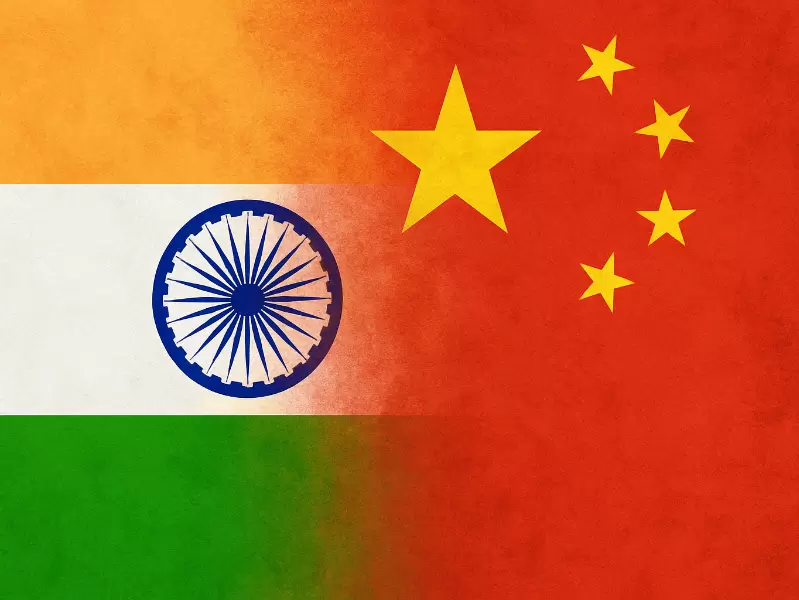 India China Flags/ AI Generated / AI Generated
Geopolitics is dynamic in its moves and counter-moves. The more the world is digitalized, militarized, industrialized and commercialized, the more geopolitics becomes complicated and tense. In the present landscape of geopolitics, the Sino-India relationship is a major challenge to be managed. In spite of a civilizational legacy of 5,000 years, Western influence and power loom large in this relationship.
In the fight against Japan, the Chinese had gained goodwill and sympathy from the Indian National Congress led by Gandhi. In response to Gandhi’s appeal, Indians had boycotted Japanese products in India with a view to expressing their wholehearted support and sympathy in the war of liberation of China. As one of the first non-Communist countries, India stamped China with the seal of diplomatic approval.
In the Non-Aligned Movement, both countries worked shoulder to shoulder to condemn colonialism and the expansionism of the West. Jawaharlal Nehru, in his books Autobiography, The Discovery of India and Glimpses of World History, appreciated Chinese culture and philosophy, holding Chinese civilization in high esteem. In the heyday of Mao and Nehru, China and India appeared near and dear to each other on many issues.
The irony of fate in the relationship is that many factors played roles simultaneously to create an atmosphere of animosity between the two countries, paving the way for war in 1962. The Dalai Lama’s visit in 1956 and his shelter in India in 1959, along with his followers and devotees, brought a storm in a teacup in the relationship. The boundary issue, Tibet issue, Western game, Communist mindset of China and the idealism of Nehru’s foreign policy were factors in creating the war of 1962. Nirupama Rao, in her book Fractured Himalaya, pinpoints the fact that India lacked the diplomatic skill to understand the intentions of China. In other words, under the cover of beautiful words and attractive adjectives, China threw dust in the eyes of Indian diplomats. The overconfidence of Nehru undermined the warnings of then-Home Minister Vallabhbhai Patel with regard to this sensitive relationship.
In the aftermath of 1962, for a long period of time, a vacuum was created in the diplomatic relationship between the two countries. In the 1970s, as foreign minister, Atal Bihari Vajpayee played an important role in bridging trust between the two countries during his visit to China. Ironically, the Janata government did not last long. In 1988, a young, energetic and enthusiastic Prime Minister Rajiv Gandhi visited China. It was a landmark in the relationship. Chinese leader Deng Xiaoping and Gandhi developed three pillars to find an outlet for this complex relationship.
In accordance with the understanding between Deng and Gandhi, trade was prioritized, peace and tranquility on the border were maintained, and understanding was developed to address all issues through dialogue and discussion. On these pillars, for two and a half decades, economic ties, people-to-people relationships and convergence on climate change and other issues were developed. In terms of the size of the economy, China had a GDP of $395 billion and India had a GDP of $350 billion. More or less, the per capita income was the same.
The excesses of engaging in multiple directions gradually emerged. With the arrival of Xi Jinping, the tone and temper of China toward India changed. Jettisoning the policy of Deng, China became aggressive and assertive in its diplomatic dealings with India. Shyam Saran, in his book How China Sees India and the World, makes his point abundantly clear that the economic gap between India and China is one of the major factors behind the bullying attitude of China. In 2010, the size of the Indian economy was a little more than $1 trillion, whereas the size of the Chinese economy had grown six times larger.
Saran is of the opinion that the insurmountable pressure of China can be countered by accelerating the pace of India’s growth. China exercised pressure on India step by step. For example, in 2013 clashes in Depsang lasted for days, in 2014 confrontation in Chumar lasted for weeks, in 2017 the tussle in Doklam lasted for months, and in 2020 the Galwan confrontation turned into war, causing the deaths of more than 20 soldiers. Few leaders of major economies are recorded to have met as many times as Xi and Modi. India’s Indo-Pacific policy and its tilt toward the West sowed seeds of suspicion in China. Growing ties with Asia, expanding footprints in the Middle East and trade deals with the EU posed challenges to China.
China is conscious of India’s demographic dividend, the emergence of a large number of middle-class consumers in India, its virgin market and its capacity to become a technological hub. In the changed geopolitical landscape, countries crippled with economic bankruptcy are close in diplomatic relationship with China. Pakistan, Iran and North Korea are examples of this. Chinese investment does not yield results in these countries because of fanaticism and dictatorship.
As the world’s second-largest economic power, its export-oriented economy totally depends on the democratic world — America, Europe, India and Asia. Therefore, in the quest for revisiting and resetting its relationship with India, the Communist Party seems to be charting out a clear-cut policy toward India. China and India are major powers that have benefited from the process of globalization and liberalization. In this regard, both countries need to search for those areas that can help them develop an understanding and convergence of interests. Global warming, maritime security, free trade and digitalization are issues on which both countries can develop understanding.
In order to celebrate the Asian century, Kishore Mahbubani, in his book The Asian 21st Century, lays stress on the togetherness of these two civilizational states. As the dynamics of geopolitics keep changing with time, India and China need to develop trust, which would have a productive impact on Asia in general and South Asia in particular.
To do so, China has to relinquish its approach of being an Asian hegemon; rather, it has to muster its strength to create a multipolar Asia. With the shift of the balance of power from the trans-Atlantic to the trans-Pacific, China as the second-largest economy and India as an emerging third-largest economy have to work together on major issues of global challenge.
(The writer is a Nepal-based geopolitics expert.)
(The views and opinions expressed in this article are those of the author and do not necessarily reflect the official policy or position of New India Abroad.)
Discover more at New India Abroad.
Related





ADVERTISEMENT

ADVERTISEMENT
E Paper
Video

Comments
Start the conversation
Become a member of New India Abroad to start commenting.
Sign Up Now
Already have an account? Login