ADVERTISEMENT
ADVERTISEMENT


Chicago art school suspends Indian American professor over assignment
Savneet Talwar was placed on paid leave after an assignment drew allegations of an antisemitic classroom environment.
-
1759953093.png) Staff Reporter
Staff Reporter - Sun, 07, Jun 2026
- 04:19 EDT
- 52
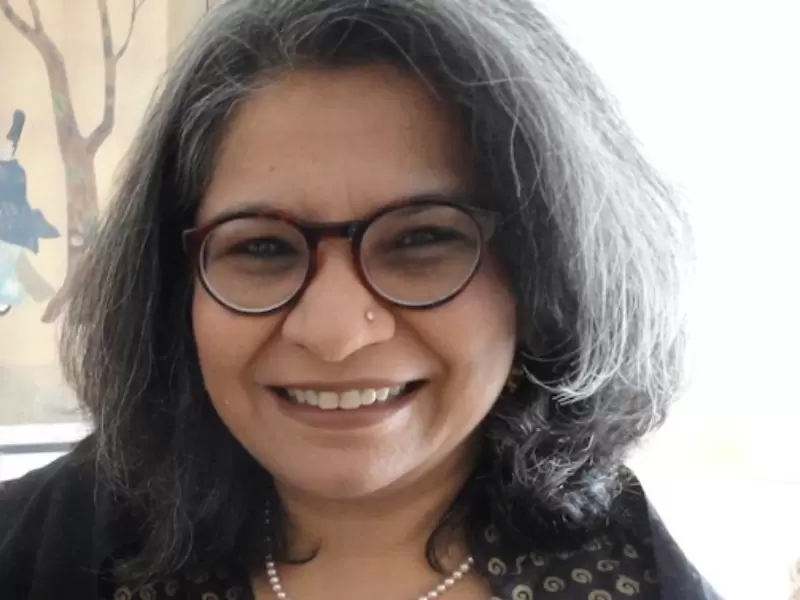 Savneet Talwar / The School of the Art Institute of Chicago
The School of the Art Institute of Chicago has suspended Indian American professor Savneet Talwar and opened a formal investigation after an Israeli student alleged that a classroom assignment contributed to an anti-Israel and antisemitic environment within the institution.
Talwar, a tenured lecturer in SAIC's Art Therapy and Counseling program, was placed on paid leave following a complaint related to an assignment distributed in April in a course examining the cultural dimensions of psychological treatment.
The assignment asked students to develop an ethical treatment plan for a hypothetical patient described as a queer Muslim woman living in the United States. The case study focused on the patient's family background, relationships and immigrant experience. It also stated that demonstrations in support of Palestinians “resonated with her on a personal level,” and that she was deeply affected by violence against Palestinian civilians and “was critical of the home government’s limited response.”
According to the school, the decision to investigate followed complaints from the same Israeli student, who had previously raised concerns about what she described as a hostile environment toward Jewish students in the department. Earlier complaints resulted in internal investigations and mandatory workshops for faculty on cultural bias prevention.
Shortly after the assignment was distributed, Talwar said she received a phone call from the dean asking whether she had assigned material that mentioned Palestine. She was later called to an urgent meeting with a university vice president, and a scheduled class was canceled. The school subsequently issued a notice placing her on paid leave.
Talwar was instructed not to discuss the matter with students or colleagues, and the assignment was removed from the institution's online learning platform. In a formal letter, administrators warned that distributing the assignment could be considered “discrimination, harassment and/or retaliation.”
The letter also stated that the student was involved in separate investigations “involving claims by her as a Jewish Israeli related to alleged conduct expressing an anti-Israeli, antisemitic, and/or pro-Palestine viewpoin[t].” The administrator wrote that despite Talwar's awareness of those investigations, she “gave an academic assignment that focused solely on the issues of a Muslim woman with strong sympathies for the Palestinian cause.”
In a separate communication, the dean questioned Talwar's judgment, writing: “One of the reasons this issue raises such serious concerns is that there have been multiple, prior complaints alleging the creation of a hostile environment within your department.”
The case comes amid continuing scrutiny of the department. In late 2023, another Israeli student filed a lawsuit against the institution alleging systemic antisemitism. A federal judge dismissed the case twice.
About a month after Talwar's suspension, the institution provided additional allegations involving interactions between the professor and the Israeli student. Among them were claims that Talwar described the Bondi Beach attack in Australia as an act of “gun violence” without acknowledging what the student viewed as its antisemitic context. The school also alleged that Talwar suggested the student consider whether she should attend a lecture by an openly anti-Zionist activist.
Talwar's attorney has filed a formal complaint against the institution and said the professor plans to pursue an employment discrimination lawsuit.
“Are SAIC faculty expected to ethnically cleanse Palestinians from their course materials?” the attorney wrote to administrators.
Talwar told The Guardian that she believes the disciplinary action stemmed from the assignment's reference to Palestine.
“We call it the ‘P-word’ now,” she said. “There is no tolerance for the very word.”
Discover more at New India Abroad.
Related










ADVERTISEMENT

ADVERTISEMENT
E Paper
Video

Comments
Start the conversation
Become a member of New India Abroad to start commenting.
Sign Up Now
Already have an account? Login