ADVERTISEMENT
ADVERTISEMENT



Violence against women in India: A civilizationalfailure
When violence becomes routine, the issue is no longer simply criminal. It is moral, cultural, institutional, and civilizational
-
1785182671.png) Pradeep K. Patnaik
Pradeep K. Patnaik - Mon, 27, Jul 2026
- 16:04 EDT
- 18
 Representational image / Shutterstock
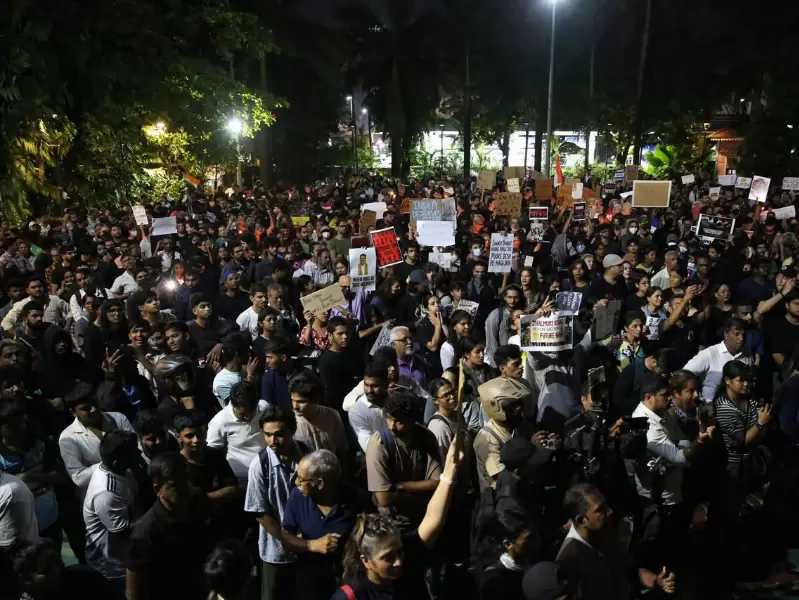
Violence against women and girls, including minor children, appears to be escalating at an alarming rate. Reports of sexual harassment, rape, gang rape, trafficking, and other brutal assaults have become so frequent that they no longer shock the public as they should.
According to the National Crime Records Bureau (NCRB), in 2024 there were 411,534 registered cases of violence against women in India. Yet these figures likely represent only a fraction of the true scale of the crisis. Countless victims remain silent, trapped by fear, social stigma, family pressure, and a lack of faith in the justice system.
Also Read: The changing voice of democratic dialogue
When violence becomes routine, the issue is no longer simply criminal. It is moral, cultural, institutional, and civilizational. A society that cannot protect its women and children is not merely experiencing a law-and-order problem; it is confronting a failure of its most fundamental values.
India has enacted new criminal laws—the Bharatiya Nyaya Sanhita (BNS), Bharatiya Nagarik Suraksha Sanhita (BNSS), and Bharatiya Sakshya Adhiniyam (BSA)—to strengthen justice and improve protection for women.
These reforms are necessary, but laws alone cannot transform a society. If legal provisions were sufficient, the steady rise in crimes against women across India would not persist. The tragic death of Twisha Sharma and a minor girl in Baruipur, West Bengal are painful reminder that legislation without effective enforcement, swift justice, institutional accountability, and deep social change offers little comfort to victims and their families.
The contradiction between modern realities and the ethical ideals that India frequently celebrates could not be starker. Ancient Indian philosophical traditions repeatedly emphasized the dignity, strength, and sacred value of women. The Manusmriti verse, "Yatra naryastu pujyante ramante tatra devatah" ("Where women are honored, there the divine rejoices"), is often quoted with pride.
Yet if women are routinely assaulted, abused, intimidated, and denied justice, such quotations become hollow rituals rather than living principles.
The uncomfortable truth is that patriarchy remains deeply embedded in social structures and daily behavior. It is reinforced by dowry practices, caste and class hierarchies, victim-blaming, misogyny, substance abuse, weak law enforcement, and political indifference. Too often, public outrage fades while survivors continue to bear the burden of trauma.
Religious institutions, spiritual leaders, politicians, educators, media personalities, and cultural influencers carry a responsibility that extends far beyond speeches and symbolic gestures.
Those who invoke civilizational greatness while remaining silent about violence against women undermine the very values they claim to defend. Moral authority is not earned through reciting scriptures, chanting mantras, or celebrating heritage; it is earned by standing unequivocally against injustice.
Change must begin long before a crime is committed. Respect for women must be taught in homes, schools, and communities as a non-negotiable value. Boys and men must learn that masculinity is measured not by dominance but by character, responsibility, and respect.
Silence in the face of abuse is not neutrality—it is complicity. Families, communities, and institutions must stop treating violence against women as an individual tragedy and recognize it as a collective societal failure.
Much is said today about reclaiming the name Bharat and celebrating India's civilizational heritage. Yet a civilization is not defined by the names it adopts, the monuments it builds, or the slogans it repeats.
It is defined by how it treats its most vulnerable citizens. India cannot credibly claim civilizational greatness while millions of women and girls live with fear, insecurity, and the constant threat of violence.
The violence against women unfolding across India today is therefore not merely a social or criminal crisis. It is one of the defining moral and civilizational tests of our time. A civilization that fails to safeguard the dignity, equality, and security of its women is not simply falling short of its ideals—it is failing itself.
India's path to genuine civilizational greatness will be judged not by its rhetoric, but by whether every woman and every girl can live with dignity, justice, and freedom from fear. It is a sad commentary as India prepares to celebrate its 80th Independence Day.
(The views and opinions expressed in this article are those of the author and do not necessarily reflect the official policy or position of New India Abroad.)
Discover more at New India Abroad.
Leave A Comment
Related










ADVERTISEMENT

ADVERTISEMENT
E Paper
Video

Comments
Start the conversation
Become a member of New India Abroad to start commenting.
Sign Up Now
Already have an account? Login