ADVERTISEMENT
ADVERTISEMENT



The changing voice of democratic dialogue
The fruits of globalization that the earlier generation enjoyed are gradually disappearing.
-
 Sarika Rachuri
 - Mon, 27, Jul 2026
- 11:55 EDT
- 47
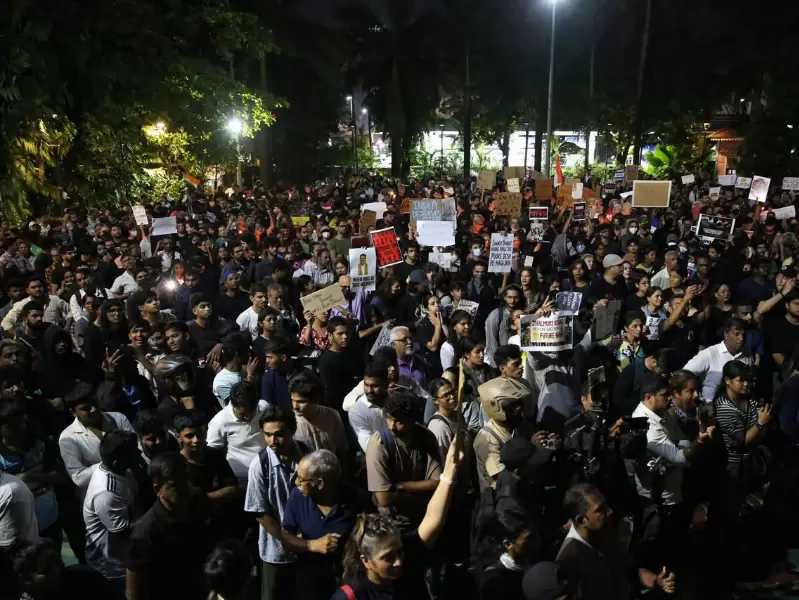 Youth protest in Goa as part of nationwide protests / X@Cockroachisback
The protest by the Cockroach Janta Party started as a monsoon of discontent. It, however, ended up revealing far more than what was visible on the surface.
It reminded me of the last lines of Jane Austen's Northanger Abbey, where she leaves her readers to decide "whether the tendency of this work be altogether to recommend parental tyranny, or reward filial disobedience."
Also Read: An Indian summer of discontent
The Cockroach Janta Party protest leaves us with a similar puzzle. Did it expose government high-handedness, or did the flippant videos, memes and reels merely reflect a generation's defiance?
Yet, regardless of which side one takes, this protest unravelled several facets of Gen Z. This is the demographic dividend economists have been talking about for years. Within the next few years, millions of them will enter the workforce. Yet, the fear that there may not be enough opportunities to absorb their aspirations is what perhaps triggered this movement.
India today stands at the cusp of a skill gap. Artificial intelligence is no longer a futuristic concept. It is a textbook example of structural unemployment unfolding before our eyes. Not just India, but the world is ill-prepared for such a disruption. How to keep the youth engaged, relevant and employable is perhaps the biggest challenge countries like India will face.
The fruits of globalization that the earlier generation enjoyed are gradually disappearing. Developed countries are increasingly turning inwards. Migration to greener pastures, which once appeared a natural progression for many young Indians, may remain elusive for this generation.
Amidst all this, a question paper leak created a deep sense of disappointment. It was merely the trigger. What surfaced thereafter was the silent anxiety that Gen Z has been grappling with for years.
Soon, they gathered in thousands across different parts of the country. This was the very generation often accused of remaining confined to their mobile phones and being ill-suited to conventional forms of socialization. Yet they came together in extraordinary numbers.
Who played, or did not play, the Pied Piper is perhaps irrelevant. Was the paper leak everybody's concern? Certainly not. But it brought to the surface the accumulated angst of a generation that had been silently grappling with uncertainty, unemployment and shrinking opportunities.
Sceptics criticized the manner of protest. The reels, memes and videos were dismissed as flippant. But perhaps that criticism misses the point. Gen Z engages, communicates and even argues differently from previous generations. They document everyday life through photographs, reels and short videos. They celebrate the trivial as much as the profound. Why should their protests be any different?
The memes and reels were not merely acts of defiance. They were expressions native to this generation. They communicated what letters, memoranda and formal speeches perhaps could not. They carried serious concerns in a language that appeared jocular, yet was sufficiently jarring to demand the government's attention.
History has witnessed protests where humor and sarcasm became instruments of resistance. Yet, the digital hegemony displayed by this generation is unique. Their ability to mobilize, sustain momentum and shape public discourse through memes, reels and short videos marks a departure from conventional forms of dissent.
Perhaps democracy itself is quietly being reimagined through these expressions. Governments can no longer afford to dismiss them as mere social media chatter. Beneath the humour lie questions of employment, opportunity, aspiration and accountability. If these concerns remain unheard, digital platforms will increasingly become the preferred arena through which this generation seeks dialogue. The medium may appear light, even irreverent. The message is anything but.
Jane Austen concluded Northanger Abbey by leaving her readers to decide "whether the tendency of this work be altogether to recommend parental tyranny, or reward filial disobedience." The Cockroach Janta Party leaves us with a similar dilemma. Did the movement merely celebrate Gen Z's irreverence, or did it remind us that democracy, too, is changing the language through which it speaks and listens? I leave that question to the reader.
(The views and opinions expressed in this article are those of the author and do not necessarily reflect the official policy or position of New India Abroad.)
Discover more at New India Abroad.
Leave A Comment
Related





ADVERTISEMENT

ADVERTISEMENT
E Paper
Video

Comments
Suchita Krishnaprasad
2026-07-27 00:00:00
Beautifully penned. Thanks for sharing this