ADVERTISEMENT
ADVERTISEMENT


Anil Purohit, a Boston doctor who spearheaded early AIDS programmes in India
With recent cuts to US funding for global HIV programmes, Purohit observes a shift toward self-reliance
-
1747754650.png) Ishani Duttagupta
Ishani Duttagupta - Sun, 26, Jul 2026
- 00:00 EDT
- 18
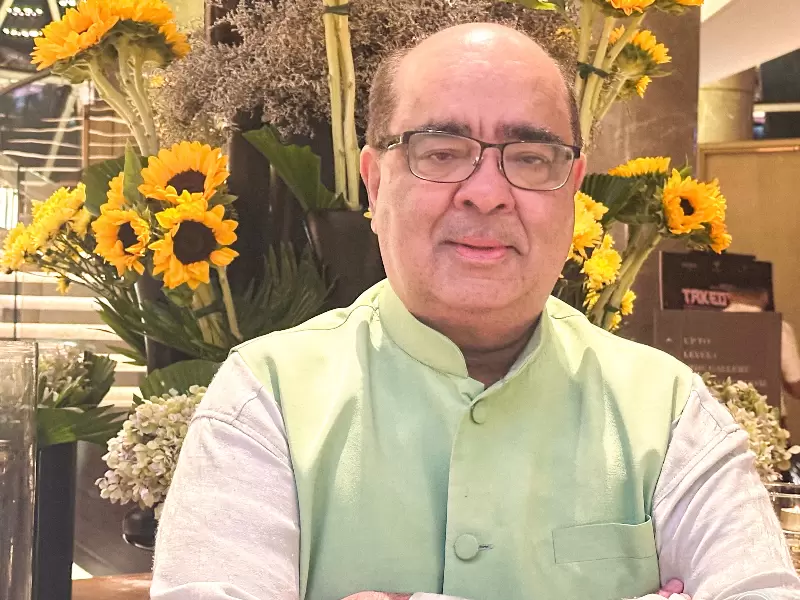 Anil Purohit / Courtesy photo
Anil Purohit’s entry into public health and HIV/AIDS policy leadership was largely accidental. While pursuing his PhD under Professor Joana Chakraborti of the University of Toledo’s department of physiology and pharmacology, he secured funding in 1995, to conduct HIV research at Calcutta Medical College.
“It gave me an opportunity to travel widely across India,” Purohit, who had earlier graduated from the Harvard Medical School, recalled. “Later, I received another grant to work in the Fiji Islands—a experience that deepened my connection to my Indian roots, given Fiji’s history of Indian indentured labour.”
Later as executive director, Francois Xavier Bagnoud Association, USA, an organisation that fights poverty and AIDS, he spearheaded several initiatives in India to fight AIDS/HIV and as director of the AIDS programme at Harvard University, he brought the first HIV project, funded by the Bill & Melinda Gates Foundation, to India.
However, a severe hereditary kidney disease—which eventually required dialysis and a transplant—threatened to halt his extensive global fieldwork.
“It wasn't just me; my mother and sisters were battling the same disease,” said Dr. Purohit, who had immigrated to Boston with his family as a teenager. “It was tough, and it permanently derailed my path toward getting a clinical medical license in the US. Fortunately, I had already built a strong foundation in HIV research, and my training at Harvard had anchored my true passion in public health.”
An assignment with the White House during the Obama administration demanded extensive global travel. “I was already on the waiting list for a kidney transplant, making work-related travel for a federal programme quite challenging. But I drew tremendous inspiration from my mother,” Purohit recalls.
Even after receiving a kidney transplant, he refused to slow down his international work as an HIV/AIDS policy expert. “Even while on dialysis, I travelled across continents, and that momentum hasn’t stopped today because I truly love my job. I firmly believe that regardless of health challenges, mental strength is everything. My journey through India, Africa, Latin America, and Europe taught me that so many people face immense hardships yet remain deeply passionate about their work,” Purohit says.
He had served as global director of the Bedford Research Foundation, a biomedical institute focused on stem cell research and HIV/assisted reproduction and is currently global health director at Dure Technologies, a private global company with headquarters in Geneva, working to merge healthcare and technology seamlessly. These roles have taken him to South Africa, Zambia, Zimbabwe, Ethiopia, Argentina, Colombia, and extensively across India. Seeing the landscape first hand sparked a larger vision.
“Dure works in over 60 countries with a global public health solution. While it is a technology company focussed on public health, we work with many government agencies and doctors.”
Purohit’s extensive field work across India with many other American researchers and health experts made him realise the need for formal public health institutions. “Recognizing this gap, I founded the Jodhpur School of Public Health in Rajasthan in 2008. While we now grant bachelor’s, master’s, and PhD degrees, we have also expanded programmes to Jaipur and Mizoram, and are actively partnering with universities to grow public health education across the country,” he explains.
With recent cuts to US funding for global HIV programmes, Purohit observes a shift toward self-reliance. “Many countries, including India, have successfully managed the disease by focusing on localized, self-driven initiatives,” he explains. “In many cases, heavy reliance on foreign aid simply hasn’t been sustainable.”
Back home in Boston, Purohit, along with his wife and two children, remains deeply anchored in the local Indian-American community. “We attend the local temple, and my son and daughter love embracing Indian culture, food, and traditional attire,” he shares.
Having watched the community flourish over the past decade, he credits the city's academic and medical ecosystem for the growth. “Boston is an academic powerhouse with over 100 universities and colleges, attracting top-tier Indian-American researchers and scholars. On top of that, its world-class hospitals draw exceptional medical talent. As our community has expanded, so too has the local ecosystem, with vibrant Indian restaurants and grocery stores popping up across the area.”
Discover more at New India Abroad.
Leave A Comment
Related


.png)


ADVERTISEMENT

ADVERTISEMENT
E Paper
Video

Comments
Start the conversation
Become a member of New India Abroad to start commenting.
Sign Up Now
Already have an account? Login