ADVERTISEMENT
ADVERTISEMENT



Expectations from Parliament of India: Safeguarding democracy and shaping viksit Bharat
At this moment—with the 18th Lok Sabha in session and 2029 elections approaching—Parliament must embody statesmanship.
-
1785011443.png) Viren S Doshi
Viren S Doshi - Sat, 25, Jul 2026
- 16:56 EDT
- 22
.png) Lok Sabha / X@LokSabhaSectt
Lok Sabha / X@LokSabhaSectt
India, the world's largest democracy with over 1.4 billion people, stands at a pivotal juncture. As the nation eyes its centenary of independence in 2047—envisioned as Viksit Bharat (Developed India), a $30–40 trillion economy with high per capita income, robust institutions, and equitable growth—its Parliament must prioritize foundational reforms.
Citizens expect decisive action on electoral fairness, national security against external influences, governance efficiency, and long-term developmental legislation. Two critical areas highlighted in public discourse are tightening the Foreign Contribution (Regulation) Act (FCRA) and executing delimitation for proportional representation.
Parliamentary Functioning Amid Political Contestation
In recent sessions, opposition parties have been accused of frequent disruptions, leading to lost legislative time and delayed scrutiny of key bills. Critics describe these tactics as anarchic and aimed at stalling governance rather than constructive debate.
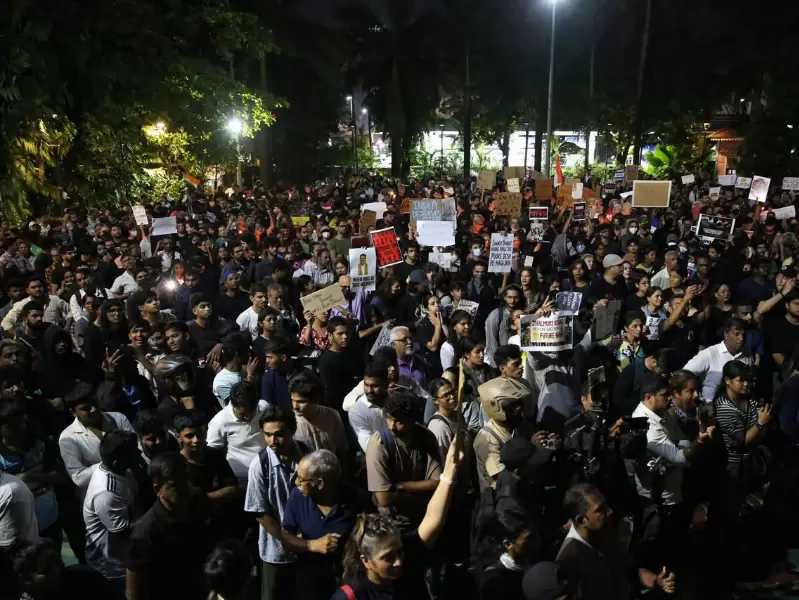
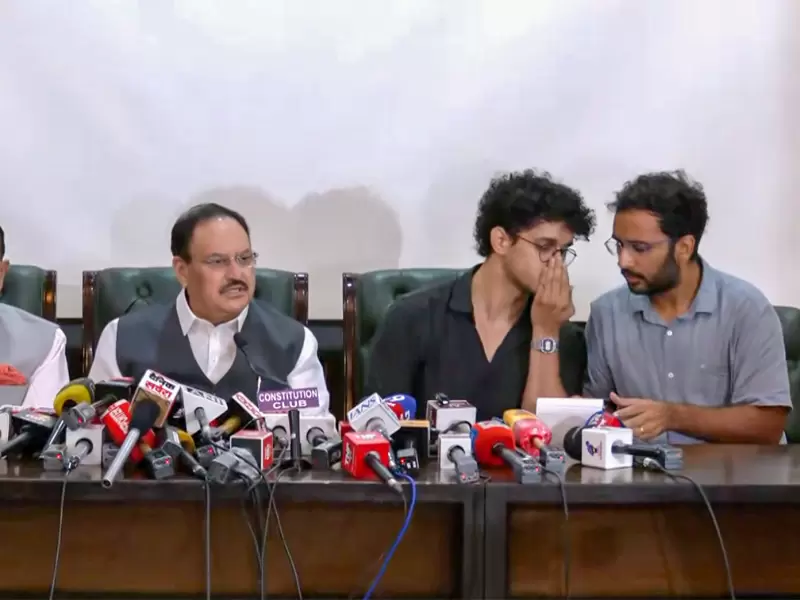
The recent resignation of the Education Minister has been viewed by some as a government gesture to de-escalate tensions and address demands, thereby countering coordinated efforts—both inside Parliament and on the streets—that are alleged to involve opposition strategies and possible external backing.
While such claims remain contested and partisan, they underscore the broader public expectation for Parliament to prioritize substantive law-making over obstruction, ensuring democratic institutions function effectively at this critical juncture.
Delimitation: Restoring the Backbone of Fair Representation
Delimitation—the redrawing of electoral constituency boundaries based on population—is a constitutional imperative for vibrant democracy. Article 82 of the Indian Constitution mandates readjustment of seats after each census to ensure representation reflects demographic realities. However, a freeze since the 1970s (extended by the 84th Amendment till the first census after 2026) has created distortions.
Key Facts and Numbers: The Lok Sabha currently has 543 elected seats (maximum constitutional strength 550, excluding nominated seats abolished earlier), unchanged since 1977 despite massive population growth.
The last full delimitation (2002–2008) only adjusted boundaries within states based on the 2001 Census; inter-state allocation remains frozen on 1971 figures to reward population control.
India's population has grown unevenly: States like Uttar Pradesh, Bihar, and Rajasthan have higher fertility rates compared to Tamil Nadu, Kerala, Andhra Pradesh etc. which successfully curbed growth but now face relative under-representation.
Projections: Without adjustment, mismatches could reach 8% of seats (around 44 equivalents). Post-delimitation proposals suggest expanding to 753–850 seats. One model (50% uniform increase) targets 816 seats, with Uttar Pradesh rising from 80 to 120, Tamil Nadu from 39 to 59, maintaining southern share around 24%.
In 2026, Parliament saw the introduction of the Delimitation Bill, Constitution (131st Amendment) Bill, and related measures to enable delimitation potentially using 2011 Census data for faster rollout, including the 33% women's reservation (Nari Shakti Vandan Adhiniyam). These faced political hurdles from beleagured and rudderless opposition.
Public Expectations: Citizens want Parliament to rise above partisan divides for a transparent, data-driven process that balances "one person, one vote" with incentives for demographic responsibility. Fair delimitation would reduce average constituency size (currently ~2.7 million people per seat, far higher than global peers), enhance accountability, enable women's reservation implementation, and strengthen federal trust. Delaying it risks perpetuating imbalances that undermine democratic legitimacy. Government should bring in the amendment that it attempted lastly with renewed vigour with representation earmarked for women for gender balance. Opposition must join in for getting this cleared at the earliest without creating disruptions. This is going to help our democracy get ready for Viksit Bharat @2047.
FCRA Tightening: Protecting Sovereignty from External Inimical Forces
Foreign funding of NGOs and entities has raised alarms about interference in India's internal affairs, including activism, protests, conversions, and narratives potentially aligned against national interests. The FCRA, enacted in 1976 and amended over time, regulates such inflows.
Key Statistics: As of recent data, ~14,449 organizations hold FCRA registration and received ₹22,963 crore in foreign contributions in a recent year. Over 21,000–22,498 registrations cancelled or expired in the past decade+ for violations like non-compliance, political activities, or misuse.
The Foreign Contribution (Regulation) Amendment Bill, 2026 (introduced March 25, 2026) proposes: a Designated Authority for asset management/disposal upon deregistration; stricter disclosures on activities, locations, and spending; administrative expenses capped at 20%; barring foreign nationals from key roles.
Supporters view this as essential to curb foreign influence peddling, especially amid cases involving human rights groups, environmental activism, and alleged circumvention. Critics argue it may hamper legitimate philanthropy, education, and welfare work.
Expectations: People demand robust oversight to ensure foreign funds serve developmental goals, not agenda-driven disruption. Parliament should pass balanced tightening that enhances transparency (e.g., real-time digital tracking) while safeguarding genuine NGOs. This aligns with Atmanirbhar Bharat by reducing external vulnerabilities.
Broader Legislative Agenda for Viksit Bharat@2047
Beyond these, citizens expect Parliament to fast-track reforms for sustained 8%+ GDP growth, institutional strength, and inclusivity:
Electoral and Governance Reforms: One Nation One Election (simultaneous Lok Sabha and Assembly polls) to cut costs, reduce policy paralysis, and boost governance efficiency. Labour Codes implementation, Gig Workers Welfare, and MSME enhancements.
Economic and Sectoral Bills: Income-tax amendments, corporate law updates, Electricity Amendment, trade competitiveness measures, defence indigenisation, and critical minerals processing incentives. Focus on manufacturing depth, AI/digital infrastructure, and skilling under NEP along with measures like fast track courts for paper leaks.
Social and Judicial: Uniform Civil Code progress, women's empowerment, education/skills for human capital, and Supreme Court judge strength adjustments.
Sustainability: Green energy (500 GW renewable target by 2030), agriculture reforms for high-yield crops, and infrastructure integration.
Numbers for 2047 Vision: From current ~$4 trillion GDP to $30+ trillion, requiring bold productivity gains, export diversification, and workforce transformation. Public investment in education needs to rise toward 6% of GDP.
The Critical Juncture: Bipartisanship and Long-Termism
At this moment—with the 18th Lok Sabha in session and 2029 elections approaching—Parliament must embody statesmanship. Public sentiment, amplified via digital platforms and ground feedback, favors action over disruption: secure borders and sovereignty (FCRA), equitable voice (delimitation), efficient democracy, and growth-oriented laws.
Challenges like North-South tensions on delimitation or civil society concerns on FCRA require consensus-building, perhaps via committees or all-party meetings. Successful navigation will bolster India's global standing as a mature democracy and accelerate Viksit Bharat.
The people of India expect their representatives to legislate not for the next election cycle, but for the next generation—ensuring a sovereign, representative, prosperous, and united nation by 2047. Parliament's responsiveness to these expectations will define its legacy.
(The views and opinions expressed in this article are those of the author and do not necessarily reflect the official policy or position of New India Abroad.)
Discover more at New India Abroad.
Leave A Comment
Related




.jpg)
ADVERTISEMENT

ADVERTISEMENT
E Paper
Video

Comments
Start the conversation
Become a member of New India Abroad to start commenting.
Sign Up Now
Already have an account? Login