ADVERTISEMENT

ADVERTISEMENT

It Was Julia Who Called Me to the 2006 FIFA World Cup

Between 1986 and 1998, Julia visited India several times

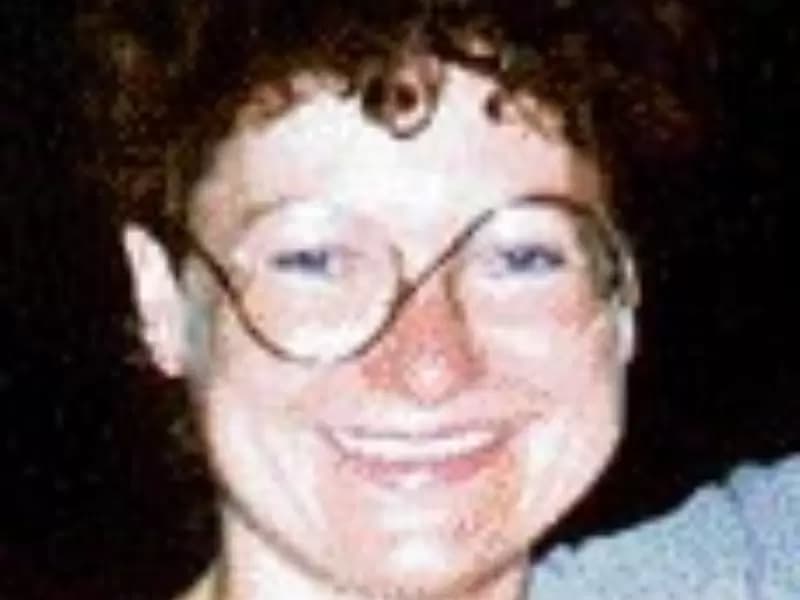
 Julia Mariam Willner Julia Mariam Willner / Courtesy photo

Memories of the 2006 FIFA World Cup in Germany will remain etched in my mind forever. It was not only my first World Cup but also my last visit to my childhood pen pal, Julia Mariam Willner. It was an emotive meeting as she lay calmly with a big smile on her face. Her mother, Anna, stood by my side as Julia just watched us arrive at her cemetery with flowers in our hands. She did not get up to hug either of us but watched us quietly with tears running down her face. “I managed to get you here” was what her eyes were conveying to me as Anna explained how Julia came back from her last sojourn to Ghana. More about our last meeting is in the piece below, as I took a couple of days off from the busy schedule of the FIFA World Cup 2006.

Last Meeting With Julia

I boarded the train to Kronach with mixed feelings. Once the train started moving, my last trip to Kronach in the late 1990s flashed before me. At that time, Julia, my friend, had insisted that I must visit her mother, Amma Willner. And now I was going to visit Amma, 84, to share her grief as Julia left us forever in 2003.

News of her untimely demise came to me only a few months ago. For the past couple of years, I had not received any mail or even a Christmas card from Julia. Intuition told me that something was wrong before I asked my friend Barjinder Sodhi in Berlin to find the telephone number of her mother in Kronach. In 2002, she had written to me that she was moving back to her mother’s home.

When my friend returned the call, he had sad news. Brave Julia fell to the mosquitoes of Ghana. She would never care about hostile terrain or environments in her quest to explore new territory. She traveled to Kashmir as well as Sri Lanka during the insurgencies.

Julia was the second of three children. It was in the early ’60s that we started corresponding with each other as pen pals. And in 1986, almost 20 years later, we were face to face with each other. Julia married Dr. Grasberger, a financial wizard who used to advise sick industrial units.

Julia, carrying both her children, daughter Ute and son Tilo, had come to receive Jaspal Bhatti and me at Cologne railway station and escorted us to her beautiful bungalow in Freshen, a suburb. But before we could take our baggage out, she drove us to a nearby hotel. The reason: She wanted us to be comfortable.

I was pleasantly surprised the next morning when a waiter, without any order, brought me a cup of tea with sugar and milk. On inquiry, he said that Julia had instructed him to do so. What a sharp memory she had, as more than 10 years earlier, I had once written to her that I was fond of bed tea with sugar and milk. In 1997, when my entire family visited her, she had displayed in her living room a drawing made by me in 1969. We were amazed when she showed us the entire correspondence she had with me. It was neatly piled and kept in a box.

Without taking a break from her work, she would take us sightseeing. I vividly remember that in 1986 she drove us to the then-German capital, Bonn, at midnight. After dropping us back at our hotel at 3 a.m., she turned up for work at 6.

Between 1986 and 1998, Julia visited India several times. Besides being a trained gymnastics teacher, she was an excellent photographer. During one of her trips to India, she lost her camera and a bag while she was on her way to Chandigarh from Srinagar on a bus. She was upset not over the loss of the camera but the films she had exposed in the valley. Every time she went back from India, she organized an exhibition of photographs depicting the diverse and rich Indian heritage and culture.

Whenever she would come to India, she would sit beside me in the front seat of the car and tell my wife, Vinky, that she enjoyed a priority because she had known me longer. She was always smiling and would laugh loudly at even the slightest provocation. Since she was fond of smoking strong cigars, she would normally walk out, sit on the railing of the park opposite our house, puff away, and then come back. One room remained reserved for her as she would leave some of her belongings behind every time she visited us.

During one of her visits, she joined us for New Year’s Eve celebrations at the Chandigarh Press Club, and on another occasion she accompanied us to the wedding of my brother-in-law in Ludhiana.

When my family visited her at her Hollfeld studio near Bayreuth in 1997, she made sure that we all were “very comfortable.” She organized a special dinner in our honor by calling some guests. She made sure that we were taken to all major tourist attractions in the area. At that time, Julia was a broken woman. She had separated from her husband.

Though she was extremely attached to her children, she did not have enough money to pay for their education and care. It was perhaps the only reason she never sought their custody. Instead, she would visit them in their boarding houses. On one such occasion, I accompanied her to a boarding house where Tilo was training as a horse rider.

After a few years of lonely life in Hollfeld, she returned to her mother’s home, the place where she was born and spent her childhood with her elder sister, Jutta, and younger brother, Toni. Her father, a soldier, died when she was young. Her mother, a schoolteacher, had initially worked in a post office during World War II. It was during her stint there that she learned English, as she had to interact with American soldiers.

During my last visit to Kronach, Amma told me several stories of the hardships Germans suffered because of the war. At times, she recalled how she and her family would survive on a dry loaf of bread for several days.

While on the train, I was trying to imagine how lonely Amma would be and how she would have taken the death of her “brave” daughter. Amma, looking fit and agile, was at the railway station to receive me. She drove me home, saying that we should have food first before visiting the cemetery. In the same cemetery, her husband had been buried.

It was at the dining table that Amma told me the story of Julia’s last journey. After putting up an exhibition of her photographs at the annual craft festival of Kronach in December 2002, Julia left for Ghana without even telling her mother. Amma thought she had gone to Munich to meet her boyfriend until she received a letter from Ghana in which Julia had asked her to receive her at the railway station some days later.

“I went to pick her up. But she did not come out. So I went inside the station and found her lying on the platform, unconscious. She was running a high temperature. I got her admitted to a hospital. Doctors told me that it was a bad case of malaria and the chances of her survival were slim. I informed her children and her ex-husband. She remained in the hospital for three weeks before she gave up the fight. Unfortunately, after her return from Ghana, she could not speak even a word. Both Ute and Tilo wanted me to inform you about her death, but I did not have your address.

“She had mentioned somewhere that after her death, she should be cremated. So we cremated her and then raised this burial. In one of her bags, I found a picture on the back of which she had written that ‘my camera, bag and purse have been stolen. I am hungry and very sick.’ This was written almost a week before her return from Ghana. Why couldn’t she return immediately? I still cannot understand.” Some of the photographs taken by Julia now adorn the walls of Amma’s house. “This is all that is left of her,” Amma said, sobbing.

After the food, she took me to the cemetery. Julia, who always took pride in taking me around Germany, was no longer there to greet me with her ever-smiling face or her loud laughter. She lay there, quiet, unlike the Julia I knew.

And when we walked into the old town, there was a festival of traditional crafts. Though the town looked the same, something was missing. Last time it was Julia who had taken me around and explained every exhibit there. The crowded streets of this historic town now seemed deserted and lifeless.

Everything looked different as Amma tried to put up a brave face.

Discover more at New India Abroad.

Comments

Related