ADVERTISEMENT
ADVERTISEMENT



The Indian-American doctor reshaping healthcare in North Carolina
In January, Sangvai was sworn in as Secretary of the North Carolina Department of Health and Human Services
-
1759953093.png) Staff Reporter
Staff Reporter - Sun, 17, May 2026
- 02:27 EDT
- 704
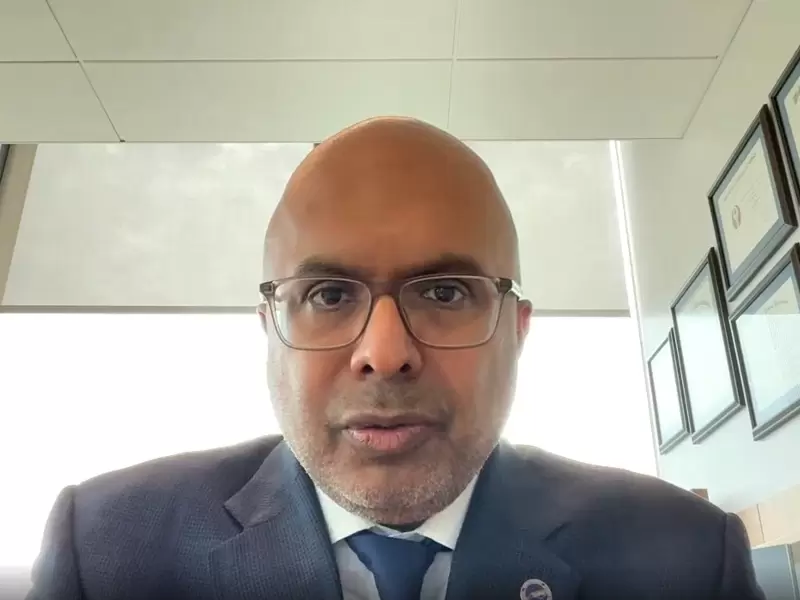 Dr Devdutta “Dev” Sangvai / NIA
Long before Dr Devdutta “Dev” Sangvai became North Carolina’s top health official, there was a small story his father liked to tell about arriving in America from India with almost nothing.
Someone at the hospital where he was beginning his residency training told him to use a payphone and “put a dime in”. He had no idea what a dime was.
“One of the first questions he had to ask when he came to the United States was, what's a dime?” Dr Sangvai recalled, smiling at the memory.
It is the kind of immigrant story deeply familiar to many Indian-American families. But in Dr Sangvai’s case, it also frames a larger journey — one that stretches from a Midwestern childhood to the upper ranks of American healthcare leadership.
In January, Sangvai was sworn in as Secretary of the North Carolina Department of Health and Human Services, becoming the first Indian-American cabinet member to serve under a North Carolina governor.
ALSO READ: Why robotics and AI are the next frontier
A physician, professor at Duke University and former president of Duke Regional Hospital, Sangvai now oversees one of the largest public agencies in the state, responsible for Medicaid, child welfare, public health and rural healthcare systems.
“This has been a remarkable opportunity,” he said in an exclusive interview with India Abroad.
Born in India, Sangvai moved back to the United States shortly after birth. His father had come to America in the late 1960s as part of a wave of Indian doctors recruited to help address physician shortages in the United States.
The family eventually settled in Ohio, where Sangvai spent most of his childhood before attending medical school and later moving to North Carolina in the early 2000s.
Today, his concerns are less about adaptation and more about sustainability — how to keep healthcare accessible and affordable in a fast-growing and increasingly unequal America.
North Carolina, he said, faces the same pressures confronting much of the country: rising healthcare costs, physician shortages and struggling rural hospitals.
“We're a fairly rural state,” Sangvai said. “Over 3 million of the 11 million people who live in North Carolina live in a rural community.”
That geography shapes nearly every healthcare conversation.
“Even in some areas when people do have insurance and they do have Medicaid access is challenging because we see the rural hospitals have a hard time staying open,” he said.
One of the state’s biggest recent accomplishments has been Medicaid expansion, which has added healthcare coverage for more than 700,000 residents.
“We expanded healthcare through Medicaid expansion to over 700,000 people in the state,” he said.
But Sangvai speaks about healthcare less as a political debate and more as a systems problem — one requiring better coordination, earlier intervention and smarter use of technology.
“There is considerable waste in the United States healthcare system on the administrative side,” he said.
Artificial intelligence, he believes, could help reduce that waste while improving diagnosis and patient care.
“There’s also a role for AI and other forms of technology to help with diagnosis and accuracy,” he said.
He sees technology not as a replacement for doctors but as a tool to extend healthcare access into underserved communities through telemedicine and digital services.
At the same time, Sangvai repeatedly returned to an idea that sounded less technological and more human: food.
“If you intervene early, you have a better opportunity to lower healthcare costs later on,” he said.
That philosophy helped shape North Carolina’s “Healthy Opportunity Pilot” programme, which connects vulnerable residents with food, transportation and behavioural health services.
The programme, he said, showed that when people have stable access to nutrition and support systems, healthcare costs decline over time.
Sangvai even found himself reflecting on lessons from Indian households.
“The one we hear about most commonly is turmeric,” he said, referring to the growing interest in traditional spices and preventive health. “Some of those things that I think we often learned in an Indian household on the dos and do not dos are now actually being able to be proven with medical research.”
Outside healthcare policy, Sangvai spoke warmly about North Carolina’s growing Indian-American population, particularly in the Research Triangle region around Raleigh, Durham and Chapel Hill.
“There is a incredibly vibrant Indian American community throughout the state,” he said.
The state’s universities, technology industry and pharmaceutical sector have drawn increasing numbers of Indian professionals and businesses over the past two decades.
For Sangvai, the rise of Indian-Americans in public life also reflects the long legacy of Indian physicians in the United States.
“The nation is facing a physician shortage,” he said.
That shortage, he added, makes it even more important to expand medical training and encourage doctors to engage in public policy.
“There’s a very natural link between what we do in healthcare and health policy,” he said.
And perhaps that link begins with stories like the one his father told decades ago — about a young immigrant doctor standing in front of a payphone in America, trying to understand what a dime was.
Discover more at New India Abroad.
Leave A Comment
Related




ADVERTISEMENT

ADVERTISEMENT
E Paper
Video

Comments
Start the conversation
Become a member of New India Abroad to start commenting.
Sign Up Now
Already have an account? Login