ADVERTISEMENT
ADVERTISEMENT


Shashi Kapoor and the art of being himself
He did not try to be another Raj or Shammi Kapoor. He simply created a legacy that was entirely his own.
-
 Bollywood Insider
 - Sun, 12, Jul 2026
- 03:29 EDT
- 18
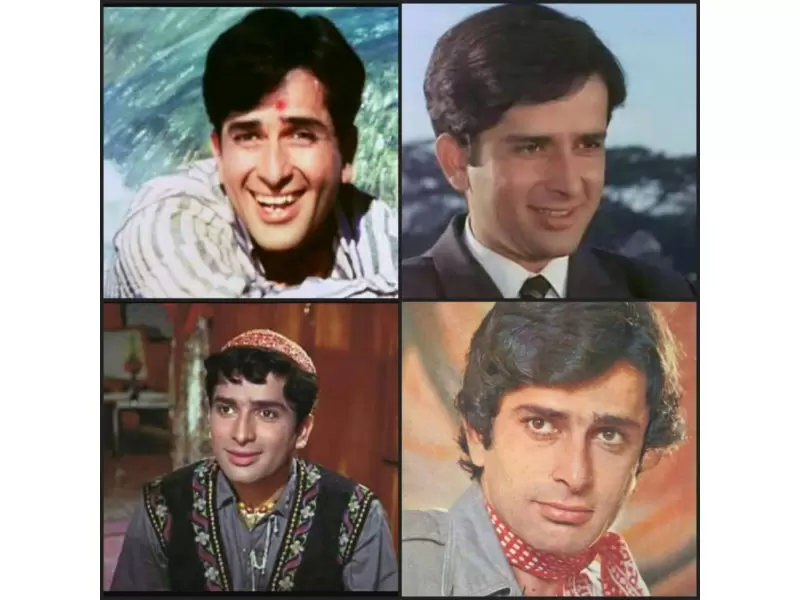 Shashi Kapoor in his films. / Wikipedia
Prithviraj Kapoor started the Bollywood Kapoor dynasty and will forever be remembered for his epic historical image, especially for his commanding performance in Mughal-e-Azam. His son Raj Kapoor was the ultimate showman. His other son, Shammi Kapoor, was as flamboyant as they came. The youngest Kapoor scion marched to a different tune. He was gentlemanly, understated, with a disarming smile. His career trajectory was also far removed from the legacy he was part of.
Born Balbir Raj on 18 March 1938, the actor was nicknamed Shashi because of his obsession with the moon as a child. He would go on to shine brightest among the stars. Here's a look at how Shashi Kapoor charmed his way into audiences' hearts and forged his own path.
A Strong Beginning
Belonging to the Hindi film industry's first family, facing the arc lights was a given for Shashi. Having a legend for a father, Prithviraj Kapoor, and another in the making, Raj Kapoor, as an elder brother, it was like growing up in a film institution.
His Bollywood journey began early, in 1950, with films such as Sangram and Samadhi, followed by Awara in 1951, where he played the younger version of Raj Kapoor. A decade later, in 1961, he debuted as a leading man with Yash Chopra's Dharmputra. Right from the start, he proved he wasn't going to tread a conventional path. After all, this was an unusual launch vehicle for a typical Bollywood hero, as the role was that of a fundamentalist Hindu set against the backdrop of the Indo-Pakistan Partition.
The Gentleman
Belonging to the Kapoor clan could have meant an easy, pre-written script. But Shashi Kapoor chose otherwise. Amid the grand cinematic universe and its flashiness, he preferred a quieter, more personal journey. Though he became a commercially viable superstar and a critically acclaimed actor-and was part of films like Deewaar, Haseena Maan jayegi, Kabhi Kabhie, Namak Halaal, Sharmeelee, and Waqt he also explored cinema beyond the mainstream.
He worked in English-language films such as The Householder, Shakespeare-Wallah (in which he was paired with his wife, British actress Jennifer Kendal), Heat and Dust, and Bombay Talkie, bringing a rare international sensibility to his work. With more than 100 films to his credit, Shashi Kapoor remained one of the few actors of his time who could balance stardom with substance.
Even at the peak of his commercial success, he was never afraid to step away from formula. His work in parallel cinema and his support for unconventional stories showed a curiosity that went far beyond box-office validation. He was not trying to outshine his lineage; he was quietly building a space that was entirely his own.
As a producer, he backed films like 36 Chowringhee Lane (1981), a moving portrait of an elderly Anglo-Indian teacher's loneliness; Junoon (1979), a romantic historical drama set against the 1857 rebellion; Kalyug (1981), a modern-day retelling of the Mahabharata through corporate rivalry; and Utsav (1984), an aesthetically rich adaptation of the Sanskrit play Charudatta. As an actor, he continued to choose layered roles in films such as New Delhi Times (1986), a hard-hitting look at political corruption and media ethics, and
Theatre
Shashi Kapoor was, at heart, a theatre man. Prithvi Theatre, the intimate Juhu space he built with his wife Jennifer, was both a tribute to his father, Prithviraj Kapoor, and a return to his own roots. Long before he became a Hindi film star, he had worked with Prithvi Theatres as a backstage hand, production manager, costume and light designer, and eventually, an actor.
As journalist and film and theatre critic Deepa Gehlot-who co-authored Shashi Kapoor Presents the Prithviwallahs with him-has noted, perhaps because he was the youngest and stayed with the travelling theatre company while Raj and Shammi Kapoor became movie stars, Shashi absorbed his father's values closely. Prithviraj Kapoor believed there should be no difference between family and troupe members. Everyone worked hard, travelled simply, and ate the same modest meals. The company travelled third class, and Prithviraj often reminded his sons that they were "mazdoors, not jagirdars." That belief stayed with Shashi Kapoor. It gave him his discipline, humility, easy charm, and a lifelong devotion to theatre.
Risky Producer
While Shashi Kapoor's creative ambitions found an outlet through his production house, Film-Valas, his films were critically acclaimed but often struggled commercially. These were not safe investments but deeply personal choices. Many of them turned out to be financial setbacks, yet they reinforced the idea that Shashi Kapoor valued artistic fulfilment over financial security.
In 1991, he produced and directed the ambitious fantasy film Ajooba, starring Amitabh Bachchan. Though the film did not succeed as expected, it remained a testament to his willingness to dream big and take risks long after many of his contemporaries had settled into safer choices.
Quiet Excellence
Shashi Kapoor's career was marked not by noise, but by consistency and grace. He moved effortlessly between mainstream entertainers and meaningful cinema, between Hindi films and international projects, between stardom and theatre. His contributions were recognised with several honours, He won National Film Awards for Muhafiz, New Delhi Times, and Junoon. He received the Filmfare Lifetime Achievement Award in 2010. In 2011, he was honoured with the Padma Bhushan for his contribution to Indian cinema. In 2015, he was conferred the Dadasaheb Phalke Award, the highest honour in Indian cinema.
Beyond the Dynasty
In a family known for its towering personalities, Shashi Kapoor remained refreshingly unassuming. He did not carry the burden of legacy as much as he carried its values. He respected where he came from, but never allowed it to dictate where he would go.
Perhaps that is what made him stand apart-not just the films, not just the theatre, not just the awards, but the quiet dignity with which he lived his life and shaped his career.
Discover more at New India Abroad.
Leave A Comment
Related




 (1).jpg)






ADVERTISEMENT

ADVERTISEMENT
E Paper
Video

Comments
Start the conversation
Become a member of New India Abroad to start commenting.
Sign Up Now
Already have an account? Login