ADVERTISEMENT
ADVERTISEMENT



Response to the Article titled "India and Pakistan still cannot agree to restore the Indus Waters Treaty - but re-engagement could help bring lasting peace"
Rebuttal to the article published by Chatham House on 17 April 2026
-
 Dr. Pradeep Kumar Saxena
 - Sat, 23, May 2026
- 18:08 EDT
- 406
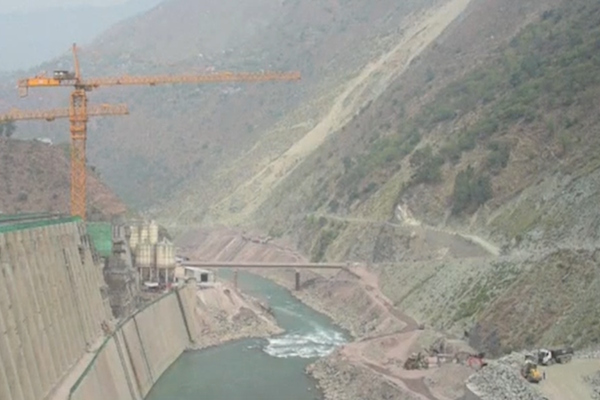 Indus River /
The article is from Chatham House, which claims to be an independent policy institute and a trusted forum for debate and dialogue and aims to help governments and societies to build a secure, sustainable, prosperous and just world. The Article presents a perspective that is heavily tilted towards preserving the status quo of a Treaty that has functioned at India's expense for over six decades.
The Article proceeds from a fundamentally flawed perspective projecting Indus Waters Treaty as an instrument of cooperation. In reality, it functioned more as an instrument of division, one that imposed a number of obligations on India, without imposing a comparable burden on Pakistan.
Also Read; Rebuttal to "Sifting IWT Truth from Lies, Myths"
The durability of any water-sharing Treaty depends, mostly, on the conduct of the upper riparian. If this Treaty has endured six decades despite recurring conflicts, the credit belongs entirely to India, which, as a responsible and principled nation, continued to honor its obligations even through the most turbulent periods without any reciprocity. This, while Pakistan continued to wield it as a political instrument to obstruct and retard development in Jammu and Kashmir.
INDIA'S SOVEREIGN RIGHT TO SUSPEND AN INEQUITABLE TREATY
The Article frames India's suspension of the Indus Waters Treaty following the Pahalgam attack as an escalatory or destabilizing act. This framing is both misleading and morally inverted. India is a victim state that suffered continued devastating terrorist attacks on its soil for decades, attributed to actors operating from or with the support of Pakistani territory. The Pahalgam attack was only the proverbial last straw on the camel’s back.
The proposition that India must continue fulfilling Treaty obligations towards a state that sponsors terrorism against India defies elementary principles of international law, including the doctrine of rebus sic stantibus, which permits suspension of Treaty obligations when the foundational circumstances have materially changed. A Treaty designed to foster cooperation cannot be expected to survive as a one-way obligation when the other party continues to undermine the bilateral relationship through proxy violence.
THE TREATY'S STRUCTURAL INEQUITY HAS BEEN IGNORED FOR TOO LONG
The Article propagates the IWT as a "stabilizing force" and a model of durability, but conspicuously ignores what India conceded under in the name of cooperation. As the upper riparian state, it was allocated only the three eastern rivers - Ravi, Beas, and Sutlej - comprising less than 20 percent of the basin's total flow that included already in use waters. Even for this small share, India was made to pay £62 million (approximately $2.45 billion in present value) as compensation for replacement works in Pakistan occupied Kashmir.
This extraordinary concession might have been made in 1960 under geopolitical pressures at a time when India's developmental needs and the basin's hydrology were poorly understood. Six decades later, with India's population and water demand having grown enormously, and with J&K remaining chronically underdeveloped because of Treaty restrictions on water use, the arrangement has become structurally untenable.
The Article contends that "should India's reservoir storage capacities improve amid surging water scarcity, there are risks of an escalating crisis", a proposition that amounts to an argument that India ought to abandon its legitimate developmental aspirations altogether.
PAKISTAN HAS WEAPONIZED THE TREATY'S DISPUTE RESOLUTION MECHANISMS
The Article speaks warmly of the Permanent Indus Commission and third-party processes as enabling "data sharing" and dispute management. What it omits is Pakistan's serial abuse of these mechanisms to obstruct perfectly legitimate Indian run-of-river hydropower projects on the western rivers, some with capacities of less than 5 MW causing no material harm to Pakistan's water availability.
Pakistan has raised objections to the Kishanganga, Baglihar, Ratle, and several other projects, dragging India into arbitration proceedings of questionable jurisdiction and using Treaty forums as instruments of diplomatic harassment rather than genuine dispute resolution. The Article even acknowledges that technical disputes have become "more frequent and increasingly politicized" but fails to assign any responsibility to Pakistan for this deterioration.
MODERNIZATION ARGUMENTS CUT BOTH WAYS
The IWT, as the Article itself concedes, "predates modern climate science and rests on outdated hydrological assumptions." If the Treaty is so ill-suited to present realities, the logical conclusion is that it must be fundamentally renegotiated on terms that reflect current hydrological conditions, equitable water allocation, technological advancements and India's legitimate development imperatives. Not merely "restored" to preserve arrangements that were skewed against India from the outset.
THE COMPARISONS TO OTHER RIVER BASINS ARE NOT APPROPRIATE
The Article draws parallels with the Aral Sea basin, the Mekong River Commission, and the Senegal River Basin to argue for cooperative governance. These examples involve states that are broadly aligned in their developmental interests and have not engaged in sustained cross-border terrorism against one another. The India-Pakistan relationship has no such foundation. Cooperation frameworks function where there is baseline good faith. Pakistan's continued support for terrorist infrastructure targeting India makes the comparison with the Mekong Commission or the Jordan-Israel water arrangements imperfect and fundamentally misleading.
WATER DIPLOMACY WITHOUT ACCOUNTABILITY?
The Article concludes by urging international actors to support "water diplomacy" and calls for "patience" in rebuilding trust. India's position is unambiguous: It maintains a strict policy that all dealings with Pakistan are bilateral, rejecting third-party mediation. Further, trust can only be rebuilt through verifiable, sustained action by Pakistan to dismantle terrorist infrastructure and honor its international commitments. To ask India to treat the IWT as sacrosanct while Pakistan continues to act with impunity is not a prescription for peace. It is a prescription for the continued exploitation of India's restraint.
In sum, this skewed Chatham House Article expects India to subordinate its sovereign interests, security concerns, and development needs to maintain an outdated and biased institutional arrangement brokered by a third party. India's measured response to Pakistani aggression, including the abeyance of the Treaty is not a threat to regional stability. It is a long-overdue signal that the terms of engagement must change.
The former Indian Commissioner for Indus Waters, highlighting India's perspective with regards to the Indus Water Treaty.
(The views and opinions expressed in this article are those of the author and do not necessarily reflect the official policy or position of New India Abroad.)
Discover more stories on New India Abroad
Leave A Comment
Related





.jpg)





ADVERTISEMENT

ADVERTISEMENT
E Paper
Video

Comments
Start the conversation
Become a member of New India Abroad to start commenting.
Sign Up Now
Already have an account? Login