ADVERTISEMENT
ADVERTISEMENT



Rebuttal to "Sifting IWT Truth from Lies, Myths"
An Indian Perspective - Response to Brig (retd) Dr Raashid Wali Janjua's letter published in Dawn, April 9, 2026
-
 Dr. Pradeep Kumar Saxena
 - Sat, 23, May 2026
- 17:11 EDT
- 132
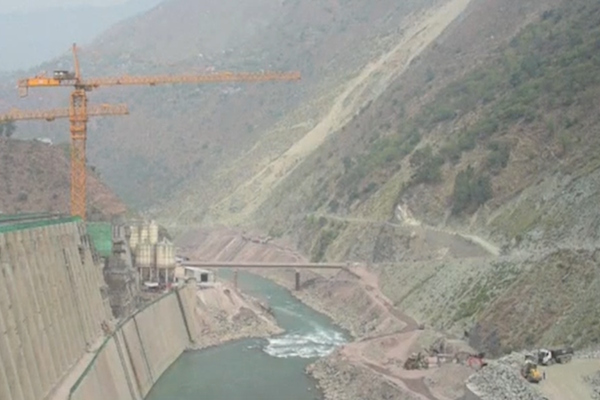 Indus River /
Brig (retd) Dr Raashid Wali Janjua's letter suffers from the very same selective amnesia he accuses India of. An unbiased examination of the facts reveals that several of his contentions are historically incomplete and legally imprecise.
The author invokes the closure of the Central Bari Doab and Depalpur canals in 1948 as evidence of India's predatory intent. He omits the essential context: these canals drew water from headworks that lay entirely within Indian Territory after Partition, and the supplies were interrupted during an extraordinarily complex process of partition of India.
The matter was swiftly resolved through the Inter-Dominion Agreement of May 4, 1948, in which Pakistan itself acknowledged India's sovereign rights over the headworks and agreed to pay seigniorage charges for continued water use. Far from being an act of malice, this is evidence of India’s intent to resolve every issue amicably.
The author asserts that IWT has served Pakistan's water interests well, yet simultaneously and paradoxically accuses India of "continual attempts at filching" Pakistan's water. The fact is that the Indus Waters Treaty of 1960, signed after nearly a decade of negotiations, is one of the most generous transboundary water treaties in the world from the lower riparian's perspective.
India not only relinquished its rights to approximately 80 percent of the total Indus system waters but also paid an amount of approximately £62 million (approximately ₹227.5 billion in present value) as compensation for replacement works in Pakistan-occupied Kashmir to secure use of waters that were already hers. No comparable concession by an upper riparian exists in modern water treaty history.
Janjua correctly notes that India is permitted cumulative storage of only 3.6 MAF on the Western Rivers and that run-of-river hydroelectric projects must not alter the downstream flow regime. This is precisely India's position as well. The dispute fundamentally revolves around Pakistan's interpretation of "alteration of the downstream flow regime".
Pakistan has been deploying this as an objection against every hydroelectric project India has sought to construct on the Western Rivers, regardless of project size or design. The pattern is revealing. Uri II, a project with zero pondage, was objected to. Lower Kalnai attracted objections despite the difference between India's designed pondage and Pakistan's computed figure being a matter of decimal fractions. In both cases, the factual basis for objection was negligible to the point of being technical pretext rather than substantive concern.
Pakistan has further raised objections to the Kishanganga and Ratle hydroelectric projects, both legitimate run-of-river projects fully consistent with the Treaty's provisions, by asking the World Bank to appoint a Court of Arbitration, thereby bypassing the Neutral Expert mechanism provided under the Treaty.
India's objection to the Court proceedings is not an attempt to escape accountability; it is a principled position that Treaty-mandated dispute resolution mechanisms must be fully exhausted before resorting to arbitration, as expressly required under Article IX of the IWT itself. Pakistan's unilateral invocation of the Court of Arbitration, bypassing the sequential dispute resolution ladder, is itself a breach of Treaty obligations.
India issued a notice in January 2023 seeking modification of the IWT under Article XII(3), citing Pakistan's persistent obstruction of Treaty mechanisms and unilateral resort to external arbitration as conduct incompatible with the spirit of the Treaty. This is not a unilateral abrogation but a legally available remedy. The Treaty requires renegotiation to reflect six decades of changed circumstances, including technical advancements, India's own developmental needs on the Western Rivers, and Pakistan's bad-faith use of dispute resolution provisions. India is exercising a Treaty right, not violating one.
The Egypt-Ethiopia and Syria-Iraq comparisons actually undercut Janjua's argument rather than supporting it. In those cases, there are no legally binding bilateral treaties at all, which is precisely why those lower riparians are vulnerable. Pakistan, by contrast, had a detailed, legally binding Treaty with India, which was grossly used as a political tool and not for development.
Responsible commentary on a Treaty of this complexity must rise above the narrative of predators and prey. The Indus Waters Treaty had endured for over six decades because of the generous attitude of India. India's concerns reflect a legitimate recognition of changed circumstances and that the Treaty cannot indefinitely be wielded as a political instrument to obstruct India's lawful utilization of its own river waters. Such inflammatory rhetoric by Pakistan clearly brings out its intent and justifies India’s stance.
The former Indian Commissioner for Indus Waters, highlighting India's perspective with regards to the Indus Water Treaty.
(The views and opinions expressed in this article are those of the author and do not necessarily reflect the official policy or position of New India Abroad.)
Discover more stories on New India Abroad
Leave A Comment
Related





.jpg)





ADVERTISEMENT

ADVERTISEMENT
E Paper
Video

Comments
Start the conversation
Become a member of New India Abroad to start commenting.
Sign Up Now
Already have an account? Login