ADVERTISEMENT
ADVERTISEMENT



Pakistan’s debt trap and the crisis of foreign policy
Pakistan’s debt crisis is a reminder that economic strength is the foundation of strategic autonomy.
-
1744362597.jpeg) Arun Anand
Arun Anand - Wed, 08, Apr 2026
- 18:37 EDT
- 1009
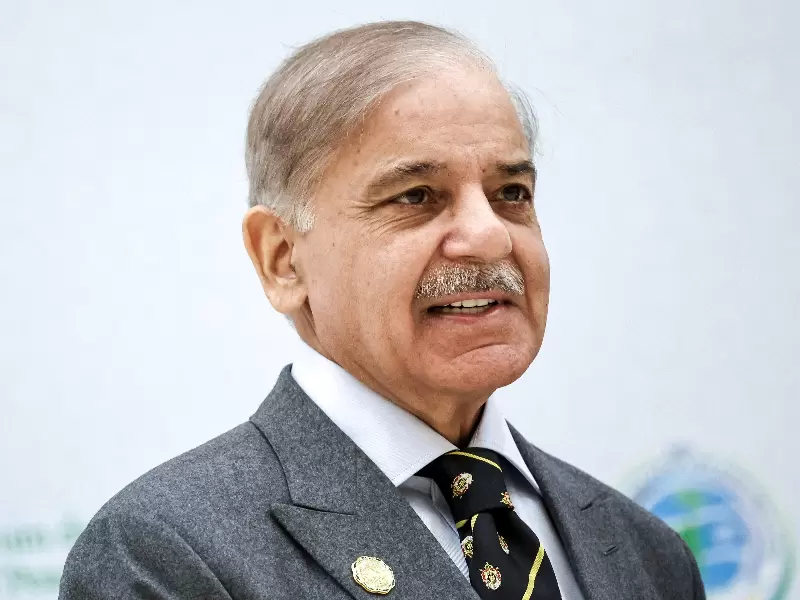 FILE PHOTO: Pakistani Prime Minister Shehbaz Sharif / Sputnik/Alexander Kazakov/Pool via REUTERS
Pakistan is a state long bogged down in debt. This has recently come to the fore when Abu Dhabi asked Pakistan to repay its $3.5 billion loan, exposing the fragility of its external finances.
Pakistan’s total public debt has crossed $270 billion, with external debt and liabilities exceeding $125 billion. A significant portion of this burden comes from Gulf partners such as the United Arab Emirates and Saudi Arabia, which together have extended over $10–12 billion in deposits, oil facilities, and loans in recent years.
Also Read: Substantively, nothing has changed in U.S.-Pakistan relationship: Expert
These funds have been critical in propping up Pakistan’s foreign exchange reserves, which have often hovered at dangerously low levels—barely enough to cover weeks of imports.
This growing dependence has deeply shaped Pakistan’s foreign policy. Economic compulsions now dictate diplomatic choices, reducing strategic autonomy and forcing Islamabad into a reactive posture. The tightening stance of Gulf creditors reflects declining confidence, weakening Pakistan’s leverage in international negotiations.
At the same time, repeated reliance on bailouts from the International Monetary Fund underscores structural weaknesses—low exports, poor tax collection, and fiscal mismanagement. Consequently, Pakistan’s foreign policy is increasingly driven by survival rather than strategy, highlighting how economic vulnerability can constrain geopolitical ambition.
What makes this crisis particularly acute is not just the size of the debt, but the way it has accumulated over time. Pakistan has repeatedly borrowed to meet immediate needs—import bills, fuel payments, and debt servicing—without building a strong base of exports or domestic revenue. Today, debt servicing alone consumes a staggering share of government resources, often exceeding 50–60 percent of federal revenues.
This leaves little room for development spending, social welfare, or infrastructure, deepening public frustration and slowing economic growth. The reliance on Gulf countries has been both a lifeline and a liability. The United Arab Emirates has provided crucial deposits to Pakistan’s central bank, while Saudi Arabia has extended oil on deferred payments, easing immediate pressure on foreign reserves. However, these arrangements are not permanent solutions; they are short-term relief measures that must eventually be repaid or rolled over.
As global economic conditions tighten and oil-rich nations reassess their financial commitments, Pakistan finds itself with fewer guarantees of continued support. The recent insistence on repayments signals a shift from strategic generosity to financial caution. Beyond the Gulf, Pakistan’s debt obligations are spread across multiple creditors, including China, multilateral institutions, and international bondholders.
Also Read: India budget leaves rupee, bonds vulnerable heading into RBI policy decision
Chinese loans, many tied to infrastructure projects under the China-Pakistan Economic Corridor (CPEC), have added another layer of complexity. While these projects aim to boost long-term growth, they also come with repayment schedules that add to near-term pressure. Meanwhile, borrowing from global markets has become increasingly expensive, as Pakistan’s credit ratings have been downgraded due to economic instability.
Foreign exchange reserves present another stark indicator of vulnerability. At several points in recent years, reserves have dipped below $4–5 billion—barely sufficient to cover a month’s worth of imports. Such low levels trigger panic in financial markets, weaken the currency, and drive up inflation.
The Pakistani rupee has depreciated sharply over time, making imports more expensive and further increasing the burden of external debt. For ordinary citizens, this translates into rising prices of fuel, food, and essential goods, turning a macroeconomic crisis into a daily struggle for survival.
The repeated need for assistance from the International Monetary Fund reflects deeper structural issues. Pakistan has entered IMF programs more than 20 times, each accompanied by conditions such as subsidy cuts, tax reforms, and currency adjustments. While these measures are intended to stabilize the economy, they often lead to short-term hardship and political resistance. Governments find themselves caught in a cycle—implement reforms to secure funds, face public backlash, and then struggle to sustain those reforms over the long term.
This economic fragility has direct consequences for foreign policy. Pakistan’s ability to take independent positions on global issues is increasingly constrained by its financial needs. Diplomatic engagements are often influenced by the necessity to secure loans, grants, or favorable terms from key partners. This has led to a perception that Pakistan’s foreign policy is reactive rather than proactive, shaped more by economic compulsions than strategic vision.
Even relationships that were once considered strong and unconditional are now being tested by financial realities. At the same time, the crisis has forced Pakistan to rethink its approach. There is growing recognition within policy circles that dependence on external borrowing is unsustainable. Efforts are being made to broaden the tax base, improve export competitiveness, and attract foreign investment. Sectors such as information technology, agriculture, and textiles hold potential, but realizing this potential requires consistent policy implementation and political stability—both of which have been elusive.
Humanly, the crisis is not just about numbers on a balance sheet; it is about uncertainty in everyday life. Rising inflation erodes purchasing power, job opportunities become scarce, and public services remain underfunded. For many Pakistanis, the consequences of debt are felt in the form of higher electricity bills, expensive groceries, and limited economic mobility. This disconnect between macroeconomic policies and lived realities often fuels public dissatisfaction and distrust in institutions.
There is also a broader regional and global dimension to consider. Pakistan’s economic stability matters not just for itself but for South Asia and the wider region. A financially unstable Pakistan can affect trade flows, security dynamics, and regional cooperation efforts. This is why international stakeholders continue to support Pakistan, albeit with increasing caution and conditionality. The challenge lies in balancing immediate financial assistance with long-term structural reform.
Ultimately, Pakistan’s debt crisis is a reminder that economic strength is the foundation of strategic autonomy. No country can sustain an independent foreign policy if it is perpetually reliant on external support for survival. The current situation underscores the urgent need for a shift—from a consumption-driven, debt-financed model to one based on production, exports, and fiscal discipline. Pakistan’s existence cannot remain dependent on external bailouts and temporary financial lifelines.
As a sovereign state, it must move toward building a stable and self-reliant economy that can support its people and its strategic ambitions. Yet, given the scale of structural challenges, political constraints, and economic vulnerabilities, this transformation appears far-fetched in the immediate future. The path ahead is difficult, but it is also necessary—for without economic stability, both national resilience and foreign policy independence will remain out of reach.
The writer is an author and a columnist. He has authored more than 15 books including 'Taliban: War and Religion in Afghanistan'.
Discover more stories on New India Abroad.
Leave A Comment
Related










ADVERTISEMENT

ADVERTISEMENT
E Paper
Video

Comments
Start the conversation
Become a member of New India Abroad to start commenting.
Sign Up Now
Already have an account? Login