ADVERTISEMENT
ADVERTISEMENT



Nepal’s ambassadorial reform: Opening diplomacy to ctizens
The move challenges this convention by creating an open application process that allows accomplished citizens to compete for some of the nation’s most important overseas assignments.
-
 Amit Deshmukh
 - Mon, 08, Jun 2026
- 18:38 EDT
- 124
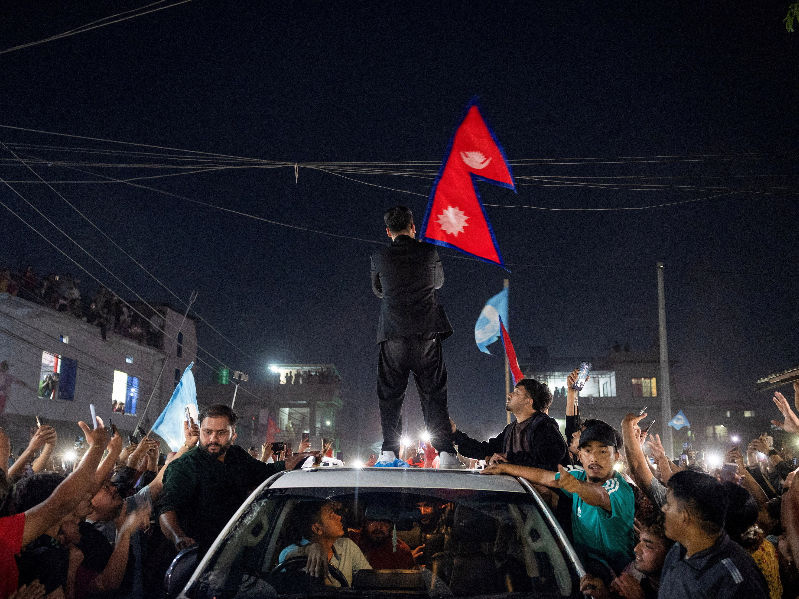 Balendra Shah, a rapper-turned-politician waves national flag after winning the election, in Damak, Jhapa district, Nepal, March 7, 2026. / REUTERS/Adnan Abidi
Nepal’s recent decision to invite citizens to self-nominate for ambassadorial positions marks a bold and potentially transformative step in the evolution of its diplomatic service. As highlighted in the article “Want to be an ambassador?”, the initiative reflects a broader effort by the government to make appointments more transparent, merit-based, and accessible to qualified professionals beyond the traditional diplomatic establishment.
For decades, ambassadorial appointments in South Asia have often been influenced by political considerations, personal networks, or bureaucratic seniority. Nepal’s move challenges this convention by creating an open application process that allows accomplished citizens from academia, business, public administration, law, international relations, and other fields to compete for some of the nation’s most important overseas assignments.
Also Read: Beyond the meme moment of “Cockroach”: India’s politically savvy Gen Z
A Democratic Experiment in Diplomacy
The reform sends a powerful message: diplomacy should not be the exclusive domain of career diplomats. In an increasingly interconnected world, successful ambassadors require a diverse skill set that extends beyond protocol and statecraft. Trade promotion, investment attraction, technology cooperation, cultural diplomacy, and engagement with diaspora communities have become central to modern diplomacy.
Professionals with proven leadership experience in these sectors can often bring practical insights, extensive networks, and fresh perspectives to foreign missions. By broadening the talent pool, Nepal may strengthen its ability to pursue economic diplomacy and national branding on the global stage.
Merit Must Prevail
The success of this initiative, however, will depend on its implementation. An open application process alone does not guarantee transparency. The selection mechanism must be credible, independent, and insulated from political interference.
Clear evaluation criteria, public disclosure of qualifications, and professional vetting procedures are essential. If appointments ultimately continue to favor political loyalties over competence, the reform risks becoming a symbolic exercise rather than a meaningful institutional change.
The emphasis on qualifications outlined in the Terms of Reference—including educational credentials, language skills, international exposure, leadership experience, and knowledge of foreign policy—is encouraging. These standards should be rigorously applied.
Economic Diplomacy in the 21st Century
Nepal's development aspirations increasingly depend on foreign investment, tourism, trade expansion, and international partnerships. Ambassadors today serve not only as political representatives but also as economic ambassadors.
Countries across the world have benefited from appointing distinguished professionals from business, academia, and public service to diplomatic posts. Such appointments can help attract investment, strengthen commercial relations, and build strategic partnerships.
For Nepal, whose economy relies heavily on remittances and international engagement, a more professional and performance-oriented diplomatic corps could generate significant national benefits.
Lessons for the Region
The initiative also raises important questions for neighboring countries. India, Bangladesh, Sri Lanka, and Pakistan have traditionally relied on a mix of career diplomats and political appointees. Nepal’s experiment could serve as a regional case study in democratizing diplomatic appointments.
If successful, it may encourage other nations to consider more transparent and competitive methods for selecting ambassadors while maintaining the institutional expertise of their foreign services.
Balancing Innovation and Professionalism
Career diplomats remain indispensable. Their years of training, policy knowledge, negotiation experience, and institutional memory cannot be easily replicated. The goal should not be to replace professional diplomats but to complement them with exceptional individuals who bring specialized expertise.
A balanced model—where career diplomats and qualified external candidates coexist—may offer the best path forward.
The Road Ahead
Nepal’s decision reflects confidence in the capabilities of its citizens and recognition that talent exists beyond government corridors. It is a reform aligned with contemporary governance principles of openness, accountability, and meritocracy.
The real test will lie not in the number of applications received but in whether the final appointments genuinely reflect excellence and national interest. If managed with integrity, this initiative could redefine Nepal’s diplomatic landscape and emerge as one of the most significant governance reforms in the country's foreign policy architecture.
In an era where diplomacy is increasingly about innovation, economic engagement, and public outreach, Nepal has opened a new door. The world—and the region—will be watching closely to see who walks through it.
The writer is a former journalist, researcher, and expert in media law and digital diplomacy.
(The views and opinions expressed in this article are those of the author and do not necessarily reflect the official policy or position of New India Abroad.)
Discover more at New India Abroad.
Leave A Comment
Related





ADVERTISEMENT

ADVERTISEMENT
E Paper
Video

Comments
Start the conversation
Become a member of New India Abroad to start commenting.
Sign Up Now
Already have an account? Login