ADVERTISEMENT
ADVERTISEMENT



US targets global scam hubs as losses soar
Officials told the Senate Foreign Relations Committee that Chinese-origin criminal organisations were the principal force behind scam operations concentrated in Burma, Cambodia and Laos.
-
 IANS
IANS - Sat, 08, Aug 2026
- 05:44 EDT
- 17
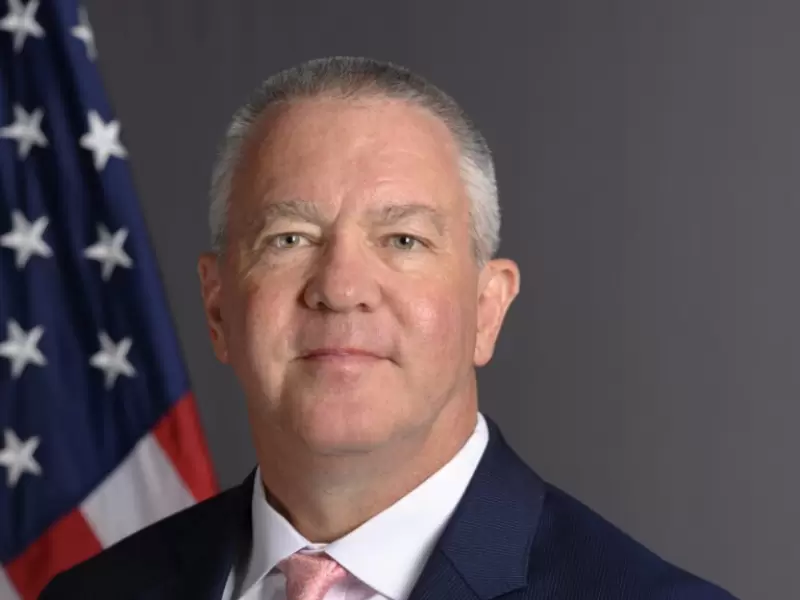 Michael DeSombre / STATE DEPARTMENT
The United States has warned that overseas scam compounds have grown into an industrial-scale criminal economy, costing Americans billions of dollars while fuelling human trafficking, money laundering and other transnational crimes.
Officials told the Senate Foreign Relations Committee that Chinese-origin criminal organisations were the principal force behind scam operations concentrated in Burma, Cambodia and Laos.
ALSO READ: US weighs ending 60-day grace period for H-1B workers
“In Burma, Cambodia and Laos criminal scam operations have reached an unprecedented, industrialised scale,” Assistant Secretary of State Michael DeSombre told the committee.
What began as isolated fraud rings had developed into a sprawling illicit economy with its own infrastructure, workforce and supply chains, he said. Credible sources estimate that hundreds of thousands of people from dozens of countries have been trafficked into operations across the three countries.
Initial estimates placed reported American losses from Southeast Asia-based scam groups at $12.5 billion in 2025. The actual total was expected to be significantly higher, DeSombre said.
American losses in 2025 were three times their 2023 level. People in all 50 states were targeted. The groups were also estimated to have inflicted losses of up to $114 billion on East Asian and Pacific countries last year.
Senate Foreign Relations Committee Chairman Jim Risch said entire cities were now devoted to scamming Americans. The operations also enable illicit drug and arms trafficking, he said.
The networks frequently recruit workers through false employment advertisements. Their passports are seized after arrival. Some are tortured and forced to defraud people online.
Deputy Assistant Secretary of State David Bedard said the networks were spreading into South Asia, Africa, the Western Hemisphere and other regions. They were also moving from large compounds into hotels and residential buildings to avoid detection.
“These networks exploit a persistent vulnerability; criminal operations are borderless, but law enforcement is not,” Bedard said.
The organisations operate through several layers. These include criminal leaders, managers and scam workers. Complicit officials, lawyers, accountants, bankers and cryptocurrency converters help keep the system operating.
Bedard said different forms of fraud were emerging around the world. “We have Indian call center scams, there's Jamaican lottery scams, there's cartel timeshare scams,” he said, adding that Washington also had concerns about scam centres appearing in Sri Lanka.
President Donald Trump signed an executive order in March directing several federal departments and the attorney general to develop a government-wide plan to identify, disrupt and dismantle the networks.
Washington has since introduced visa restrictions targeting people involved in cybercrime. It has also formed a 13-country Counter Scams Contact Group to coordinate law enforcement action, asset seizures, sanctions, diplomatic pressure and information sharing.
DeSombre said Trump had raised transnational criminal organisations with Chinese President Xi Jinping. Washington has urged Beijing to show that it is not enabling the crimes by allowing Chinese crime bosses to face international accountability.
Discover more at New India Abroad
Leave A Comment
Related



.jpg)



ADVERTISEMENT

ADVERTISEMENT
E Paper
Video

Comments
Start the conversation
Become a member of New India Abroad to start commenting.
Sign Up Now
Already have an account? Login