ADVERTISEMENT
ADVERTISEMENT


India’s EU Outreach: Strategic foresight or reactive pivot?
The deal is expected to double EU exports to India by 2032 by eliminating or reducing tariffs in 96.6% of traded goods by value.
-
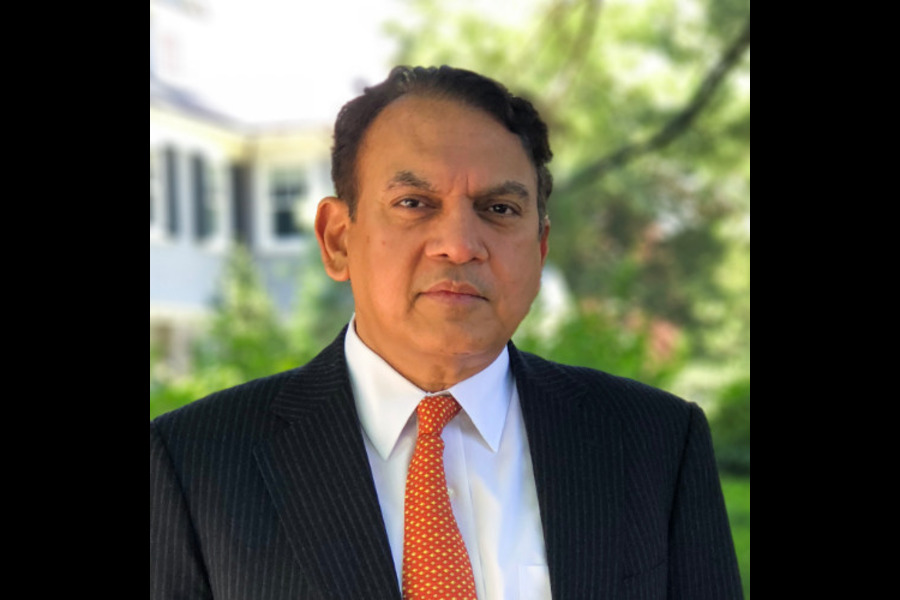 Satish Jha
 - Tue, 27, Jan 2026
- 13:30 EST
- 113
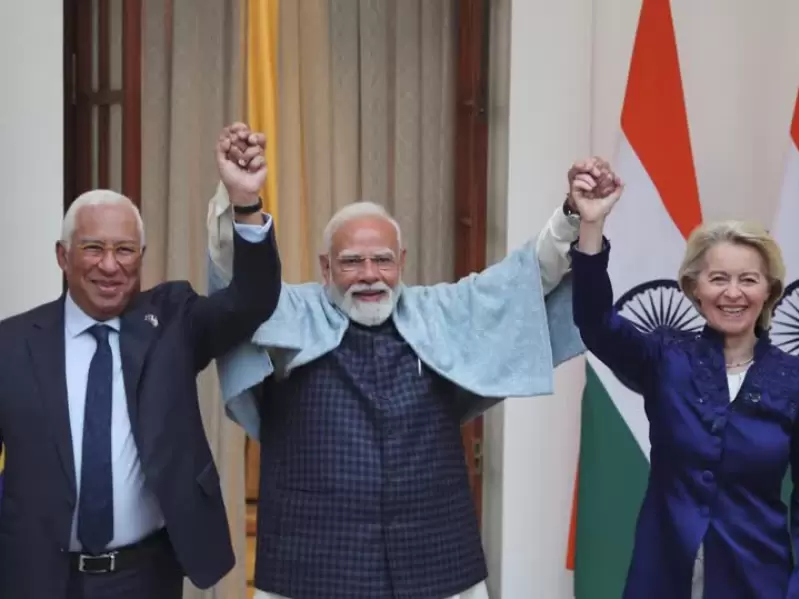 European Council President Antonio Costa, European Commission President Ursula von der Leyen and Indian Prime Minister Narendra Modi pose during a photo opportunity ahead of their meeting at the Hyderabad House in New Delhi, India, January 27, 2026. / REUTERS/Altaf Hussain
In diplomacy, timing is everything. India’s renewed embrace of Europe—crystallized in the newly concluded India–EU Free Trade Agreement—appears less like the culmination of long-term strategic design and more like a recalibration hastened by circumstance.
The historical record suggests that Europe has rarely occupied the center of India’s strategic imagination. What changed was not intent alone, but urgency—sharpened by global shocks and the return of uncertainty in Washington.
Also Read:A New Year on the edge of transition where policy meets pragmatism
For seven decades, Europe remained peripheral to Delhi’s worldview. India’s external orientation was shaped by the Cold War triangle: Soviet arms and energy, rivalry with China, and a cautious post-1991 courtship of the United States. Europe, by contrast, was the former colonial power turned normative critic—lecturing on rights while protecting its own markets through subsidies and regulation.
The 2004 India–EU Strategic Partnership promised depth but delivered little. Summits became ritualistic, trade talks collapsed in 2013, and commerce expanded steadily but without strategic inflection—from €47 billion in 2006 to €91 billion in 2018. There were no transformative breakthroughs, only incrementalism.
China’s trajectory underscores the contrast. Backed initially by Washington as a counterweight to Moscow, Beijing integrated rapidly into global supply chains. With U.S. markets open and European capital following, EU–China trade surged from roughly €100 billion in 2000 to over €700 billion today. Scale, speed, and centralized decision-making amplified this rise.
India never benefited from such strategic alignment. In Brussels, it was viewed as protectionist, slow to reform, and geopolitically entangled with Moscow. As a result, India’s share of EU trade stagnated below 3% for decades.
Recent numbers reinforce this pattern. India–EU goods trade rose from €88 billion in 2021 to €120 billion in 2024. Services trade tripled to €66 billion, driven largely by IT and consulting. These are respectable gains—but incremental ones.
But by contrast, India’s newer FTAs with the UAE, Australia, and EFTA delivered export spikes within months of implementation. Europe remained the last major holdout—not only because of India’s hesitations, but also because Brussels itself moved cautiously amid regulatory, political, and strategic recalibration.
That recalibration matters. Europe’s own reassessment—driven by China’s assertiveness, supply-chain fragility exposed during COVID, and the geopolitical rupture following Russia’s invasion of Ukraine—has made India a more plausible long-term partner. Yet it was the return of volatility in U.S. trade policy that accelerated convergence.
Donald Trump’s re-entry into the White House in 2025 revived tariff threats against Indian exports and calls for penalizing Delhi’s Russian oil purchases. Negotiations with Brussels, long stalled, suddenly gained momentum. The fourteenth round in October 2025 delivered the breakthrough, and the agreement was announced in January 2026. The groundwork existed; the capstone was laid under pressure.
This sequence reveals a deeper structural issue. India’s diplomacy remains too personality-driven and event-responsive, insufficiently institutionalized for complex partners like the European Union.
Negotiating with the EU is not bilateral bargaining; it requires navigating twenty-seven member states, the European Commission, and a dense regulatory ecosystem. The Broad-based Trade and Investment Agreement, launched in 2007, floundered for years over patents, agricultural subsidies, and data governance. Progress accelerated only when external shocks—China’s rise and renewed U.S. unpredictability—imposed urgency.
The new agreement is ambitious on paper: elimination of tariffs on 97% of goods, mobility provisions, defense cooperation, and sustainability commitments. But ambition does not guarantee execution. The real test lies in alignment—whether India can match Europe’s regulatory expectations with domestic reforms that deliver predictability in taxation, labor markets, and contract enforcement.
If the partnership is to be transformative, it must move beyond symbolism. That means building genuinely complementary supply chains—linking India’s services, pharmaceuticals, and manufacturing scale with Europe’s strengths in machinery, precision engineering, and green technology. One sector, in particular, will signal seriousness: green hydrogen. Joint investment targets, shared standards, and a credible pathway to large-scale production would reveal whether this partnership can anchor the next phase of industrial cooperation rather than merely rebadge existing trade flows.
Institutional depth will be decisive. Permanent working groups, annual trade and regulatory reviews, and empowered sub-national partnerships—Gujarat with Hamburg, Karnataka with Bavaria—must replace episodic summitry. Without such architecture, momentum will remain hostage to political cycles.
India’s economic ascent requires a genuinely multi-vector strategy, not episodic realignments driven by external shocks. The EU agreement is a necessary step, but it must be treated as a foundation, not a finale. If Delhi frames it as the endpoint of reactive diversification rather than the start of proactive integration, Europe will remain a courteous partner—not a transformative one.
The question, then, is not whether the deal was long in the making. It is whether India is prepared to make it matter. History will judge not the signature, but the substance that follows.
The author co-founded the national Hindi daily Jansatta and was the chief editor of Dinamaan, the national newsweekly of The Times of India Group.
(The views and opinions expressed in this article are those of the author and do not necessarily reflect the official policy or position of New India Abroad.)
Leave A Comment
Related




ADVERTISEMENT

ADVERTISEMENT
E Paper
Video

Comments
Start the conversation
Become a member of New India Abroad to start commenting.
Sign Up Now
Already have an account? Login