ADVERTISEMENT
ADVERTISEMENT



The business of anti-Indian hate
The Irish, Jews, and Italians did not wait for unanimity. Indian Americans must organize with hard realism
-
1784990308.png) Anang Mittal
Anang Mittal - Sat, 25, Jul 2026
- 11:20 EDT
- 28
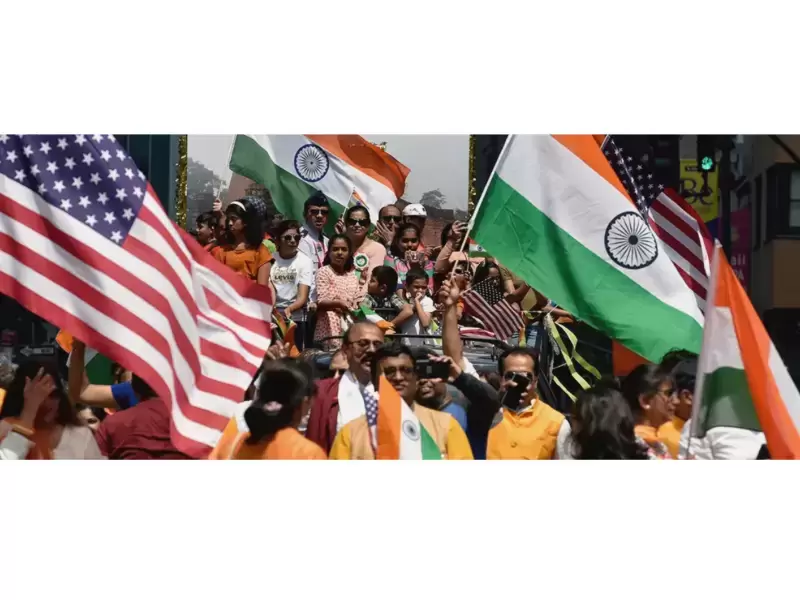 Indian Americans / File Photo
A recent Texas Monthly article on Frisco, Texas, revealed the motivation of the activists who appear at city council meetings to denounce the Indian community. One activist who warned of an “Indian takeover” admitted his game: he was trying to build a brand on social media. Anti-Indian videos, he explained, were useful for growing his account.
This is the business model of wannabe social media stars. Find a community where Indian immigrants live normal lives. Arrive with a camera and try to manufacture a viral moment. Since 2024, this grift has metastasized, thanks to social media.
Also Read: The road to 2028: Polling, battleground realities, and evolving coalitions
What began as anonymous accounts spreading racist language about “replacement” has influenced backbench politicians hungry for a brand of their own. Congresswoman Nancy Mace, in the middle of a disintegrating campaign for governor, tried to introduce a constitutional amendment to stop naturalized citizens from serving in Congress or on the federal bench.
That idea is so nakedly anti-American that earlier generations would have treated it as a joke. Now it’s commonplace in the never-ending rat race of social media virality.
Senator Eric Schmitt, the junior senator from Missouri, went so far as to describe the employment-based visa system as a “Visa Cartel,” treating the number of Indian approvals as proof of a conspiracy. The fact that Indians excel at the jobs for which employment visas are designed is now evidence of wrongdoing.
One is reminded of earlier immigration panics a century ago, when assimilation by Jews and Catholics was further proof of their sinister nature to embed themselves into American society.
Algorithms may reward demagoguery, but American voters are harder to fool. Mace’s bid for governor of South Carolina netted only 12 percent from Republican primary voters. Rod Vilhauer, the Frisco mayoral candidate who compared immigrants to “rats” and declared Islam a “terrorist group,” lost by sixteen points. The people who actually live with Indian Americans were not impressed.
Electoral victory is not the point. The promoters of this rhetoric are not serious participants in civic life. They are trying to move the Overton window. They take legitimate anxieties about illegal immigration and fraud and redirect them onto a community that arrived legally, followed the law, and prospered.
A lie repeated ad nauseam can influence politicians into knowing which prejudices their base will tolerate. That is the real goal: not victory in Frisco, but normalization of grievance politics to energize the voters.
These are not new political tactics. There is an old antisemitic trick: accuse a Jew of theft, and demand that he turn out his pockets. The accusation is irrelevant. The victory is to demonstrate power by making the Jew show his empty pockets. This is why respectability and conformity are not an answer to this vulgarity.
We don’t need to produce a résumé for an attention seeker claiming that brown skin and an Indian name constitute a civilizational threat. But we should be armed with the truth.
Earlier this year, I launched the Indian American Voter Atlas to bring data and statistics into the light. Analysis of Federal Election Commission records shows that Indian-origin donors contributed close to $100 million to the 2024 election cycle. The next time someone claims Indian Americans do not participate in politics, the Atlas makes it easier to check their lies.
The Indian diaspora is divided by religion, language, region, generation, and party. Organization will always be difficult, which is no excuse for avoiding it.
The Irish, Jews, and Italians did not wait for unanimity. Indian Americans must organize with hard realism. Build local organizations. Recruit candidates. Support allies and punish opportunists. America does not award power for patience and good conduct. Political power is acquired by people who know their numbers and are prepared to use them.
(The views and opinions expressed in this article are those of the author and do not necessarily reflect the official policy or position of New India Abroad.)
Discover more at New India Abroad.
Leave A Comment
Related


.jpg)


ADVERTISEMENT

ADVERTISEMENT
E Paper
Video

Comments
Start the conversation
Become a member of New India Abroad to start commenting.
Sign Up Now
Already have an account? Login