ADVERTISEMENT
ADVERTISEMENT



SCOTUS ruling upholds birthright citizenship – for now
It is abundantly clear that America has become the uniquely diverse and democratic nation it is today precisely because of birthright citizenship and the U.S. Supreme Court’s decision in Wong Kim Ark.
-
1784993109.jpg) Manjusha Kulkarni
Manjusha Kulkarni - Sat, 25, Jul 2026
- 11:29 EDT
- 25
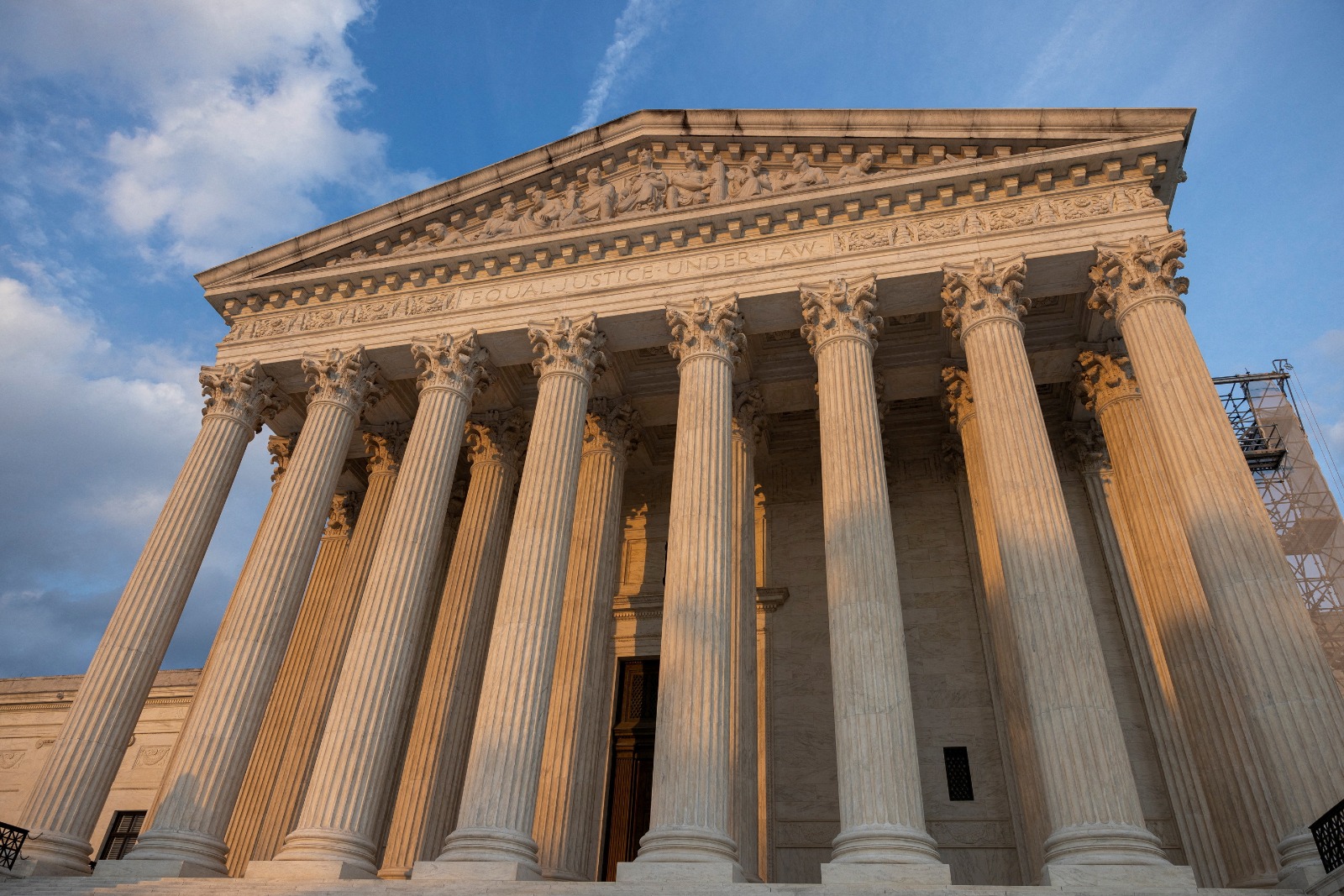 A view of the U.S. Supreme Court in Washington, U.S., July 19, 2024. / REUTERS/Kevin Mohatt/File Photo
Birthright citizenship has been a fundamental right in the United States for over a century. On June 30, the Supreme Court struck down President Trump's executive order that would have stripped citizenship from U.S.-born children of both undocumented individuals and those with nonimmigrant visas.
A smaller majority of five justices determined that the executive order violated the U.S. Constitution.
This is, no doubt, a victory for all Americans, including South Asian Americans, and a powerful reaffirmation of the promise enshrined in the Constitution that every child born in the United States is a citizen. For now.
Also Read: Valuing contributions: The case for settled citizenship protections
For more than 150 years, birthright citizenship has been a cornerstone of American democracy. As the nation was reckoning with its enslavement of Black people after the Civil War, the 14th Amendment established birthright citizenship to all babies, including those born to former slaves.
Birthright citizenship was a rejection of the old-world notion that status should be determined by race, ancestry, or bloodline – and it reflected one of America’s most democratic values: that people should not be judged by who their parents are, but instead recognized as equal members of the nation under the law.
Birthright citizenship has carried special significance for Asian American communities. Its constitutional foundation was secured in 1898 when Wong Kim Ark, a Chinese American born in San Francisco, successfully challenged the government’s attempt to deny his citizenship.
The government’s effort took place during an era of systemic anti-Asian exclusion made plain by the Chinese Exclusion Act. Wong’s victory at the Supreme Court affirmed that the 14th Amendment protects people born in the U.S., regardless of their parents’ immigration status or national origin.
It is abundantly clear that America has become the uniquely diverse and democratic nation it is today precisely because of birthright citizenship and the U.S. Supreme Court’s decision in Wong Kim Ark. It enabled the Asian American community and other communities of color to grow in size and political power – and that is precisely why the Trump administration attempted to end it.
In fact, it was so important to the president to prevent immigrant families from settling in the U.S. and developing roots in the community that he made the executive order one of the very first of his second term, signing it on January 20, 2025.
President Trump, Stephen Miller, and others within the White House know that eliminating birthright citizenship would disproportionately impact Asian and Latino communities. Specifically, for South Asian Americans, the executive order would have made the children born to individuals on student visa and work visas, including H1-Bs, noncitizens and likely even stateless at birth.
Based on a study by researchers at Penn State, roughly 757,000 babies of Asian descent, including South Asian, born in the United States between now and 2050 would be denied citizenship. Upon reaching adulthood, these individuals would be unable to vote, access critical public benefits or receive the full legal protections to which citizens are entitled.
The Barbara v. Trump decision is concerning specifically because we were only one vote away from losing those protections. Justice Kavanaugh, in his concurrence, found that Trump’s executive order only violated federal law, the Nationality Act. This limited finding provides a legal roadmap for how to restrict birthright citizenship in the future with a simple change to federal law. And it has the potential of not only stripping citizenship from children of certain immigrants, but eliminating birthright citizenship altogether.
So while we celebrate the ruling, we must also recognize that the Trump regime’s recent attack on birthright citizenship is just one part of their broader plan to make America permanently hostile to people of color, including Asians and South Asians. That’s why we must continue to confront and counteract the racist, anti-immigrant political rhetoric and policies that fueled the challenge to birthright citizenship in the first place.
(The views and opinions expressed in this article are those of the author and do not necessarily reflect the official policy or position of New India Abroad.)
Discover more at New India Abroad.
Leave A Comment
Related

.jpg)

ADVERTISEMENT

ADVERTISEMENT
E Paper
Video

Comments
Start the conversation
Become a member of New India Abroad to start commenting.
Sign Up Now
Already have an account? Login