ADVERTISEMENT
ADVERTISEMENT



U.S.-India relationship can transform future of the world: USISPF chair at annual summit
The summit opened with an optimistic vision for the next phase of India-U.S. cooperation, despite global trade and geopolitical uncertainties.
-
 Malvika Choudhary
 - Mon, 29, Jun 2026
- 16:02 EDT
- 41
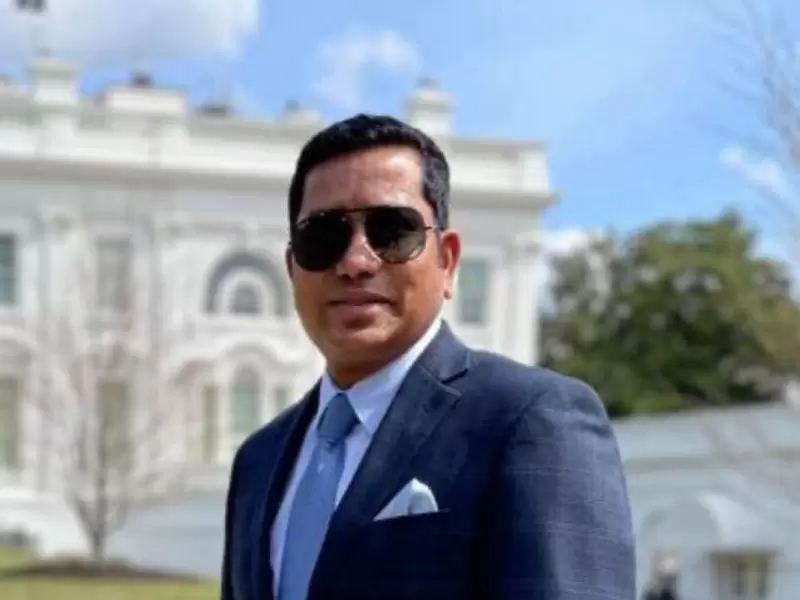
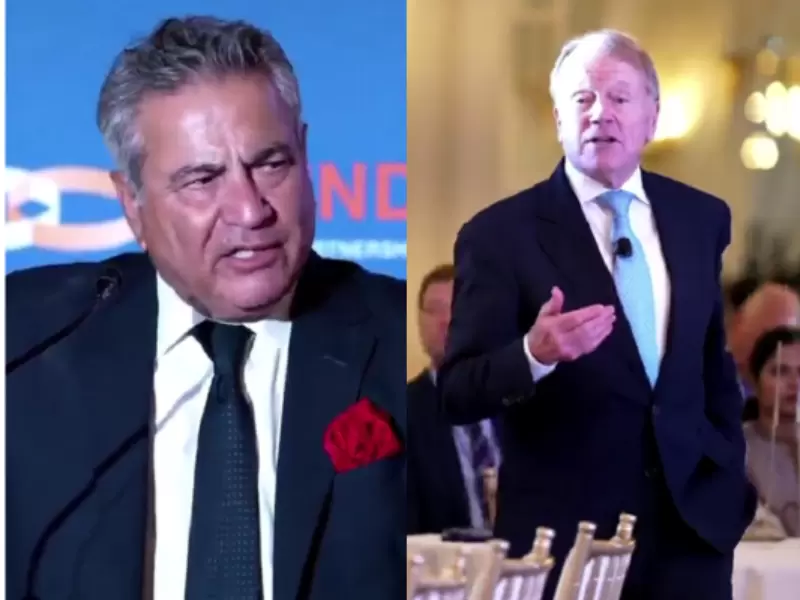 Mukesh Aghi/ John T. Chambers / USISPF
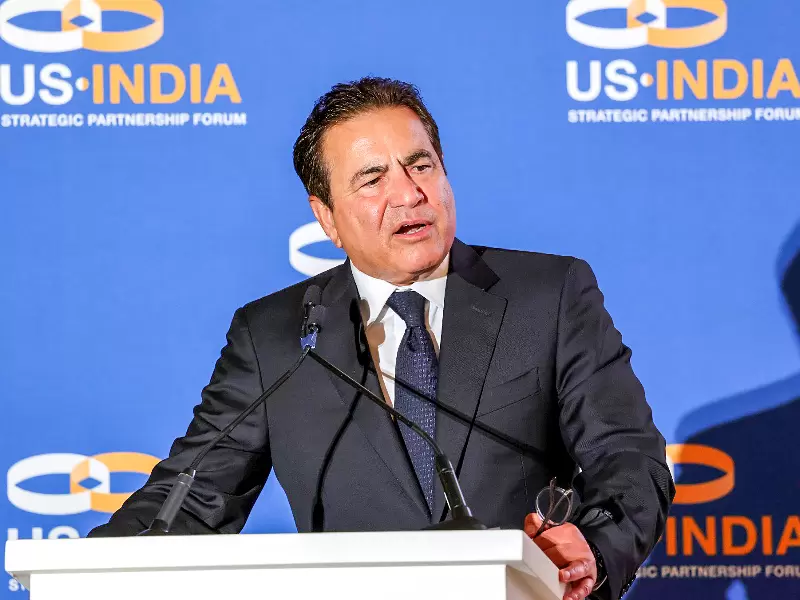
The ninth U.S.-India Strategic Partnership Forum (USISPF) Leadership Summit opened in Washington on June 29 with leaders expressing confidence in the future of the India-U.S. partnership despite global trade and geopolitical uncertainties.
Delivering the welcome address, USISPF chairman John T. Chambers said, "I am the biggest believer this relationship can transform the future of the world in a very positive way," and urging business leaders, policymakers, and entrepreneurs to build on the momentum of the past decade.
Also Read: USISPF to mark America@250 at IX Leadership Summit
Reflecting on the United States' 250th anniversary and India's 75 years of independence, Chambers said the two democracies share common values and an opportunity to accomplish far more together than either could alone.
"When you think about democracy, it's about the ability to empower people, to accomplish more together than they can by themselves," he said, adding that the two nations have "so much in common" and must continue to "dream together."
Looking back on USISPF's founding a decade ago, Chambers said the organization was built on a vision that extended far beyond expanding bilateral trade. It sought to strengthen cooperation in economic growth, healthcare, education, innovation, entrepreneurship, and startups while creating a model partnership for the rest of the world.
"The last 10 years, we've achieved almost all. We set our objectives too low," Chambers said, noting that many had initially viewed those ambitions as unrealistic. "I think you're just beginning to see what is truly possible going forward."
Calling for a broader approach to bilateral cooperation, Chambers said the partnership should not be viewed through individual sectors such as trade, defense, or semiconductors.
"History remembers that the strength of democracy is in how they work together," he said. "It can't be trade over here, defense over here, semiconductors over here. It's got to be, how do we think out of the box?"
He argued that deeper collaboration between India and the United States could add 3 to 4 percent annually to India's GDP growth while contributing 1 to 2 percent to U.S. economic growth, describing it as an unprecedented opportunity.
Describing himself as "the biggest bull (optimist) on India," Chambers said he has remained optimistic about India's future for more than two decades because of its innovation ecosystem, entrepreneurial talent, and expanding partnerships with the United States.
"This is the biggest bet I would make," he said, calling the India-U.S. relationship the strongest long-term strategic opportunity before both countries.
Pointing to recent diplomatic engagement between the two nations, Chambers cited Prime Minister Narendra Modi's meetings with President Donald Trump, Secretary of State Marco Rubio's visit to India, progress toward a bilateral trade agreement, and growing cooperation on artificial intelligence as evidence that the partnership continues to gain momentum.
"The momentum's been good," he said, adding that "it is amazing how far a win-win attitude extends."
Chambers identified artificial intelligence as the next defining chapter of bilateral cooperation, saying, "I think we've got to challenge ourselves to stretch further in terms of what's possible. AI will be at the heart of that."
Calling AI "not a technology" but something that "allows you to change everything," he urged governments and businesses to break down organizational silos and embrace transformational change instead of incremental improvements.
Drawing on his own investment experience, Chambers said he is involved with 24 startups, including 12 unicorns and two decacorns, about 60 percent of them led by Indian entrepreneurs, underscoring his confidence in India's innovation ecosystem.
Concluding his remarks, Chambers challenged attendees to identify one way to strengthen the India-U.S. relationship within their own organizations and another beyond their immediate responsibilities.
"Our best time is just in front of us."
Earlier, welcoming participants to the summit, Mukesh Aghi, president and CEO, USISPF highlighted growing momentum in the bilateral economic relationship, pointing to expanding trade, investment, technology collaboration, and supply-chain diversification.
"We are seeing the trade between the two countries is going up and up, regardless of a trade deal or not, but I think with a trade deal, you'll see much more acceleration," Aghi said, referring to the goal set by President Donald Trump and Prime Minister Narendra Modi to increase bilateral trade to $500 billion by 2030.
Aghi said cooperation is also expanding in strategic sectors, including semiconductors and critical minerals, while U.S. companies continue to increase investments in India through Global Capability Centers (GCCs). India now hosts nearly 2,800 GCCs, with roughly 60 percent operated by U.S. companies leveraging the country's skilled workforce, he said.
He also highlighted the gradual shift in global supply chains away from China.
"They are very quietly de-risking from China," Aghi said. "A classic example is Apple, which is now making most of the iPhone 17 and planning production of future iPhone models in India."
Despite uncertainty surrounding trade negotiations and broader geopolitical developments, Aghi said the long-term trajectory of the bilateral relationship remains positive.
"We hear about all the noise... but I think overall, the sentiment in every aspect is going forward," he said. "We do strongly believe that the relationship will continue to grow."
Highlighting the Indian American community's contribution to the U.S. economy, Aghi noted that nearly five million Indian Americans, representing about 1.5 percent of the U.S. population, generate nearly 6 percent of the country's GDP while occupying leadership positions across the technology sector and corporate America.
During the summit, USISPF will honor RTX chairman and CEO Christopher T. Calio, Bharti Enterprises founder and chairman Sunil Bharti Mittal, Fairfax Financial chairman and CEO V. Prem Watsa, Senator Mark Warner, and Senator Steve Daines for their contributions to advancing India-U.S. ties.
Aghi described Warner and Daines as longstanding champions of the bilateral partnership and welcomed senior government officials, diplomats, and business leaders attending the annual summit.
The day-long summit at the Waldorf Astoria features discussions on U.S.-India energy security and infrastructure, economic growth, trade, manufacturing, and public policy, alongside fireside conversations with senior government officials, diplomats, and business leaders.
Scheduled speakers include U.S. Under Secretary of State for Economic Growth, Energy, and the Environment Jacob Helberg; U.S. Ambassador to India and Special Envoy for South & Central Asian Affairs Sergio Gor; Indian Ambassador to the United States Vinay Mohan Kwatra; Congressman Ro Khanna; former U.S. Ambassador to India Kenneth I. Juster; IBM chairman and CEO Arvind Krishna; Fairfax financial chairman and CEO Prem Watsa; and Infosys chief legal officer Inderpreet Sawhney, among others.
The summit will also feature the presentation of the USISPF Public Service Award to Senators Mark Warner and Steve Daines, the 2026 USISPF Leadership Awards, and the launch of USISPF's commemorative coffee table book, We the People: 250 Voices that Have Shaped the U.S.-India Relationship, marking America's 250th anniversary.
Discover more at New India Abroad.
Leave A Comment
Related

12.png)

ADVERTISEMENT

ADVERTISEMENT
E Paper
Video

Comments
Start the conversation
Become a member of New India Abroad to start commenting.
Sign Up Now
Already have an account? Login