ADVERTISEMENT
ADVERTISEMENT



Can India reverse brain drain? PMRC Scheme bets it can
The new initiative seeks to make returning to India a more competitive option for researchers working overseas.
-
 Malvika Choudhary
 - Mon, 29, Jun 2026
- 14:18 EDT
- 30
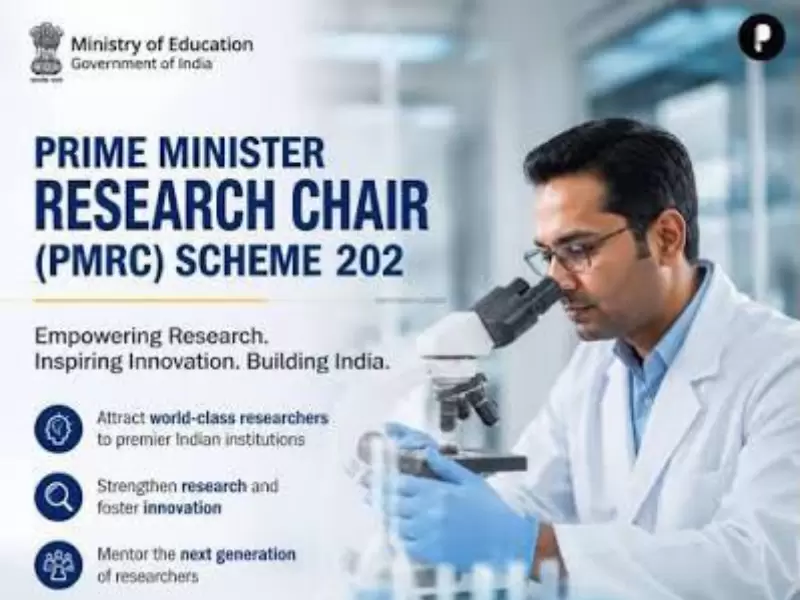 PMRC Scheme / X/ @IndianEmbassyUS
The Indian Embassy in Washington has called on Indian-origin researchers in the United States to apply for the newly launched Prime Minister Research Chair (PMRC) Scheme, aimed at attracting global scientific talent to India's premier institutions.
The outreach follows the Ministry of Education's launch of the PMRC Scheme, a flagship initiative that seeks to attract accomplished Indian-origin researchers, scientists and technologists working abroad to lead cutting-edge research at India's top government higher education institutions and national laboratories.
Also Read: The thinking behind India's Prime Minister Research Chair scheme
Eligible applicants include Indian nationals, Overseas Citizens of India (OCI) and Persons of Indian Origin (PIOs) working overseas.
Calling all Indian-origin researchers, scientists, and technologists in the USA!
— India in USA (@IndianEmbassyUS) June 28, 2026
Are you looking to make a lasting impact on India’s research landscape?
The Ministry of Education has launched the Prime Minister Research Chair (PMRC) Scheme 2026, designed to bring global… pic.twitter.com/a7hWiNTp0m
The scheme offers three fellowship tracks–Young Research Fellows, Senior Fellows and Research Chairs–tailored to different career stages. Fellows will be placed at eligible institutions, including top-ranked government universities and national laboratories, to undertake research aligned with India's national priorities.
Unlike previous efforts to encourage researchers to return, the PMRC Scheme seeks to address many of the practical challenges that have traditionally driven Indian scientists to pursue long-term careers overseas, including research funding, infrastructure and institutional support.
"India has never had a shortage of scientific talent. What it has had is a leakage problem," Adil Zainulbhai, a member of the PMRC Empowered Committee told New India Abroad. "The salary gap was real. The research infrastructure gap was real."
The initiative covers 13 priority research areas, including semiconductors, artificial intelligence, quantum computing, biotechnology, healthcare, cybersecurity, clean energy, advanced manufacturing, critical minerals, space and defence, with projects expected to support ongoing national missions.
Beyond fellowship support, the scheme provides one-time research grants, relocation assistance, residential and medical allowances, and support for spouse employment and OCI facilitation.
Research Chairs will also be able to maintain links with their overseas institutions through periodic visits, allowing them to continue international collaborations while establishing research programmes in India. Depending on the fellowship category, the overall support package can exceed $1.38 million.
According to the Empowered Committee, the scheme was informed by international talent-return programmes in countries including Israel, South Korea and China, while placing greater emphasis on ensuring Indian host institutions have the capacity to support returning researchers.
The committee also believes changing global conditions have created an opportunity for India to attract more researchers back. While India's research capacity has expanded in recent years, funding uncertainty, visa challenges and slower academic hiring in several countries have altered the global research landscape.
"Together, they created a moment where the pitch to come to India stopped being aspirational and started being competitive," Zainulbhai said.
The scheme also seeks to address factors beyond salary that often influence relocation decisions.
"The research literature on return migration is clear that family logistics, not salary, is usually the actual blocker," Zainulbhai said.
Applications for the PMRC Scheme are open through July 15, with proposals to be submitted through the Ministry of Education's dedicated PMRC portal.
Discover more at New India Abroad.
Leave A Comment
Related










ADVERTISEMENT

ADVERTISEMENT
E Paper
Video

Comments
Start the conversation
Become a member of New India Abroad to start commenting.
Sign Up Now
Already have an account? Login