ADVERTISEMENT

ADVERTISEMENT



Trump's national security team comes to convince Congress to back Iran war
Trump's Republicans control slim majorities in both the Senate and House and have been strongly supportive of his policy initiatives, as is typical when the White House and Congress are controlled by the same party.
-
 Reuters
 - Tue, 03, Mar 2026
- 16:20 EST
- 13
 U.S. Secretary of State Marco Rubio speaks to reporters, on the day of classified briefings for the full U.S. Senate and House of Representatives on the situation in Iran, on Capitol Hill in Washington, D.C., U.S., March 3, 2026. / REUTERS/Elizabeth Frantz
President Donald Trump's top national security advisers were to spend much of the day on March 2 making the case to members of Congress for the U.S.-Israel war on Iran, as Democrats and some of his fellow Republicans clamored for more information.
Secretary of State Marco Rubio, Secretary of Defense Pete Hegseth, CIA Director John Ratcliffe, and General Dan Caine, chairman of the Joints Chiefs of Staff, were to hold briefings first for the entire 100-member Senate and later the 432-member House of Representatives.
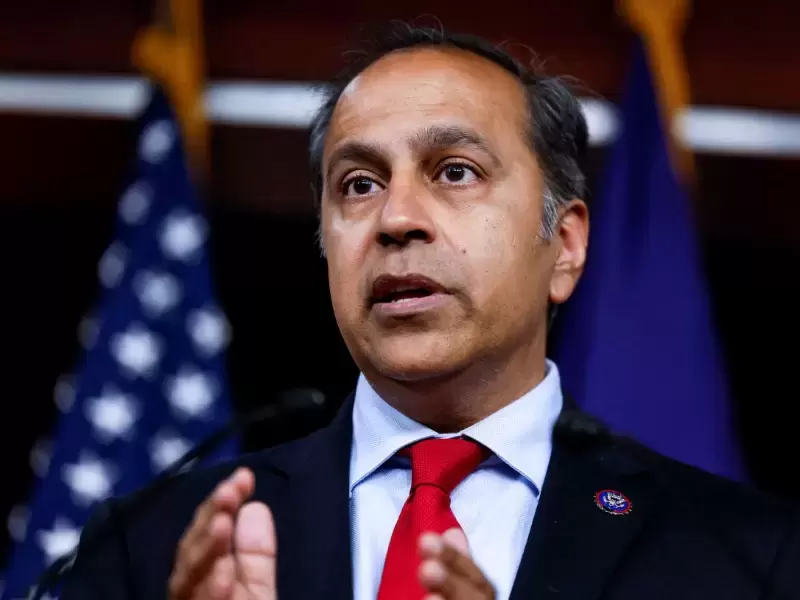
Also Read: Ro Khanna urges vote on Iran war at Dartmouth
Trump's Republicans control slim majorities in both the Senate and House and have been strongly supportive of his policy initiatives, as is typical when the White House and Congress are controlled by the same party.
But the Middle East war has prompted a few members of his party to join Democrats in saying the president should not send troops to fight abroad without first obtaining Congress' approval.
Others said they were looking forward to getting more information, especially if the White House comes to Congress to request additional funding for the war.
"America First was supposed to be a rejection of the globalist war machine," Republican Representative Warren Davidson of Ohio said in a post on X.com. "I look forward to seeing the intelligence the administration found so persuasive, then voting."
And there was concern when Rubio told reporters on Monday that the U.S. had attacked Iran because Israel planned to do so. "Have we now delegated the most solemn decision that can be made in our society, the decision to go to war, to another country," Senator Angus King of Maine, an independent who caucuses with Democrats, asked at an Armed Services committee hearing on March 3.
PAYING FOR IRAN WAR
The Senate's Republican majority leader, John Thune of South Dakota, and Representative Mike Johnson of Louisiana, the Republican Speaker of the House, have both said it is too early to know whether Congress will need to consider a supplemental funding bill.
Johnson told reporters on March 2 evening, after a separate briefing for congressional leaders, that the issue had come up during that meeting. "There are more details to be determined, how long the operation goes and what the need is," he said.
Such a resolution would face stiff opposition from Democrats. New York Representative Hakeem Jeffries, who leads Democrats in the House, told a news conference hours before the administration's briefing that Trump should get Congress' consent for the war before asking lawmakers to fund it.
The Senate is expected to vote on March 4 and the House on March 5 on war powers resolutions seeking to block Trump from continuing to attack Iran without congressional authorization.
Jeffries said he expected strong Democratic support for the measure.
"There is a requirement under the Constitution that it is members of Congress that make the decision as to whether to get us entangled in this kind of armed conflict and that's what the resolution this week will be all about," Jeffries said.
Congressional Republicans have blocked previous attempts to pass resolutions forcing Trump to obtain lawmakers' approval for military action. Even if a resolution were to pass this time, it is not expected to get the two-thirds majorities in both the House and Senate needed to override Trump's veto.
Discover more at New India Abroad.
Related










ADVERTISEMENT

ADVERTISEMENT
E Paper
Video

Comments
Start the conversation
Become a member of New India Abroad to start commenting.
Sign Up Now
Already have an account? Login