ADVERTISEMENT
ADVERTISEMENT



Ro Khanna urges vote on Iran war at Dartmouth
He said Congress must authorize any continued use of force against Iran.
-
 Malvika Choudhary
 - Tue, 03, Mar 2026
- 15:24 EST
- 91
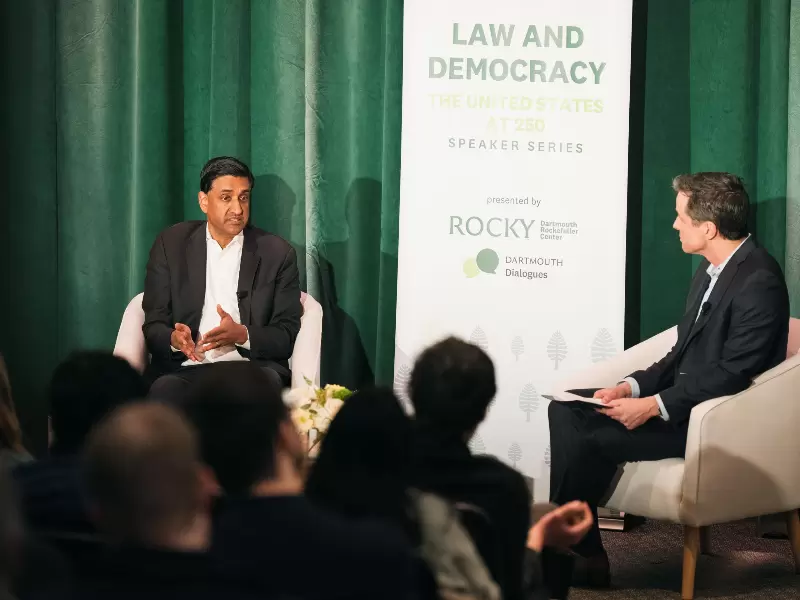 U.S. Rep. Ro Khanna, D-Calif., participates in the Rockefeller Center and Dartmouth Dialogues Law and Democracy series on Feb. 28 in Filene Auditorium. Professor of Government Brendan Nyhan moderated the event. / Photo by Eli Burakian ’00/ home.dartmouth.edu
Indian American Congressman Ro Khanna called President Donald Trump’s weekend attack on Iran “an illegal, unconstitutional war” and said he will push for a vote on a bipartisan war resolution in Congress this week.
Speaking Feb. 28 at Dartmouth College as part of the Rockefeller Center and Dartmouth Dialogues series, Khanna criticized the administration’s decision to join Israel in aerial attacks on multiple sites in Iran, including a compound where Iran’s Supreme Leader Ayatollah Ali Khamenei and other senior officials were killed.
Also Read: U.S. announces its first casualties in Iran war; poll signals challenge for Trump
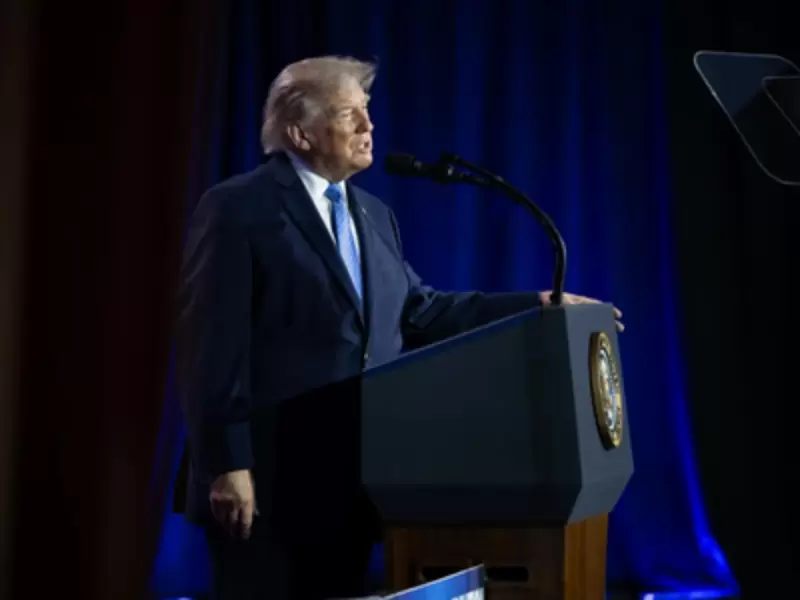
Trump said the objective of the strikes was “to defend the American people by eliminating imminent threats from the Iranian regime,” including threats to U.S. troops overseas and allies.
Khanna rejected that justification.
“The reality is that there were many other ways to prevent Iran from developing a nuclear bomb,” he said, according to Dartmouth college press. “We could have been working with our European allies. We could have been engaged in sanctions” or pursued a stronger nuclear agreement than the one Trump withdrew from during his first term.
Khanna said he and U.S. Rep. Thomas Massie, (R-Ky) has called for a vote on a bipartisan Iran war resolution. The Constitution gives Congress the sole power to declare war, while the 1973 War Powers Resolution allows a president to take military action under certain conditions, including an imminent threat.
Approval of the Khanna-Massie resolution would require congressional authorization for Trump to continue using military force against Iran.
“Trump has just launched an illegal, unconstitutional war in Iran,” Khanna said. “His promise was that we weren’t going to get into more of these overseas wars, that he was going to help focus on building manufacturing here, building jobs here, supporting the needs of health care and child care and education of the American people.”
During a question-and-answer session, Khanna reflected on his upbringing as the son of immigrants and as an Indian American growing up in a largely white community.
“What I found is that if you stand firm in your convictions, but you engage with people with curiosity and respect, the American people are pretty decent and generous and understanding,” he said.
Khanna also addressed artificial intelligence and ethics, supporting Anthropic’s decision to forgo a Defense Department contract after the Pentagon did not guarantee its technology would not be used for mass surveillance or autonomous lethal weapons.
“The Fourth Amendment protects against someone going to your house and taking your things. But the Fourth Amendment, as the courts have seen it, does not protect, right now, against building social media profiles and collecting data on Americans,” he said.
On artificial intelligence in warfare, he added: “You really want AI deciding whether we should strike some site in Iran without any human judgment in that process?”
About 200 people attended the 60-minute discussion in Filene Auditorium, with more than 500 watching via livestream, according to Dartmouth College. The event was co-sponsored by the office of the dean of the faculty of arts and sciences and the associate dean for the social sciences.
The next speaker in the Law and Democracy series will be former U.S. Rep. Jeb Bradley, R-N.H., on March 5.
Discover more at New India Abroad.
Leave A Comment
Related


ADVERTISEMENT

ADVERTISEMENT
E Paper
Video

Comments
Start the conversation
Become a member of New India Abroad to start commenting.
Sign Up Now
Already have an account? Login