ADVERTISEMENT
ADVERTISEMENT



India and Africa Must Shape the Future of the Global South Together
Interview with Anil Kumar Rai, India’s Ambassador to Ethiopia and Permanent Representative to the African Union
-
 Amit Deshmukh
 - Mon, 11, May 2026
- 16:57 EDT
- 24
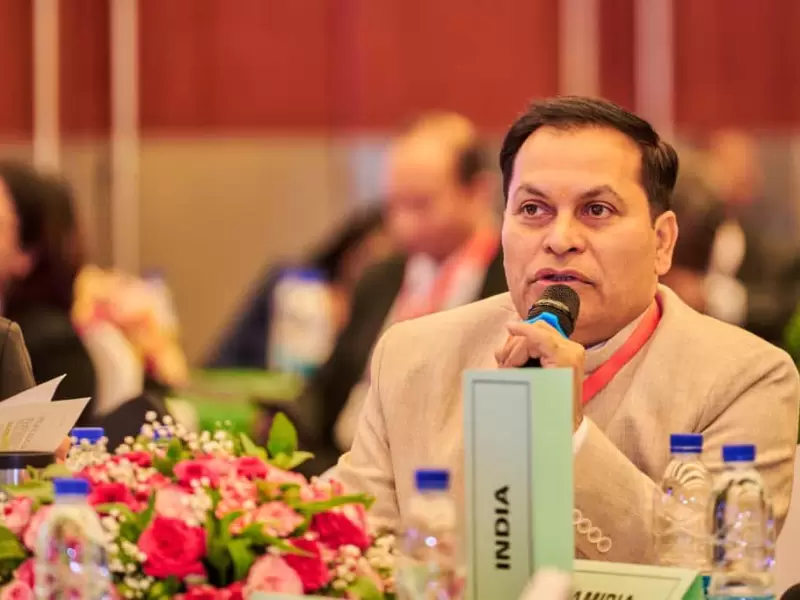 Indian Ambassador to the African Union Anil Kumar Rai / IANS
As geopolitical shifts redefine global partnerships, the relationship between India and Africa is gaining renewed momentum. With growing cooperation in technology, trade, health, and capacity building, the India–Africa partnership is increasingly seen as a cornerstone of South–South cooperation.
In this conversation, Anil Kumar Rai reflects on the evolving India–Africa partnership, the role of Ethiopia as the diplomatic capital of Africa, and the strategic significance of deeper engagement between India and African nations.
Q.1 Many global partnerships announce ambitious commitments, yet implementation often proves challenging. How is India redesigning its approach for the 4th India–Africa Forum Summit to ensure faster execution of commitments?
India will host the fourth India-Africa Forum Summit (IAFS-IV) from 28-31 May 2026 in New Delhi in collaboration with the African Union Commission. The IAFS-IV will bring together leaders from across the African continent, the African Union Commission, Regional Economic Communities and Specialized Organizations, as well as Diaspora to strengthen the enduring India-Africa partnership, and layout a roadmap for further expanding cooperation across diverse sectors. As run-up to the event Think Tank Dialogue, Cultural Events etc. are planned. The city of Delhi will be decorated with Indian and African murals.
Also Read: Indian diplomacy 2025: Trade, culture and strategy in a changing world order
The theme of 4th India-Africa Forum Summit is "IA SPIRIT: India Africa Strategic Partnership for Innovation, Resilience, and Inclusive Transformation”; this reflects the comprehensive nature of India-Africa partnership. In the lead-up to the Summit, a series of preparatory meetings will be held, including the India-Africa Foreign Ministers’ Meeting on 29 May 2026, preceded by Senior Officials Meeting on May 28, which will deliberate on key areas of cooperation between India and Africa. The Leaders’ Summit is scheduled on 31 May 2026.
The approach of the 4th India-Africa Summit is guided by Agenda 2063: “The Africa We Want,” and Second Ten Year Implementation Plan. This largely aligning with India’s ‘Viksit Bharat 2047’ a resolve to make India developed nation by 2047, on the eve of 100 years of India’s independence. Since both Africa and India has similar developmental goals, opportunities and constraints, we feel that India will bring many population scale solutions to common challenges that may provide model for African nations to examine, improvise and adopt based on their local conditions. The shared commitment and practical as well as result oriented approach taken during the 4th India-Africa Forum Summit will be lay strong foundation towards implementation of decisions taken during the Summit.
Q.2 Building on that, what specific mechanisms will be introduced to track progress and ensure measurable, transparent outcomes on the ground across African partner countries?
Discussions for establishing a Joint Monitoring and Implementation Mechanism with measurable targets are under discussions. It is expected that both sides will periodically meet to review the progress made on the decisions taken during the summit.
Q.3 In practical terms, how does India differentiate its partnership model from other global actors operating on the continent?
India and Africa share long-standing ties rooted in anti-colonial solidarity, South-South cooperation and people-to-people engagement. India’s development partnership model in Africa has traditionally focused on capacity building, affordable technology, healthcare, education, agriculture and institution building, making it distinct and most productive demand driven and strategic partnerships.
The upcoming 4th India Africa Forum Summit (IAFS-IV) provides an important opportunity to align India-Africa cooperation with the implementation priorities of Agenda 2063 and the Second Ten Year Implementation Plan (STYIP). This unique approach to support Africa achieve its goals is the key differentiator.
Q.4 India has made notable progress in digital public infrastructure. How can the upcoming Summit translate this experience into scalable, inclusive digital solutions for African countries?
Several areas of convergence exist between India’s development experience and Agenda 2063 priorities, including in the field of Digital Public Infrastructure and Technology Cooperation. The population scale implementation of Digital Public Infrastructure Stack by India in diverse fields like Digital Identity, Banking and Financial Services, delivery of Social Sector Services, health, education, travel and transport etc. has brought efficiency and cut down on redundancy.
These best practices are available for the African countries to examine and adopt. The Government of India stands ready to support the African nations. The most important aspect of India led Digital Public Infrastructure is that it’s open source and the countries are free to build upon it; this ensures data sovereignty and
Q.5 During the launch of website and logo of the 4th India-Africa Forum Summit on 23 April at New Delhi what was the key message by the External Affairs Minister of India?
External Affairs Minister Dr. S. Jaishankar officially launched the logo, theme, and website for the Fourth India-Africa Forum Summit (IAFS-IV) in New Delhi on 23 April, where all African Ambassadors accredited to India were present along with dignitaries and experts on India-Africa relations. Describing the upcoming summit as a "season of renewal," he emphasized that the gathering is not just a diplomatic event but a platform to shape a more ambitious, inclusive, and future-oriented cooperation. He noted that in a world characterized by volatility and uncertainty, the steady and growing relationship between India and Africa serves as a crucial message of stability and reliability.
The Minister highlighted that the spirit of IAFS-IV is defined by innovation, resilience, and a commitment to inclusive transformation. He reiterated India’s long-standing support for Africa’s rightful place in global governance, citing the permanent inclusion of the African Union in the G20 during India’s 2023 presidency as a testament to this commitment. This partnership, he explained, has evolved beyond simple transactions to a vision rooted in shared values, mutual respect, and a deep-seated belief in "South-South" solidarity.
Dr. Jaishankar also pointed to the physical expansion of India's diplomatic footprint as proof of this deepening bond, mentioning the establishment of 17 new missions across the continent in recent years. He underscored that India’s development cooperation-ranging from digital public infrastructure and green energy to healthcare and education is always driven by African priorities and local ownership.
The symbolism of the newly launched logo, which prominently features the lion native to both regions, was described as a representation of courage, pride, and a shared identity. The launch of the official website marks the beginning of the formal countdown to the summit, serving as a digital hub for engagement and information. Through these initiatives, the Minister reaffirmed that India remains a committed partner in Africa's journey toward the goals of Agenda 2063.
Q.6 What are the key areas of cooperation identified for the 4th India-Africa Forum Summit?
The upcoming India-Africa Forum Summit offers an important opportunity to align India-Africa cooperation with these continental priorities in a practical and implementation-oriented manner. A stronger India-Africa partnership creates great synergy between ‘Viksit Bharat 2047’ a resolve to make India a developed nation by 2047 complements with ‘Agenda 2063’ the ‘Africa We Want’. There are several areas of convergence exist between India’s development experience and Agenda 2063 priorities.
Digital Public Infrastructure and Technology Cooperation: Agenda 2063 prioritizes digital transformation and innovation. India’s experience in Digital Public Infrastructure (DPI), including digital identity, interoperable payments and e-governance, offers affordable and scalable solutions for Africa. Cooperation in AI, fintech, cybersecurity and digital governance can strengthen public service delivery, agriculture, healthcare and education while creating employment opportunities for Africa’s youth.
AfCFTA, Connectivity and Industrialization: AfCFTA is central to Africa’s economic integration. India can support customs digitization, digital trade systems, logistics efficiency and regional value chains. Indian expertise in agro-processing, pharmaceuticals, renewable energy and light manufacturing can contribute to industrialization, connectivity and infrastructure development across Africa.
Agriculture, Food Security and Green Development: India can support Africa through climate-resilient agriculture, irrigation, nano-fertilizers, seed systems and agro-processing. Cooperation in millets, organic farming and seaweed-based products can improve productivity sustainably. India-led initiatives such as the International Solar Alliance, Coalition for Disaster Resilient Infrastructure and Global Biofuels Alliance also provide opportunities for green growth and climate resilience.
Health, Education and Skills Development: India can deepen cooperation with Africa Centres for Disease Control and Prevention in pharmaceuticals, telemedicine, vaccines and digital health. Expanding technical education, vocational training and institutional partnerships, including initiatives such as Indian Institute of Technology Zanzibar and National Forensic Sciences University, can support long-term capacity building.
Space, Science and Innovation: Agenda 2063 identifies space cooperation as a priority. Collaboration with Indian Space Research Organisation can support Africa in satellite applications, GIS mapping, weather forecasting, remote sensing and disaster management, strengthening scientific and technological capabilities.
Culture, Tourism and Heritage: India can support cultural exchanges, heritage conservation, museum partnerships and restoration projects. Cooperation in tourism, films and digital creative industries can further strengthen cultural ties and generate employment opportunities.
Discover more at New India Abroad.
Related








ADVERTISEMENT

ADVERTISEMENT
E Paper
Video

Comments
Start the conversation
Become a member of New India Abroad to start commenting.
Sign Up Now
Already have an account? Login