ADVERTISEMENT
ADVERTISEMENT



Arif Sarwat recognized for Economic Impact in Florida
University of Delaware team is among nine selected to prepare the Discovery system for scientific use.
-
 Malvika Choudhary
 - Thu, 09, Jul 2026
- 17:22 EDT
- 43
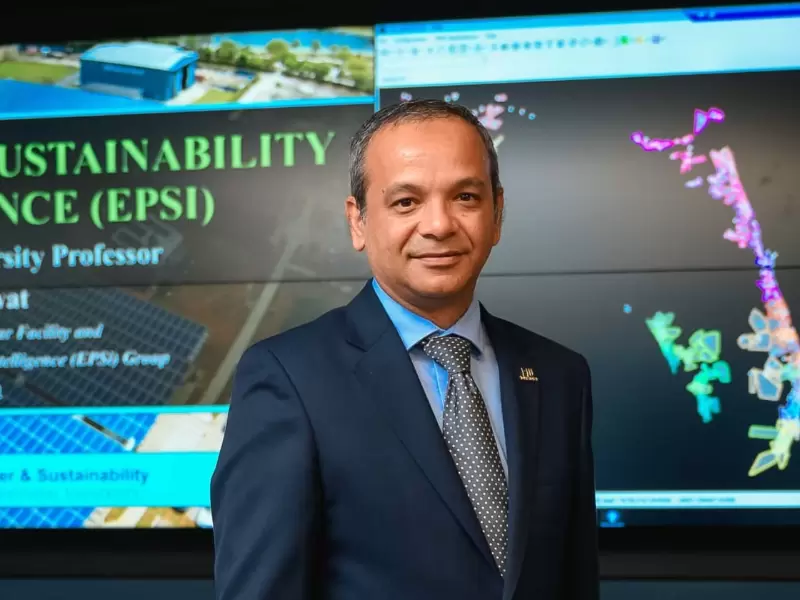 Arif Sarwat / Florida International University
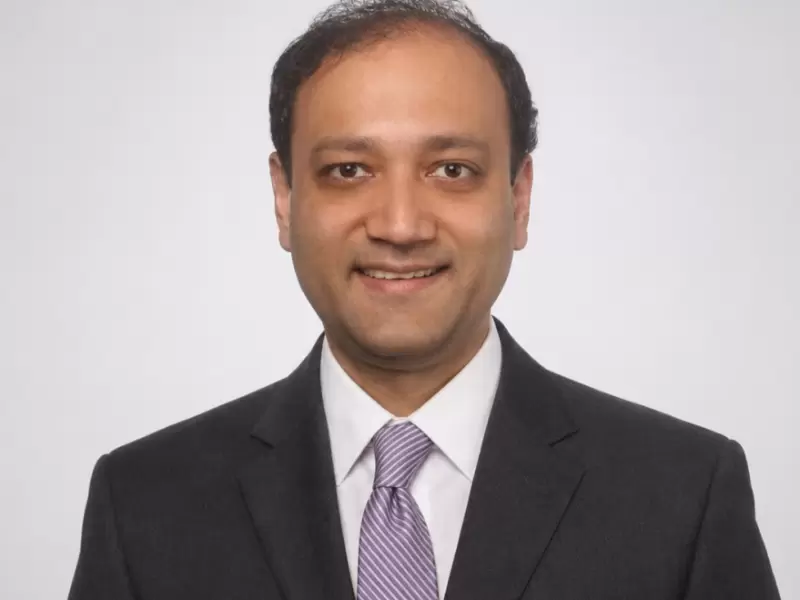
Indian American professor Arif Sarwat received the 2026 World Class Faculty Award from the Greater Fort Lauderdale Alliance, recognizing his research and academic leadership in advancing energy grid innovation and supporting South Florida's economic growth.
The Greater Fort Lauderdale Alliance, Broward County's primary economic development organization, presents the award to faculty members whose work contributes to regional job creation, capital investment and long-term economic growth.
Also Read: Ohio State's Bellamkonda outlines vision for university's future
Sarwat is a distinguished university professor and chair of the Department of Electrical and Computer Engineering at Florida International University (FIU).
He also serves as director of Engineering for Industry and Research Collaborations, director of the FPL-FIU Solar Research Facility, and leads FIU's Energy, Power & Sustainability-Intelligence (EPSi) research group.
"It is a tremendous honor to be recognized by the Greater Fort Lauderdale Alliance for my team's work," Sarwat said.
"The two things that play so importantly in decision-making for major companies are a continuous, reliable supply of electricity and a highly trained young generation. I'm proud to say that FIU is making major contributions to both."
Sarwat and his EPSi laboratory have transformed FIU's Engineering Center into a living laboratory for next-generation power grid technologies. Using the university's large solar array and smart microgrid, the team develops and tests artificial intelligence-based control systems under real operating conditions to improve grid reliability, resilience and efficiency.
The laboratory's research spans smart grids, agentic AI, federated learning, wireless power transfer, distributed energy resources, fuel-agnostic microgrids, energy storage systems, quantum computing applications for energy systems and cybersecurity for critical infrastructure.
According to FIU, more than 80 graduates from the EPSi laboratory have gone on to careers at Florida Power and Light Company (FPL), where they work on industrial-scale energy systems similar to those used during their training at the university.
"Reliability is measured in nines. Is it 99.99%, or is it 99.999%? The kind of reliability that FPL is able to provide to South Florida today is among the highest in the world, and our work has been part of making that possible," Sarwat said.
Looking ahead, Sarwat's team is developing quantum-hardened cybersecurity protocols to protect future electric grids against next-generation cyber threats. The researchers are also exploring how quantum technologies, large language models, federated learning and agentic AI can strengthen critical infrastructure and support more intelligent grid operations.
"We started working with AI in 2008. Industry began using it much later," Sarwat said. "Thinking about what's coming five to ten years down the line will help South Florida remain a growing hub for industry."
Sarwat has more than 20 years of combined experience in industry and academia. Before joining FIU in 2012, he spent more than nine years at Siemens, where he worked on large-scale energy and infrastructure projects and received three recognition awards for excellence. He also served as an assistant professor at the University at Buffalo before returning to Florida.
His research has been supported by the National Science Foundation, the U.S. Department of Energy and industry partners. Sarwat has published more than 275 peer-reviewed research papers, holds multiple patents, and serves as principal investigator for FIU's grid-connected 3MW/9MWh AI-based Fuel Agnostic (AIR) Microgrid project.
Over the course of his career, he has received numerous honors, including the NSF CAREER Award, FIU's Faculty Award for Excellence in Research & Creative Activities, multiple FIU Top Scholar Awards, and several best paper awards from IEEE conferences and Springer journals. He has also held leadership positions with the IEEE Miami Section's Vehicular Technology and Communications Society.
Sarwat earned a bachelor's degree in electronics engineering from Aligarh Muslim University in India. He later received a master's degree in electrical and computer engineering from the University of Florida and a Ph.D. in electrical engineering, specializing in smart grids, from the University of South Florida.
Discover more stories on NewIndiaAbroad
Leave A Comment
Related







ADVERTISEMENT

ADVERTISEMENT
E Paper
Video

Comments
Start the conversation
Become a member of New India Abroad to start commenting.
Sign Up Now
Already have an account? Login