ADVERTISEMENT

ADVERTISEMENT



6 in 10 AAPI adults say U.S. is on wrong track in 2026
The nationwide poll conducted in December 2025 shows economic anxiety, health care costs and immigration remain the top concerns for AAPI communities as the country enters 2026.
-
 Malvika Choudhary
 - Mon, 26, Jan 2026
- 16:18 EST
- 22
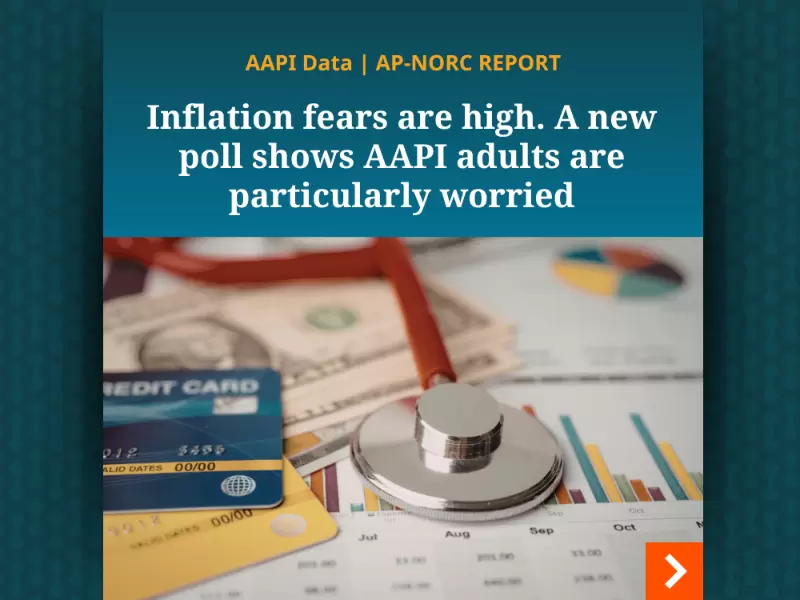 AP-NORC Survey December 2025-January 2026 / aapidata.com
Six in ten Asian American, Native Hawaiian and Pacific Islander (AAPI) adults say the United States is headed in the wrong direction in 2026, with most also expecting the economy to worsen, according to a new survey.
According to a poll by the Associated Press-NORC Center for Public Affairs Research and AAPI Data, about 60 percent of AAPI adults said they think how things are going in the country will get worse in 2026, and 58 percent expect the national economy to deteriorate.
Also Read: New framework maps path to power for AAPI communities
The poll, conducted between Dec. 2 and 8, 2025, finds that affordability and the cost of living dominate concerns across AAPI communities, alongside pessimism about the country’s economic and political direction.
Nearly half of respondents (49 percent) said inflation or the cost of living should be a top priority for the government in 2026. About 72 percent mentioned at least one economic issue, while 42 percent cited personal finances as a key concern.
Roughly one-third also believe their own financial situation will worsen. While this marks some improvement from April 2025, views are still more pessimistic than in 2023.
Income also plays a role. About 46 percent of respondents in households earning under $50,000 a year expect their personal finances to worsen, compared with 29 percent among those in households earning $100,000 or more.
Beyond inflation, about two in ten respondents pointed to unemployment and jobs, the broader economy or housing costs as major issues—levels broadly in line with the general population. Still, the high cost of living stands out as the single most frequently cited concern.
Health Care Costs
Health care costs and access also loom large. Nearly all AAPI adults said they are at least somewhat concerned about rising health care costs. A majority said they worry about being unable to access health care when needed, losing or not having health insurance, or being unable to pay for care or medications—findings that closely mirror an October 2025 AP-NORC poll of the general public.
Lower-income households also report higher anxiety. About 54 percent of those earning under $50,000 said they are extremely or very worried about being unable to access health care, compared with 31 percent among those earning $100,000 or more. Similarly, 49 percent of lower-income respondents are highly worried about losing or not having health insurance, versus 27 percent among higher-income households.
Immigration and national identity
Immigration remains a major policy priority, with 41 percent of respondents naming it as a top issue.
The survey also points to deep unease about democratic institutions and civil liberties. A majority of AAPI adults said they see major threats to freedom of speech (58 percent) and freedom of the press (57 percent). About four in ten said the right to vote is under threat, and roughly a third said the same about freedom of religion.
On questions of national identity, AAPI adults placed far greater emphasis on democratic values than on religious culture. Four in five respondents said having a democratically elected government is very important to U.S. identity.
Discover More At New India Abroad.
Related






ADVERTISEMENT
ADVERTISEMENT
E Paper
Video

Comments
Start the conversation
Become a member of New India Abroad to start commenting.
Sign Up Now
Already have an account? Login