ADVERTISEMENT
ADVERTISEMENT


Airlines raise fares as Middle East conflict lifts fuel costs, disrupts flights
The war has disrupted a key oil-export corridor, driving up airline costs, pushing fares higher on some routes and deepening concern about a broader hit to travel demand.
-
 Reuters
 - Tue, 10, Mar 2026
- 16:50 EDT
- 94
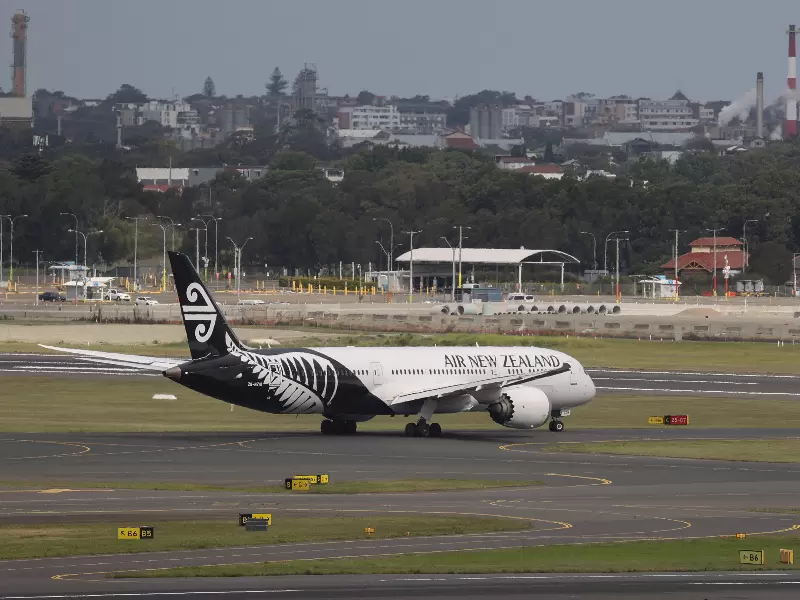 FILE PHOTO: An Air New Zealand plane is seen taxiing from the international terminal at Sydney Airport, in Sydney, Australia, November 29, 2021. / REUTERS/Loren Elliott/File Photo
Some airlines in Asia and Europe raised fares, added fuel surcharges or adjusted schedules on March 10 as the Middle East conflict drove jet-fuel costs sharply higher and disrupted key air routes.
Australia's Qantas Airways, Scandinavia's SAS and Air New Zealand were among carriers that announced price increases, while others warned the crisis could threaten fuel supplies or force further schedule changes.
Also Read: Air India, Air India Express to operate flights to and from Jeddah and Muscat on March 10
Jet fuel prices, which were around $85 to $90 per barrel before U.S.-Israeli strikes on Iran, have soared to between $150 and $200, Air New Zealand said as it suspended its 2026 financial outlook because of uncertainty over the conflict.
The war has disrupted a key oil-export corridor, driving up airline costs, pushing fares higher on some routes and deepening concern about a broader hit to travel demand.
"Increases of this magnitude make it necessary to react in order to maintain stable and reliable operations," an SAS spokesperson said, adding it had implemented a "temporary price adjustment."
SAS last year temporarily adjusted its fuel hedging policy because of uncertain market conditions and said it had no fuel consumption hedged for the following 12 months.
Several Asian and European airlines, including Lufthansa and Ryanair, have hedging in place, securing part of their fuel needs at fixed prices.
Finnair, which had hedged more than 80 percent of its first-quarter fuel purchases, warned fuel availability could also come under pressure if the conflict dragged on.
"A prolonged crisis could affect not only the price of fuel but also its availability, at least temporarily," a Finnair spokesperson said.
Kuwait, a major jet fuel exporter to north-west Europe, has faced output cuts.
AIRSPACE CHAOS IN THE MIDDLE EAST
Planes arriving in Dubai were briefly placed in a holding pattern on March 10 because of a potential missile attack, flight tracking service Flightradar24 said on X, underscoring the region's airspace disruption. The planes eventually landed.
Airlines are already adjusting networks and prices in response. Qantas said it was exploring redeploying capacity to Europe, while Cathay Pacific said it would add flights to London and Zurich in March as airspace closures and capacity constraints drive up fares on Asia-Europe routes.
Air New Zealand said it had raised fares across routes and warned further price or schedule changes could follow if jet-fuel costs remained elevated.
Hong Kong Airlines said it would raise fuel surcharges by up to 35.2 percent from March 12. Air India said it would begin a phased increase in fuel surcharges on domestic and international routes.
Some European carriers said they saw no immediate need to raise prices. IAG, the owner of British Airways, said it was well hedged for the near term and had no plans to adjust fares. British Airways, however, said it had brought forward the end of its winter-season flights to Abu Dhabi because of the "continuing uncertainty."
AIRLINE SHARES STABILISE AFTER SELLOFF
Some airline stocks rose as oil prices fell to around $90 a barrel on Tuesday from a high of $119 on Monday after U.S. President Donald Trump said on Monday the war could be over soon.
In Europe, shares of major airlines closed higher, rising between 3 percent and 8 percent. Shares of major U.S. carriers Delta Air Lines, United Airlines, Alaska Air and American Airlines were down between 1.5 percent and 2.5 percent in afternoon trade.
Most major U.S. airlines no longer hedge their fuel costs, unlike European and Asian carriers that continue to maintain active hedging programs. Fuel is typically their second-largest expense after labor.
Without the protection of fuel hedges, airlines have little choice but to lean on higher fares to offset rising costs. Deutsche Bank's latest data shows U.S. airfares climbing quickly, with both last-minute tickets and advance-purchase fares surging over the past week.
With passenger traffic continuing to outpace the growth in airline seat capacity, and some carriers forecasting record spring break demand, analysts say the backdrop should help the market absorb higher fares.
Rising fuel costs are also expected to push airlines to slow their growth plans, effectively boosting their pricing power. Still, it remains unclear whether these steps will be enough to fully protect profit margins.
Major U.S. carriers are widely expected to update their outlooks ahead of an industry conference next week, but some analysts have already trimmed their profit and capacity forecasts for the current quarter and the full year. Analysts at Melius, for example, have cut their net‑income estimates by 10 percent.
CONFLICTS SHRINKING AVAILABLE AIRSPACE
In addition to high fuel costs, tightening airspace threatens to further disrupt the global travel industry as pilots reroute around the Middle East conflict and capacity on key routes fills up.
Emirates, Qatar Airways and Etihad together account for about one-third of passenger traffic between Europe and Asia and carry more than half of all passengers flying from Europe to Australia, New Zealand and Pacific islands, according to Cirium.
European airlines have already been dealing with reduced airspace because of the war in Ukraine, with many avoiding Russian airspace and flying longer routes. With even less airspace now available, they say operating conditions have become more challenging.
Discover more at New India Abroad.
Leave A Comment
Related












ADVERTISEMENT

ADVERTISEMENT
E Paper
Video

Comments
Start the conversation
Become a member of New India Abroad to start commenting.
Sign Up Now
Already have an account? Login