ADVERTISEMENT
ADVERTISEMENT



Indian- origin nurse recovers after five months battling Guillain-Barré
Gaikwad is now continuing physiotherapy and rehabilitation in India and is able to walk with the assistance of one person.
-
1759953093.png) Staff Reporter
Staff Reporter - Wed, 12, Aug 2026
- 00:42 EDT
- 27
 NURSE / JHAH VIA X
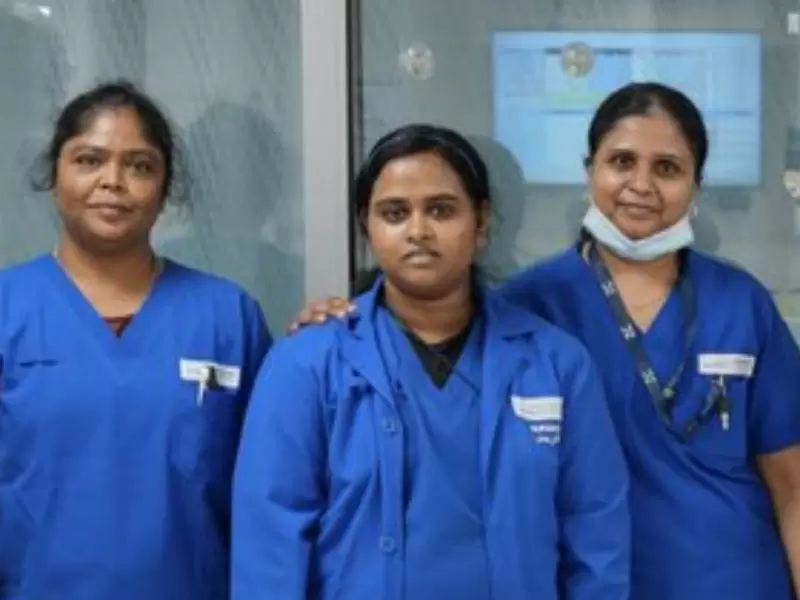
After more than two decades caring for critically ill patients at Johns Hopkins Aramco Healthcare, Rachelrani Nandkumar Gaikwad found herself on the other side of the hospital bed after being diagnosed with Guillain-Barré syndrome. With determination and the support of her health care team, she is now on the path to recovery.
ALSO READ: Stanford spotlights Indian-origin sisters inspired by seva
Gaikwad joined Aramco's medical organization in 2000 and worked as a charge nurse in the Neonatal Intensive Care Unit, caring for critically ill newborns. She continued her career after the health care operations became JHAH, a joint venture with Johns Hopkins Medicine, in 2014.
In January 2026, however, Rachel herself became the patient — admitted to JHAH with Guillain-Barré syndrome, a rare condition in which the body's immune system attacks the nerves. The weakness it causes can progress with frightening speed.
Her condition deteriorated rapidly, affecting her ability to move, swallow and breathe. She spent about a month in the Intensive Care Unit and required mechanical ventilation, a tracheostomy, a central venous line and medication to support her heart and blood pressure.
From caregiver to patient - and back to strength.
— Johns Hopkins Aramco Healthcare (@JHopkinsSaudi) August 11, 2026
For 25 years, Rachelrani Nandkumar Gaikwad cared for some of JHAH's smallest patients. In 2026, she faced one of her greatest challenges after being diagnosed with Guillain-Barré syndrome.
Supported by a multidisciplinary team… pic.twitter.com/PoLAKn2xhh
“With support from a multidisciplinary team and thanks to her exceptional determination, Rachel's journey from intensive care to recovery reflects the power of compassionate, integrated care centered on the patient. Rachel's experience serves as a reminder that every patient in JHAH receives care based on empathy, collaboration, and a commitment to achieving the best possible outcome,” Johns Hopkins Aramco Healthcare said in a post on X.
As a health care professional, Gaikwad understood the medical procedures she was undergoing, but being dependent on the health care system she had served for 25 years presented a deeply personal challenge.
A multidisciplinary team involving ICU, Neurology, Nursing, Respiratory Therapy, Physiotherapy, Nutrition and Case Management coordinated her treatment and rehabilitation.
After months of intensive care and rehabilitation, Gaikwad progressed from being completely bed-bound to sitting, standing and eventually walking with assistance. The removal of her tracheostomy and feeding support marked important milestones in her recovery.
She was discharged home in stable condition on June 10, after nearly five months in the hospital. Gaikwad is now continuing physiotherapy and rehabilitation in India and is able to walk with the assistance of one person.
“I am deeply grateful to everyone involved in my care,” Gaikwad said, praising the JHAH team for its dedication, compassion and professionalism.
The health care professionals who treated Gaikwad chose not to be named, with JHAH describing her recovery as a reflection of the collective efforts of the entire multidisciplinary team.
Discover more at New India Abroad.
Leave A Comment
Related









ADVERTISEMENT

ADVERTISEMENT
E Paper
Video

Comments
Start the conversation
Become a member of New India Abroad to start commenting.
Sign Up Now
Already have an account? Login