ADVERTISEMENT
ADVERTISEMENT



U.S. champions AI sovereignty, innovation and opportunity at India AI Summit
Rather than concentrated international control, the U.S. highlighted national AI sovereignty — the idea that countries should retain control over AI deployment
-
 Amit Deshmukh
 - Fri, 20, Feb 2026
- 15:02 EST
- 92
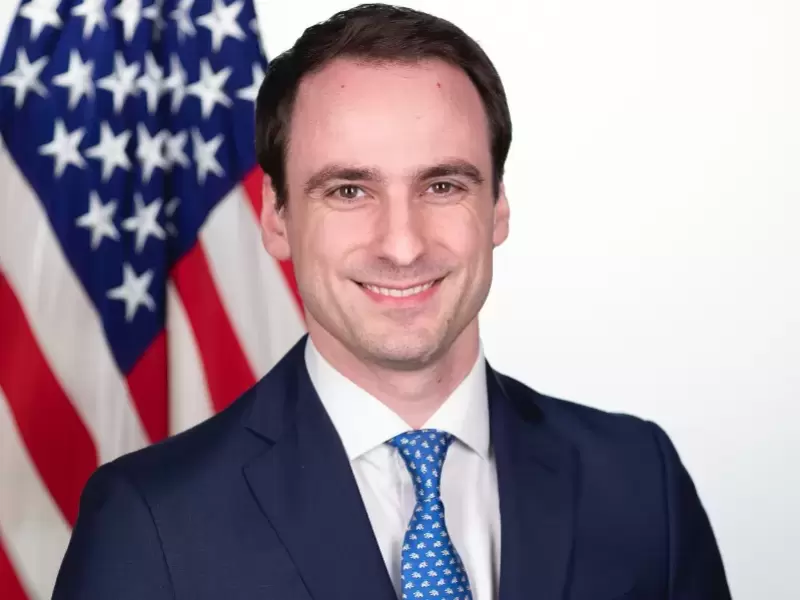 White House adviser Michael Kratsios / FIle Photo
At the 2026 AI Impact Summit in New Delhi, a major global gathering on artificial intelligence, the United States offered a forward-looking and optimistic vision for the future of AI — one grounded in national sovereignty, technological leadership, and inclusive growth rather than centralized global governance.
A Vision of Hope and Human Progress
White House technology adviser Michael Kratsios—leading the U.S. delegation—delivered a strong message that “AI adoption cannot lead to a brighter future if it is subject to bureaucracies and centralized control.” Instead of advocating for a one-size-fits-all global regulatory framework, he urged countries to focus on innovation, local leadership, and shared prosperity through responsible AI use.
“We must replace fear with hope,” Kratsios said, underscoring his belief that AI has the potential to advance human flourishing and drive unprecedented prosperity in sectors ranging from health and education to agriculture and climate solutions.
Also Read: U.S. 'totally' rejects global AI governance: White House adviser
National AI Sovereignty and Local Empowerment
Rather than concentrated international control, the U.S. highlighted national AI sovereignty — the idea that countries should retain control over AI deployment in ways that reflect their unique contexts, cultures, priorities, and economic needs. Kratsios emphasized that every nation deserves the ability to develop AI policies and systems tailored to its people.
This approach places local datasets, infrastructure, and languages at the center of AI development, encouraging countries to build capacity and talent domestically while benefiting from meaningful partnerships with global AI leaders.
Boosting Global AI Adoption and Economic Opportunity
A key theme in the U.S. strategy was accelerating AI adoption across developing and emerging economies. Kratsios pointed out that without rapid deployment and scaling of AI tools, countries risk falling behind at a crucial moment in global economic transformation.
To address this, the U.S. unveiled initiatives like the American AI Exports Program — designed to share advanced technology, skills, and best practices with partner nations to help them harness AI for public good.
Collaborative – Not Constrained – Global Partnerships
Although the U.S. rejected centralized global governance mechanisms, Kratsios clarified that this stance does not mean isolation or unilateralism. On the contrary, the U.S. is eager to work with nations in open, competitive ecosystems that encourage entrepreneurship, technical cooperation, and secure technology transfer.
He affirmed that American AI companies and open-source models can operate in ways that respect local priorities, protect data, and avoid imposing foreign political agendas — a reassuring message for nations seeking both technological advancement and cultural alignment.
A Message of Opportunity at a Pivotal Global Forum
The India AI Impact Summit — attended by world leaders, major tech CEOs, and AI experts — provided a platform for meaningful dialogue on how AI can uplift societies and industries. The U.S. contribution brought clarity and optimism: emphasizing that AI should be owned, shaped, and leveraged by people and governments to create equitable opportunities for all.
Kratsios’s remarks underscored a belief that innovation coupled with thoughtful, localized policy — not fear-driven centralization — will unlock the full potential of AI for global development.
Discover more at New India Abroad.
Leave A Comment
Related







ADVERTISEMENT

ADVERTISEMENT
E Paper
Video

Comments
Start the conversation
Become a member of New India Abroad to start commenting.
Sign Up Now
Already have an account? Login