ADVERTISEMENT
ADVERTISEMENT



U.S. announces rule to bar asylum over security, health risks
On Dec. 2, USCIS paused all pending asylum applications for review, citing national security priorities.
-
1759163132.png) Anushka Pathak
Anushka Pathak - Tue, 30, Dec 2025
- 13:27 EST
- 144
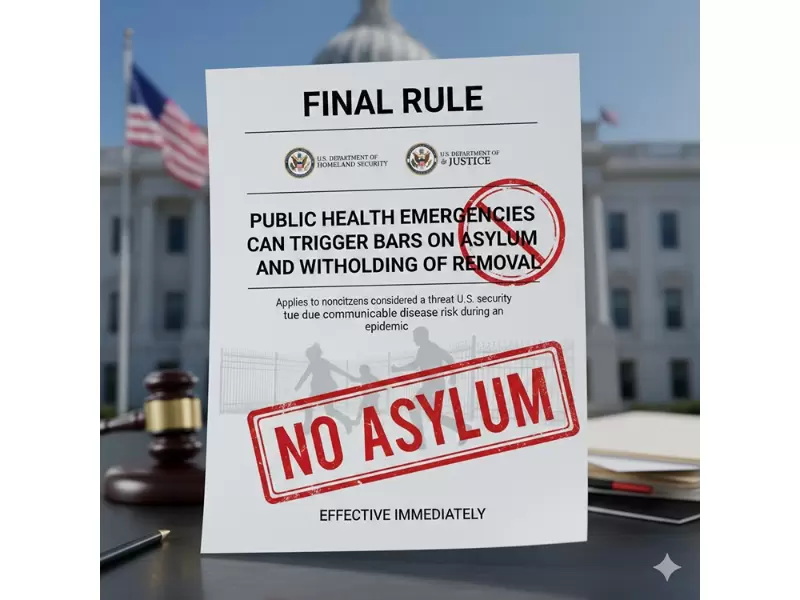 AI-generated / Courtesy: Gemini
The United States Department of Homeland Security (DHS) and the Department of Justice (DOJ) on Dec. 29 confirmed a final rule allowing public health emergencies to trigger bars on asylum and withholding of removal.
The measure applies to certain noncitizens considered a threat to U.S. security and is scheduled to take effect on Dec. 31.
Under the rule, authorities may deny asylum if an individual’s presence is deemed to risk introducing or spreading a communicable disease during an epidemic. The regulation partially revives a 2020 Trump-era rule by removing outdated provisions while retaining language that treats serious public health risks as grounds for denying protection.
Also Read: US targets alleged manipulation in H-1B system under new rule
“This final rule is an additional step in our ongoing efforts to support the priorities of the Trump administration by ensuring that aliens who would pose a danger to the security of the United States are not granted asylum or withholding of removal,” DHS said in its announcement.
First issued in Dec. 2020 as the “Security Bars and Processing” rule, the policy was delayed repeatedly under the previous administration. It broadened the statutory bar for individuals posing a “danger to the security of the United States” to include public health threats linked to outbreaks in countries or regions of origin.
The updated version removes certain procedural changes introduced in 2020 but preserves the authority for DHS and DOJ, in coordination with public health officials, to designate areas experiencing epidemics as security risks. Individuals affected could be rendered ineligible for asylum, though limited forms of protection from removal may still apply.
The move follows other recent enforcement actions. On Dec. 2, U.S. Citizenship and Immigration Services (USCIS) paused all pending asylum applications for review, citing national security priorities.
Similar measures in the past drew criticism for restricting asylum access without individualized assessments and for potentially conflicting with international refugee obligations.
The revived provisions are intended to provide a Title 8 authority framework during future public health emergencies, according to the notice published in the Federal Register.
Leave A Comment
Related











ADVERTISEMENT

ADVERTISEMENT
E Paper
Video

Comments
Start the conversation
Become a member of New India Abroad to start commenting.
Sign Up Now
Already have an account? Login