ADVERTISEMENT
ADVERTISEMENT



From war heroes to victims, Trump spotlights Americans in State of the Union address
Such moments -- where presidents highlight invited guests -- have long been a feature of State of the Union addresses, used to humanise policy priorities and connect legislative goals with personal stories.
-
 IANS
IANS - Wed, 25, Feb 2026
- 04:42 EST
- 84
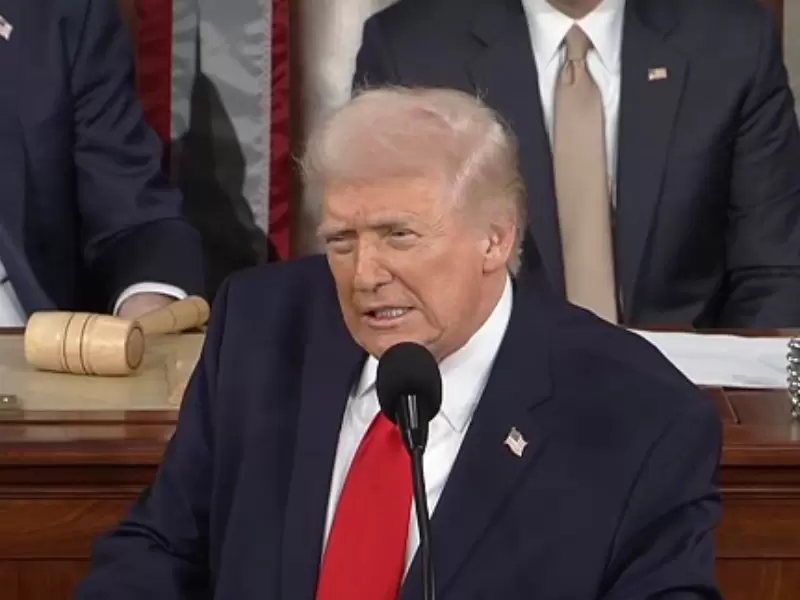 From war heroes to victims, Trump spotlights Americans in State of the Union Address / White House YouTube
President Donald Trump used his State of the Union address not only to outline policy but also to spotlight a series of individuals -- from decorated war veterans to crime victims and ordinary citizens -- presenting them as symbols of what he called the American spirit.
Among those honoured was Navy Fighter Pilot Royce Williams, who served in World War Two, Korea, and Vietnam. Trump recounted how, in 1952, Williams’ squadron was ambushed by seven Soviet fighter planes. Despite being “massively outnumbered and outgunned”, Williams led the take-down of four enemy jets while taking 263 bullets to his own plane.
ALSO READ: Takeaways from Trump's State of the Union address to Congress
“Tonight, at 100 years old, this brave Navy Captain is finally getting the recognition he deserves,” Trump said, asking the First Lady to present Williams with the Congressional Medal of Honour.
In his first State of the Union Address of his second term, Trump also recognised Buddy Taggart, who volunteered at 17 to serve in World War-2. Taggart fought in the Pacific under General Douglas MacArthur and helped liberate an internment camp in the Philippines. “Buddy, we salute you,” Trump said, noting that he would turn 100 on Jul. 4, 2026.
In a separate moment, Trump announced he was awarding the Legion of Merit to Coast Guard rescue swimmer Scott Ruskan, who carried out his “first-EVER rescue mission” during devastating floods in Texas and “lifted not just Millie Cate, but 164 others to safety.”
The President also honoured Sarah Beckstrom, a 20-year-old Army National Guard specialist who was “ambushed and shot in the head by a terrorist monster from Afghanistan” while on patrol near the White House. “Sarah Beckstrom died in order to defend our capital,” he said, addressing her parents in the chamber.
Several civilians were also highlighted. Catherine Rayner was introduced as “the very first customer ever to get the discount” under Trump’s prescription drug policy, after obtaining an IVF medication for $500 instead of $4,000.
Megan Hemhouser, a mother who homeschools her children while waiting tables at night, was cited as a beneficiary of “no tax on tips” and “no tax on overtime”, which Trump said would cut her tax bill in half.
Alejandra Gonzalez was invited to celebrate the release of her uncle Enrique, who had been imprisoned in Venezuela after opposing Nicolas Maduro. Trump said he was “pleased to inform you that not only has your uncle been released, but he is here tonight.”
The address also referenced victims of violent crime, including Lizbeth Medina and Iryna Zarutska, as Trump renewed calls for tougher law enforcement and immigration policies.
Such moments -- where presidents highlight invited guests -- have long been a feature of State of the Union addresses, used to humanise policy priorities and connect legislative goals with personal stories.
These personal narratives underscore how U.S. presidents blend domestic policy messaging with emotional storytelling.
Discover more at New India Abroad.
Leave A Comment
Related




ADVERTISEMENT

ADVERTISEMENT
E Paper
Video

Comments
Start the conversation
Become a member of New India Abroad to start commenting.
Sign Up Now
Already have an account? Login