ADVERTISEMENT
ADVERTISEMENT



UPenn's Shreya Parchure pilots AI for speech recovery
In the study, Parchure’s team trained an AI algorithm using speech samples from patients.
-
 Pranavi Sharma
 - Sat, 21, Feb 2026
- 02:11 EST
- 113
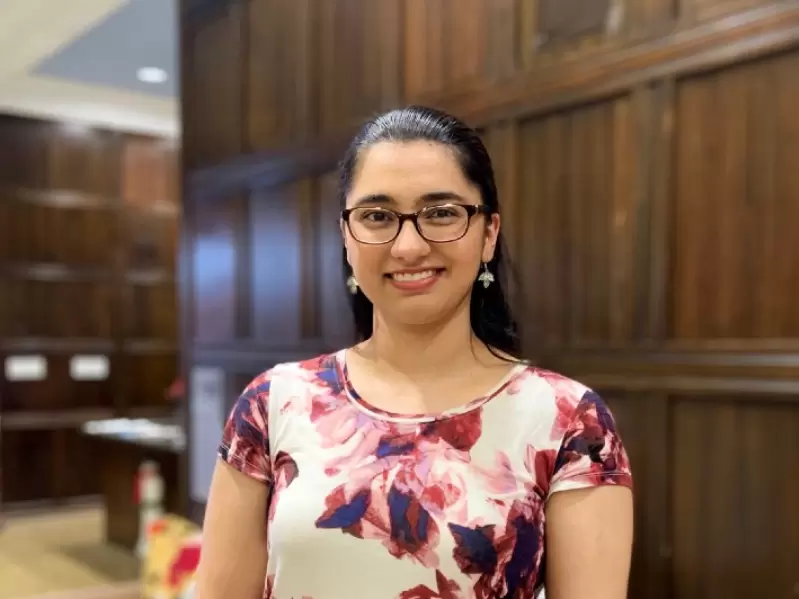 Shreya Parchure / University of Pennsylvania
Shreya Parchure, an M.D.-Ph.D. candidate at the University of Pennsylvania, evaluated an artificial intelligence tool designed to personalize speech therapy for patients with post-stroke aphasia, a condition that affects about one-third of stroke survivors and can cause long-term language deficits.
Parchure conducts research in Penn’s Laboratory for Cognition and Neural Stimulation, where she and her team studied whether “explainable AI” could help physicians tailor treatment. The approach uses machine learning methods that provide reasons behind predictions, allowing clinicians to better understand and trust the recommendations.
During clinical rotations in a neurocritical care unit, Parchure said she saw firsthand how speech therapy can restore communication. “She was overjoyed,” Parchure told UPenn, recalling a patient who gradually regained words through therapy.
Standard speech therapies for aphasia are typically uniform. In the study, Parchure’s team trained an AI algorithm using speech samples from patients and clinical data such as age, education and stroke size. The model also analyzed language fluency and the difficulty and frequency of words to predict recovery time and suggest treatment options.
“When we have an AI making a prediction, we really want to know why,” Parchure told UPenn.
The researchers found the model provided more detailed assessments of language production than standard intake forms and test scores. It also incorporated personal factors, including social support. The tool was able to predict speech performance word by word, offering clinicians insight into specific challenges a patient faces.
“It’ll help tailor speech therapy for where exactly people are having trouble,” Parchure told UPenn. “We can really meet patients where they are in a more personalized manner.”
Parchure and colleagues developed an AI-powered app for clinical and research use and plan to pilot it in Penn’s aphasia clinic. The model can also simulate a “digital twin” of a patient to compare projected and actual recovery, which may help improve clinical trial efficiency.
Parchure said her goal is to translate research advances into patient care and improve treatment for neurological conditions.
Discover more stories on NewIndiaAbroad
Related







ADVERTISEMENT

ADVERTISEMENT
E Paper
Video

Comments
Start the conversation
Become a member of New India Abroad to start commenting.
Sign Up Now
Already have an account? Login