ADVERTISEMENT
ADVERTISEMENT



As India rises, Indian Americans seek a stronger voice in Washington
The conversation unfolding on Capitol Hill suggested that a new chapter may be beginning.
-
1759953093.png) Staff Reporter
Staff Reporter - Wed, 24, Jun 2026
- 06:36 EDT
- 322
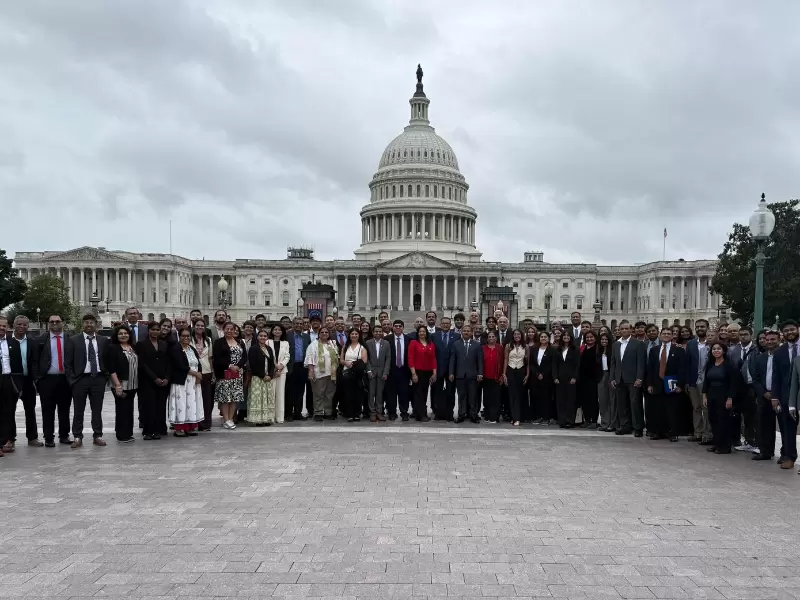 Capitol Hill Day / Handout
On a humid summer evening just steps from the US Capitol, lawmakers hurried between votes while Indian-American activists, students, business leaders and community organisers filled a conference room with a different mission: making sure Washington hears them.
The gathering, organised by the Foundation for India and Indian Diaspora Studies (FIIDS), was ostensibly about policy. Delegates from 25 states spent the day meeting members of Congress to discuss immigration reform, trade, technology, Indo-Pacific security and the future of US-India relations.
But beneath the policy papers and congressional meetings was a deeper question.
What comes next for a community that has already achieved so much?
For decades, the Indian-American story in the United States has been told through numbers. Five million people. Some of the nation's highest household incomes. Leaders of major technology companies. Thousands of physicians, engineers, scientists and entrepreneurs.
Yet speaker after speaker returned to a common theme: economic success does not automatically translate into political influence.
Congressman Raja Krishnamoorthi, one of the most prominent Indian Americans in Washington, captured the mood with a warning.
“There is the rise of anti-Hindu, anti-Indian, anti Desi hate,” he told the audience.
The room, filled with community leaders from across the country, responded with applause.
Krishnamoorthi spoke not only about discrimination but also about power — who has it and who does not.
“It's time to run for office,” he said.
The message resonated because it reflected a growing reality. Indian Americans have become increasingly visible in politics, yet many community leaders believe representation has not kept pace with the community's economic influence.
That concern surfaced repeatedly throughout the day.
Kapil Sharma, a longtime observer of India-US relations and a senior leader at the Global India Collective, reflected on three decades of advocacy in Washington. He recalled the excitement of the early 1990s, when Indian Americans first began organising politically around issues ranging from sanctions on India to the US-India civil nuclear agreement.
Back then, he said, the community rallied around common causes.
Today, he worries that some of that energy has faded.
“We should be proud of how far we've come,” Sharma said.
But he challenged the audience to ask whether success alone is enough.
The question hung in the air long after he left the stage.
The event's political significance was impossible to miss.
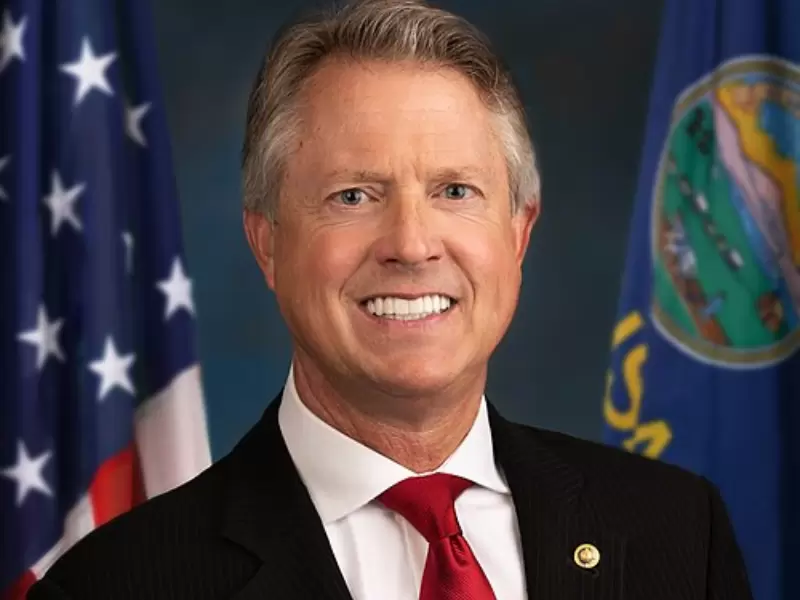
A steady procession of lawmakers from both parties appeared throughout the evening. Republican Senator Roger Marshall of Kansas praised Indian Americans as proof that legal immigration works. Democratic Congressman Sanford Bishop highlighted India's importance in countering China and strengthening supply chains. Congressman Brad Sherman reflected on three decades of advocacy for closer US-India ties.
There were moments of humour. Sherman joked that his greatest advocating achievement with Prime Minister Narendra Modi was convincing India to open a consulate in Los Angeles.
There were also moments of personal reflection.
Congressman Suhas Subramanyam spoke about his parents arriving from India in 1978 and receiving permanent residency almost immediately.
“My parents came here in 1978 from India,” he said. “They got their green card at the airport.”
Today, many Indian immigrants face waits measured in years, sometimes decades.
“We're missing out on so much talent from India,” he said.
Perhaps the evening's most compelling story came from Congressman Shri Thanedar of Michigan.
Thanedar recounted arriving at the US consulate in Mumbai as a young student seeking a visa to pursue doctoral studies in America. His application was rejected. Then rejected again. And again. And again.
Four times.
Only on the fifth attempt did he finally receive approval.
Today, the same man serves in the United States Congress.
His story drew laughter, applause and something more powerful — recognition.
Many in the audience saw their own journeys reflected in his.
Yet the event was never solely about the Indian-American experience.
Running through nearly every speech was another theme: China.
Marshall described India as a natural democratic partner for the United States. Congressman Rob Wittman called the US-India relationship the most important strategic relationship of the century. Multiple speakers highlighted supply-chain vulnerabilities, critical minerals, advanced technologies and the Indo-Pacific.
India's rise was discussed not simply as an economic story but as a geopolitical one.
“India is young, growing, democratic and partnered with us,” Marshall said.
For Washington policymakers increasingly focused on strategic competition with Beijing, India's importance has become difficult to ignore.
That point was reinforced by both governments.
Deputy Assistant Secretary of State Bethany Morrison described the relationship as increasingly focused on concrete outcomes rather than symbolism. India's Deputy Chief of Mission, Namgya Khampa, called it one of the defining partnerships of the century.
Neither official ignored differences between the two countries.
Also Read: FIIDS to host fourth annual Capitol Hill Day
Instead, both argued that the relationship has matured enough to withstand them.
Outside the conference room, the Capitol dome glowed against the night sky.
Inside the Capitol Visitor Center theater, young delegates lined up for photographs with diplomats and lawmakers.
The atmosphere felt less like a advocating event and more like a community taking stock of itself.
For much of the past half-century, the Indian-American story has been about arrival — arriving at universities, hospitals, laboratories, boardrooms and, increasingly, public office.
The conversation unfolding on Capitol Hill suggested that a new chapter may be beginning.
The challenge now is not whether Indian Americans can succeed.
It is whether they can transform that success into lasting political influence.
And whether a community that has become indispensable to the American economy can become equally indispensable to the American political conversation.
READ MORE:
Indian Americans must unite to protect influence: Kapil Sharma
Capitol Hill backs stronger India-US partnership
US India relationship is the future: State Dept
India-US ties stronger despite differences: envoy
Indian Americans urged to enter politics amid rise in hate
US losing Indian talent over immigration delays: Suhas
Rejected 4 times, now US Congressman: Thanedar
Hindus, Jews unite against rising hate in US
India key to America's future, says Senator Marshall
Indian Americans must defend their voice in US: Kand
Related




ADVERTISEMENT

ADVERTISEMENT
E Paper
Video

Comments
Start the conversation
Become a member of New India Abroad to start commenting.
Sign Up Now
Already have an account? Login