ADVERTISEMENT
ADVERTISEMENT



Indian Americans urged to enter politics amid rise in hate
Krishnamoorthi described Indian Americans as one of the most successful communities in the United States, pointing to achievements in medicine, business, education and entrepreneurship.
-
1759953093.png) Staff Reporter
Staff Reporter - Wed, 24, Jun 2026
- 00:40 EDT
- 89
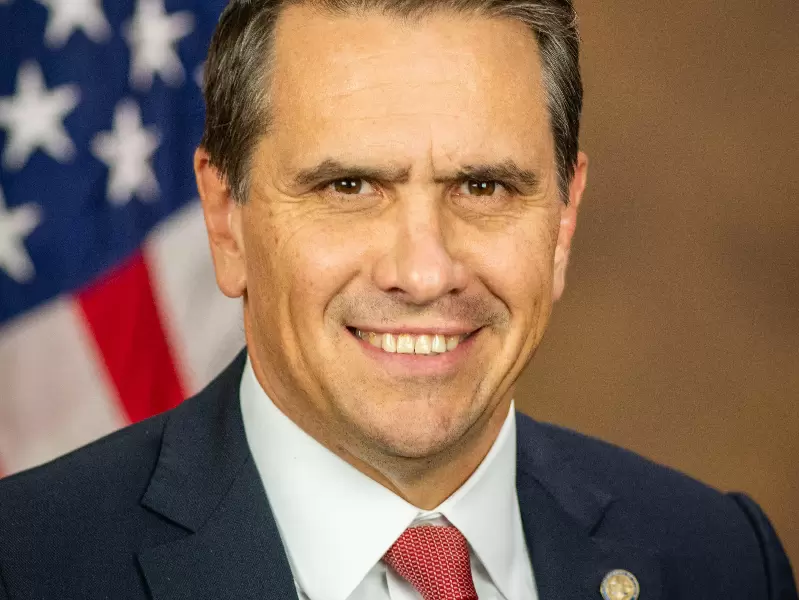
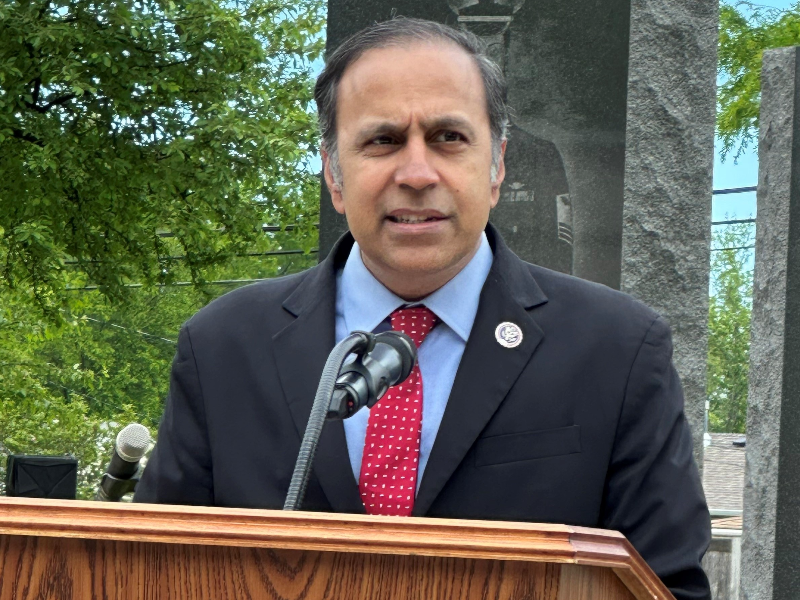 Congressman Raja Krishnamoorthi / IANS
Congressman Raja Krishnamoorthi on June 23 urged Indian Americans to become more politically active and seek elected office, warning that rising anti-Hindu and anti-Indian sentiment makes community engagement more important than ever.
Speaking at a Capitol Hill gathering of Indian-American leaders and advocates, the Illinois Democrat praised the community's extraordinary achievements but cautioned against complacency at a time when prejudice and discrimination are becoming more visible in parts of the country.
“There is the rise of anti-Hindu, anti-Indian, anti Desi hate,” Krishnamoorthi said.
The congressman, one of the most prominent Indian Americans in national politics, pointed to recent attacks directed at him as an example of the challenges facing the community.
“The other day, a Florida elected official called for me to be deported,” he said. “I'm not going anywhere, are you?”
His remarks drew applause from attendees at the Foundation for India and Indian Diaspora Studies (FIIDS) Capitol Hill event, which brought together more than 150 delegates from 25 states.
Krishnamoorthi described Indian Americans as one of the most successful communities in the United States, pointing to achievements in medicine, business, education and entrepreneurship.
ALSO READ: India-US ties stronger despite differences: envoy
“You are the fastest growing ethnic minority in the country,” he said.
“You're the best educated, you're the most prosperous.”
He noted that Indian Americans are heavily represented among physicians, business owners and spelling bee champions, arguing that the community's success story is one of the most remarkable in modern America.
“You have arrived,” he said.
Yet he said success alone does not guarantee influence or protection from discrimination.
“That hate, that bigotry, that prejudice, that discrimination that are directed at you and your families and me and all of us has no place in America,” Krishnamoorthi said.
The congressman said the best response is greater participation in public life.
“It's time to get more involved, more involved than you've ever been involved,” he said.
He encouraged Indian Americans to speak out on issues affecting their communities and to become more visible in civic and political institutions.
“You have to raise your voice, you have to speak up, you have to show up, you have to make sure that your voices are heard everywhere,” he said.
Krishnamoorthi devoted much of his speech to encouraging members of the community to seek elected office.
“It's time to run for office,” he said.
He stressed that political participation should extend beyond party affiliation.
“I don't care if you're a Republican, Democrat, independent, I don't care who you are,” he said.
The congressman urged Indian Americans to consider running for city councils, school boards, state legislatures and Congress.
“There's an old saying in Washington DC — if you don't have a seat at the table, you're on the menu,” Krishnamoorthi said.
“And none of you can afford to be on the menu, nor can our families, nor can our interests.”
His remarks come at a time when Indian Americans have achieved unprecedented visibility in American politics. Members of the community currently serve in Congress, state legislatures, gubernatorial administrations and senior federal positions.
The congressman argued that the next step is expanding that representation even further.
“I want you to consider running for city council,” he said. “I want you to consider running for state house or state senate or for the US Congress.”
Krishnamoorthi framed the challenge as part of a broader effort to ensure that Indian Americans remain influential participants in American democracy.
“I am honored and blessed to be with you here to celebrate how you have arrived, to celebrate how we are going to overcome the next chapter of adversity, and to celebrate how together we are going to make America and the world a better place,” he said.
Indian Americans today number more than five million and are among the most educated and economically successful communities in the United States. They have become increasingly visible in public life, with growing representation in Congress, state legislatures, corporate leadership and academia.
As the community's profile continues to rise, many leaders believe its future influence will depend not only on professional success but also on political participation, public advocacy and a stronger presence in elected office.
Discover more at New India Abroad
Leave A Comment
Related





ADVERTISEMENT

ADVERTISEMENT
E Paper
Video

Comments
Start the conversation
Become a member of New India Abroad to start commenting.
Sign Up Now
Already have an account? Login