ADVERTISEMENT
ADVERTISEMENT



Indian Americans must unite to protect influence: Kapil Sharma
Sharma challenged the audience to think beyond symbolic representation and focus instead on building long-term political influence.
-
1759953093.png) Staff Reporter
Staff Reporter - Wed, 24, Jun 2026
- 06:53 EDT
- 368
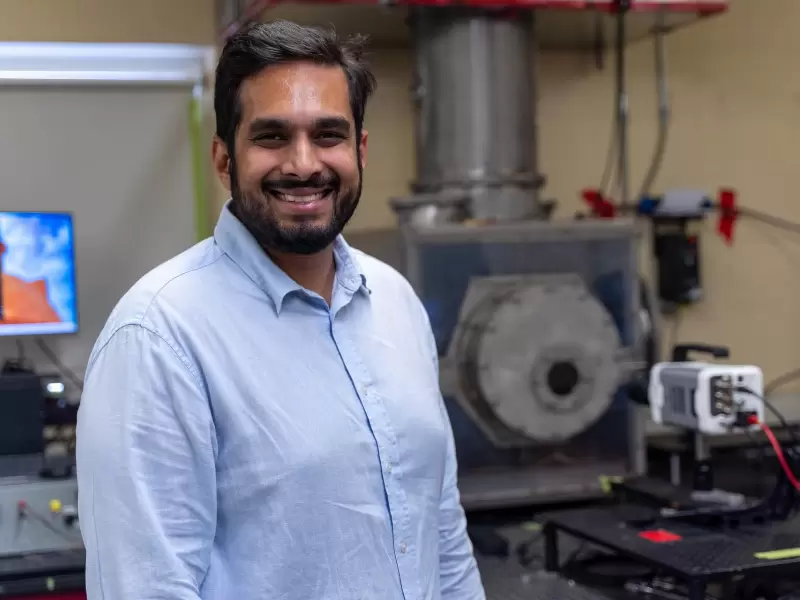
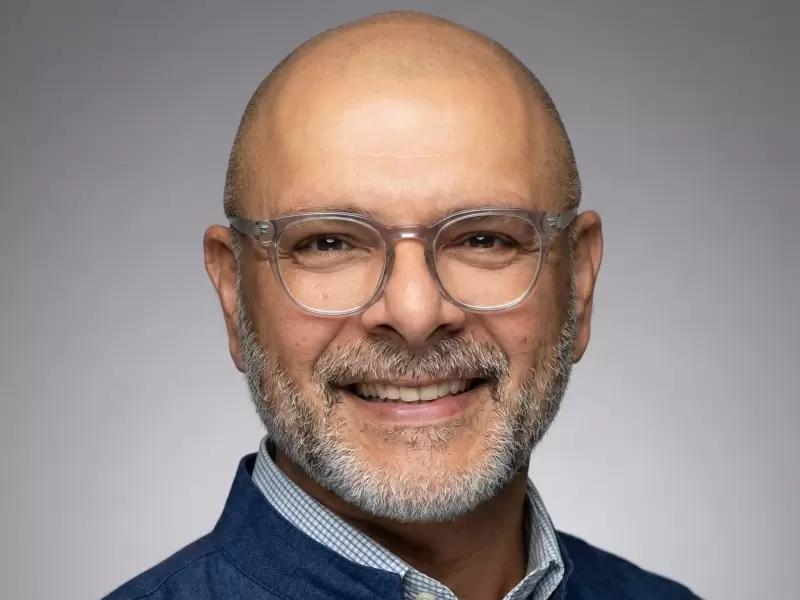 Kapil Sharma / Kapil Sharma via LinkedIn
Celebrating the rise of Indian Americans is not enough, policy strategist Kapil Sharma said Tuesday, warning that divisions within the community could undermine its growing influence in Washington unless it mobilises behind a common agenda.
Speaking at a Capitol Hill event organised by the Foundation for India and Indian Diaspora Studies (FIIDS), Sharma said Indian Americans have achieved remarkable success in business, education and public life, but have yet to fully convert that success into sustained political power.
Sharma, a Senior Lead at the Global India Collective and a long-time observer of India-US relations, reflected on more than three decades of engagement with Congress and the Indian-American community.
“I've been working on the US India relationship for more than 30 years,” he said.
He recalled the early years of the Congressional India Caucus in the 1990s, when the Indian-American community rallied around common causes and worked collectively to influence policy.
The community mobilised, he said, following India's 1998 nuclear tests, during the fight to remove US sanctions, and later in support of the landmark civil nuclear agreement.
“The community got excited and the community rallied, and we worked together,” Sharma said.
Also Read: FIIDS to host fourth annual Capitol Hill Day
He argued that those efforts demonstrated the political potential of a relatively small but increasingly influential diaspora.
But somewhere along the way, he said, that collective energy began to fade.
“That momentum was lost,” Sharma said.
He pointed to growing political fragmentation within the community and said the sense of shared purpose that once united Indian Americans has weakened.
“That north star that we had in the early nineties is gone,” he said.
According to Sharma, the challenge facing Indian Americans today is not a lack of talent, resources or representation, but the inability to act collectively.
“How do we translate that human power or that voice to what you're trying to do here today?” he asked.
“If we can't unify, we can't come together and we can't amplify the strength of that voice.”
The remarks came as Indian Americans enjoy unprecedented visibility in American public life, with members serving in Congress, state legislatures, governors' offices and senior positions across government and industry.
Sharma acknowledged that progress but warned against complacency.
“We should be proud of how far we've come,” he said.
At the same time, he questioned whether the community was doing enough to expand and protect its political influence.
“We have six congressmen. We're gonna have possibly only four by the end of this year. Is that something we should be applauding and be proud of? I would say, no.”
Sharma argued that Indian Americans need to focus less on symbolic achievements and more on building durable political institutions.
“It's more than just putting a piece of paper together and talking about resolutions,” he said.
“It's about amplifying your voice. It's about putting some oomph behind that voice.”
He also urged community members to defend elected officials when they face what he described as unfair attacks.
“So if somebody comes after Raja and or Suhas or Shri or any of our members of Congress or any of our state legislators and they make baseless claims, or they try to oust them from the seat, then there should be consequences to that,” Sharma said.
The veteran policy advocate challenged attendees to hold elected officials accountable for delivering concrete results rather than simply expressing support for India.
“What has the India Caucus done in the last 15 years?” he asked.
“You want good, strong bilateral relations? You want strong, good foreign policy. You gotta hold the members of Congress accountable.”
He argued that meaningful influence in Washington requires sustained engagement, organisation and political participation.
“We did it in the early nineties. We did it in the two thousands when we had legislation. We can absolutely do it again,” Sharma said.
Looking ahead, Sharma pointed to the growing number of Indian Americans serving in state legislatures as a sign of the community's political potential.
“In July we have 55 Indian American state legislators coming to Chicago for a conference,” he said.
“Let's make sure those 55 stay and we expand it, we double it.”
According to Sharma, expanding political representation and strengthening community unity will be critical if Indian Americans hope to shape debates on immigration, education, trade and the future of India-US relations.
“That's how we're going to show that our voices matter,” he said.
His remarks offered one of the most candid assessments of the Indian-American community delivered during the Capitol Hill gathering. While many speakers focused on the growing strength of India-US relations, Sharma focused on the diaspora itself and the work he believes remains unfinished.
Indian Americans today number more than five million and are among the most educated and economically successful communities in the United States. Their influence in business, technology, medicine and public life continues to grow.
But Sharma's message was that success alone is not enough. Without greater unity, organisation and political engagement, he warned, the community risks falling short of its full potential at a time when both India and Indian Americans occupy an increasingly prominent place in American politics.
Discover more at New India Abroad
Leave A Comment
Related




ADVERTISEMENT

ADVERTISEMENT
E Paper
Video

Comments
Start the conversation
Become a member of New India Abroad to start commenting.
Sign Up Now
Already have an account? Login