ADVERTISEMENT
ADVERTISEMENT



'Nothing changes': Trump says India U.S. trade deal to remain intact
Trump was also asked whether he planned to travel to India for the upcoming Quad Summit and how he viewed the relationship between India and the U.S.
-
 IANS
IANS - Fri, 20, Feb 2026
- 17:02 EST
- 143
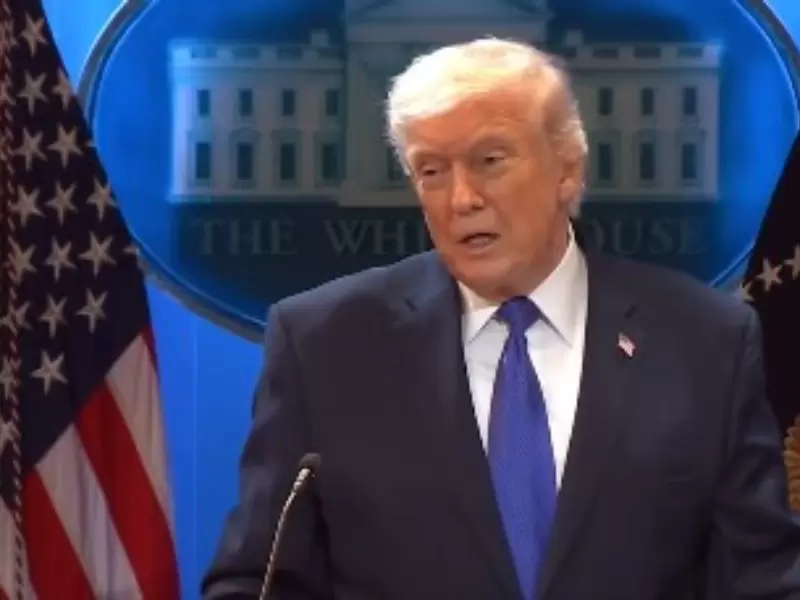 President Donald Trump at a briefing / Courtesy: IANS
U.S. President Donald Trump has said that a trade framework with India would remain intact despite a Supreme Court ruling that struck down his use of a particular tariff authority, insisting, "Nothing changes" for the India trade deal and describing Prime Minister Narendra Modi as "a great gentleman, a great man actually."
Asked at a news conference on Feb. 20 afternoon about "the framework which is to be signed with India sometime soon," Trump replied, "Nothing changes, nothing changes; they'll be paying tariffs, and we will not be paying tariffs."
The U.S. President added, "Our deal with India is that they pay tariffs. This is a reversal from what it used to be. As you know, India, and I think Prime Minister Modi is a great gentleman, a great man actually, but he was much smarter than the people that he was against in terms of the United States."
He said the arrangement had been altered, portraying it as a shift in leverage.
ALSO READ: Trump orders temporary 10% global tariff to replace duties struck down by US Supreme Court
"We made a deal with India, and it's a fair deal now, and we are not paying tariffs to them, and they are paying tariffs. We did a little flip," Trump said.
Trump was also asked whether he planned to travel to India for the upcoming Quad Summit and how he viewed the relationship between India and the U.S.
"I think my relationship with India is fantastic, and we're doing trade with India," he said.
Withstanding Trump's repeated assertions of tariffs and India-Pakistan war, India has already made it clear that there is no link between the two.
New Delhi has reiterated that the India-Pakistan war came to an end at the request of Pakistan, as the latter lost a major part of its assets, adding that the trade deal with the US is the result of a year-long negotiation.
While the news conference by the U.S. president focused largely on the Supreme Court ruling on tariffs, Trump returned repeatedly to the view that trade tools give him leverage abroad.
"This was an important case to me more as a symbol of economic and national security," the U.S. President said earlier.
He also suggested the post-ruling landscape would not weaken his negotiating posture.
"All the deals are just—we're just going to do it a different way," Trump said, after insisting the U.S. administration had "great alternatives."
The Supreme Court is the highest court in the U.S., and its decisions set binding interpretations of federal law and presidential authority.
In trade disputes, the U.S. Supreme Court's rulings can shape how far a president may go without new action from the Congress.
Discover more at New India Abroad.
Leave A Comment
Related




ADVERTISEMENT

ADVERTISEMENT
E Paper
Video

Comments
Start the conversation
Become a member of New India Abroad to start commenting.
Sign Up Now
Already have an account? Login