ADVERTISEMENT
ADVERTISEMENT



Iran says agreement reached with Oman on map of new route in Hormuz Strait
Iran and Oman have agreed on a map for a new Strait of Hormuz maritime route, with finalisation talks continuing.
-
 IANS
IANS - Mon, 17, Aug 2026
- 11:25 EDT
- 26
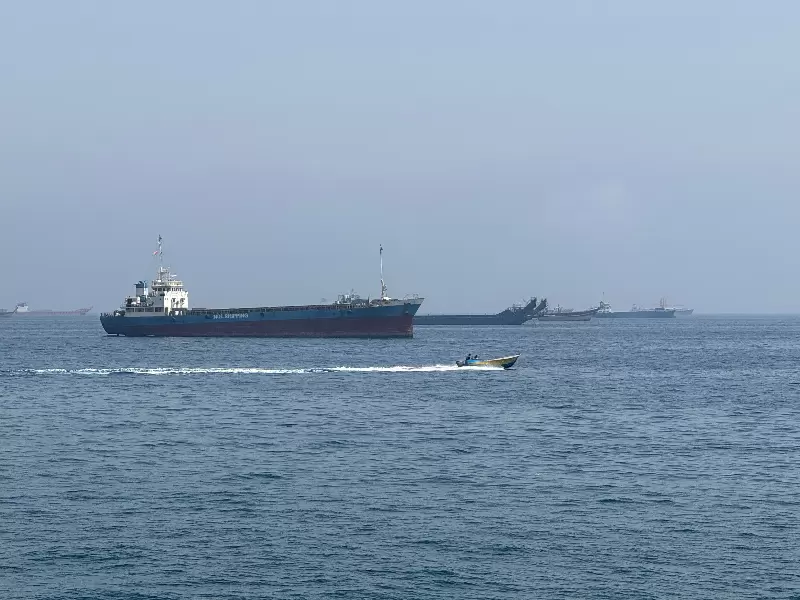 This photo taken with a mobile phone shows merchant vessels stranded in the waters of the Strait of Hormuz, near Khasab, a small town in northern Oman, May 29, 2026. / Photo: Xinhua via IANS
Iranian foreign ministry spokesman Esmaeil Baghaei said on Aug. 17 that Iran and Oman have agreed on the map of the new route for maritime traffic in the Strait of Hormuz.
He made the remarks at a weekly press conference in Tehran while elaborating on the latest progress of negotiations between Iran and Oman on the designation of a safe route for passage through the strait.
Baghaei said the two countries are supposed to finalise the agreement in the form of a package comprising the map and a joint statement, Xinhua News Agency reported.
He attributed the protraction of the process to the issue's complexity, "the number of the players" seeking to influence the process, and "attempts by certain malicious parties."
Also read: No ship can safely pass Hormuz without our permission: Iranian army
Baghaei said Tehran and Muscat are continuing the talks with seriousness, and exchanging their views on the joint statement's text, adding that both sides want to develop a mechanism capable of safeguarding their interests, addressing their concerns and taking into account considerations regarding international shipping.
Commenting on the Iran-US memorandum of understanding signed on June 18, Baghaei said that under the deal, the two countries were scheduled to hold negotiations on Tehran's nuclear issue and the removal of sanctions within a 60-day period, which ends on Aug. 17 ; however, the negotiations never started, which he blamed on the US "flagrant and extensive violations" of the deal.
A senior Iranian diplomat said Aug. 15 that the Strait of Hormuz will be closed and opened only under Iran's command.
Kazem Gharibabadi, Iranian deputy foreign minister for legal and international affairs, made the remarks on X in response to a claim by US President Donald Trump, who said that he would soon declare the strait a US territory.
"The Strait of Hormuz can be captured neither with a tweet and aircraft carriers nor by issuing orders and a stump speech. Iran is neither afraid of threats nor intimidated by displays of power," he said.
"This strait will only be closed and opened under Iran's command," he added.
Discover more at New India Abroad.
Leave A Comment
Related







ADVERTISEMENT

ADVERTISEMENT
E Paper
Video

Comments
Start the conversation
Become a member of New India Abroad to start commenting.
Sign Up Now
Already have an account? Login