ADVERTISEMENT
ADVERTISEMENT



Indian Americans must defend their voice in US: Kand
FIIDS President Khanderao Kand pointed to the community's influence across business, technology and healthcare.
-
1759953093.png) Staff Reporter
Staff Reporter - Wed, 24, Jun 2026
- 04:44 EDT
- 38
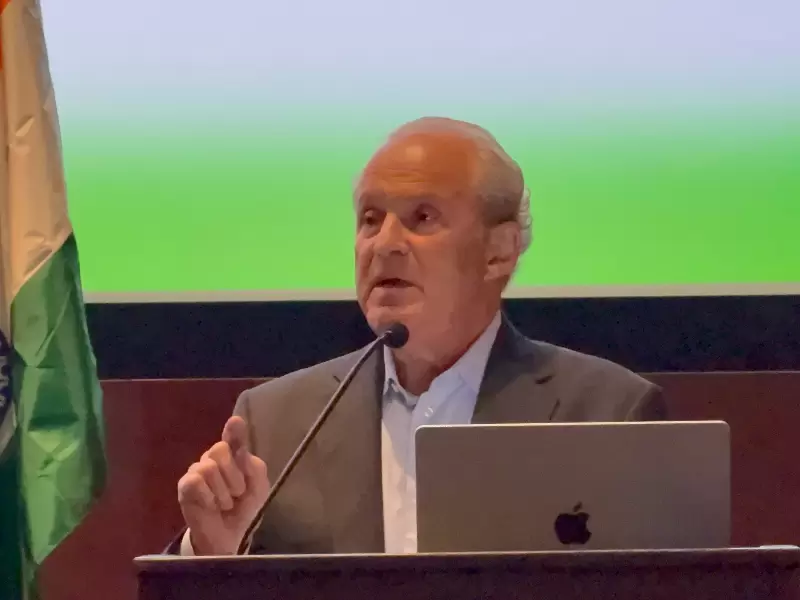
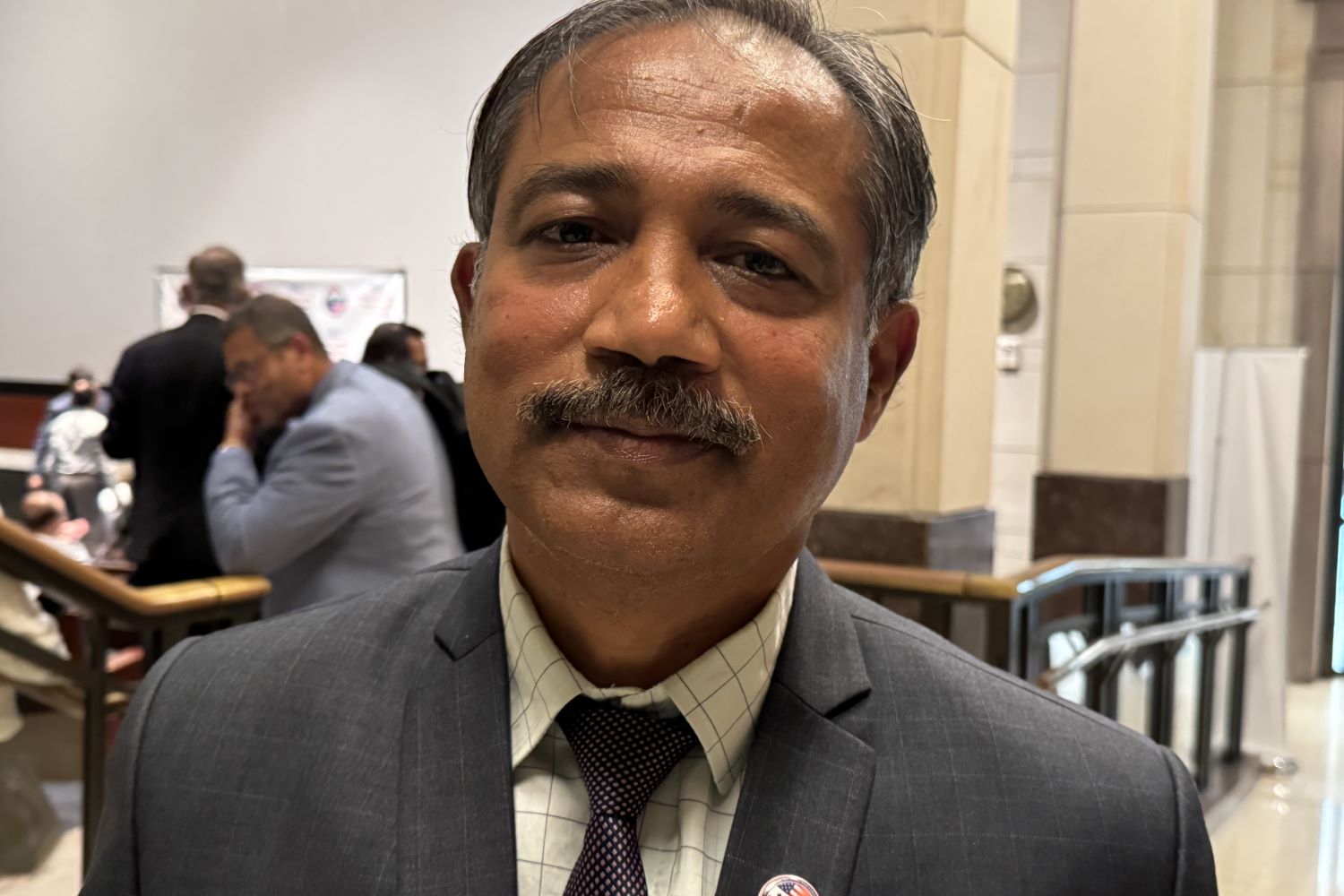 Khanderao Kand, president of the Foundation for India and Indian Diaspora Studies (FIIDS) / New India Abroad
Indian Americans have become one of the most successful and influential communities in the United States, but growing political challenges and rising anti-Indian sentiment require a more organised and assertive response, community leader Khanderao Kand said June 22.
Speaking at the Foundation for India and Indian Diaspora Studies (FIIDS) Capitol Hill advocacy event, Kand said the Indian-American community has reached a pivotal moment in its evolution, with increasing economic and political influence accompanied by new pressures and challenges.
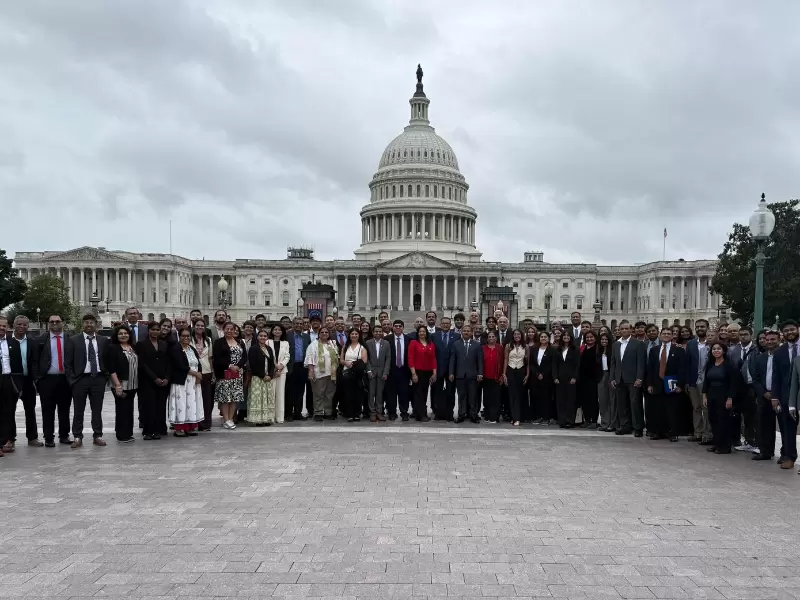
Addressing more than 150 delegates from 25 states, Kand outlined the issues community representatives raised during meetings with lawmakers and congressional staff throughout the day, including immigration reform, H-1B visa concerns, supply-chain security, Indo-Pacific cooperation and what he described as growing anti-Indian bias in parts of American society.
“Indian Americans are there, they contribute to 5% of the taxes,” Kand said, highlighting the outsized economic contribution of a community that represents only a small percentage of the US population.
ALSO READ: India key to America's future, says Senator Marshall
He pointed to the community's influence across business, technology and healthcare.
“Sixty percent of hotel motels are owned by Indians,” he said, adding that roughly 10 percent of physicians in the United States are of Indian origin.
Noting the role of Indian professionals in Silicon Valley and the technology sector, Kamd argued that Indian Americans have become indispensable contributors to American innovation and economic growth.
Yet despite those achievements, he said the community is beginning to encounter new forms of resistance.
“We saw some rising anti-Indian,” Kand said, referring to what he noted had been described by some observers as “H-1B racism.”
While he stressed that the issue had not reached a level affecting everyday life for most Indian Americans, he warned that early signs should not be ignored.
“It is not to a degree that it's really a problem in a day to day, but signs are not positive,” Kand said. “So we needed to create the awareness about that.”
Immigration emerged as one of the dominant themes of Kand's remarks.
He said delegates repeatedly raised concerns about delays affecting H-1B visa holders and professionals seeking visa renewals.
According to Kand, some companies have advised employees on H-1B visas to avoid international travel because of uncertainty surrounding visa appointments and processing delays.
“We discussed about the H-1B related, some of the frictions,” he said.
Kand said the issue has become particularly significant for Indian professionals working in sectors such as technology, engineering and healthcare.
Beyond immigration, he highlighted concerns related to the Indo-Pacific region, supply-chain resilience and China's growing influence in critical sectors.
He said FIIDS delegates discussed vulnerabilities in global supply chains, including dependence on China for critical minerals and technologies.
“Eighty percent of the critical minerals are controlled by China,” Kand said.
That dependence, he argued, has implications not only for economic competitiveness but also for national security and technological leadership.
Kand said discussions with lawmakers revealed broad bipartisan agreement that India would play a central role in efforts to diversify supply chains and reduce dependence on China.
“This is one of the most consequential relationships in this century,” he said, referring to the India-US partnership.
He reported that lawmakers from both parties recognised India's growing economic and strategic importance.
“India is rising,” Kand said. “From economy point of view, the rising to the third largest economy.”
According to Kand, there is increasing recognition in Washington that India and the United States share common democratic values and long-term strategic interests.
“There is a good bipartisan agreement,” he said.
At the same time, he emphasised that strong bilateral ties require active participation from the diaspora.
The Capitol Hill advocacy effort, he said, was designed to ensure that Indian-American concerns are heard directly by elected officials.
Throughout the day, delegates met members of Congress and Senate offices to discuss issues ranging from trade and technology to immigration and discrimination.
“We had a good discussion,” Kand said repeatedly while describing the meetings.
He characterised the overall response from lawmakers as positive and encouraging.
Kand's remarks reflected a broader theme that ran throughout the FIIDS gathering: that the Indian-American community's growing success brings with it greater responsibility to engage politically and advocate for issues affecting both the diaspora and the broader India-US relationship.
With more than five million Indian Americans now living in the United States and playing prominent roles in business, technology, medicine and public service, community leaders increasingly view political engagement as essential to protecting those gains and shaping future policy debates.
For Kand, the challenge ahead is ensuring that the community's growing economic influence is matched by an equally strong and organised public voice.
Discover more at New India Abroad
Related
ADVERTISEMENT

ADVERTISEMENT
E Paper
Video

Comments
Start the conversation
Become a member of New India Abroad to start commenting.
Sign Up Now
Already have an account? Login