ADVERTISEMENT
ADVERTISEMENT


India at Eighty: What Will We Pass On?
As India celebrates its 80th Independence Day, those of us who built our lives abroad have many reasons to celebrate and also to reflect.
-
 Prasad Kaipa
 - Sat, 15, Aug 2026
- 06:17 EDT
- 28
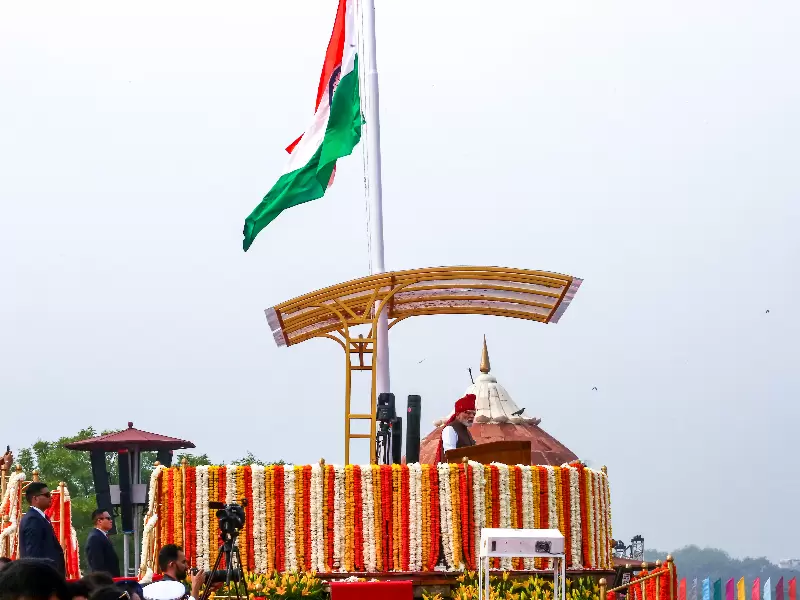
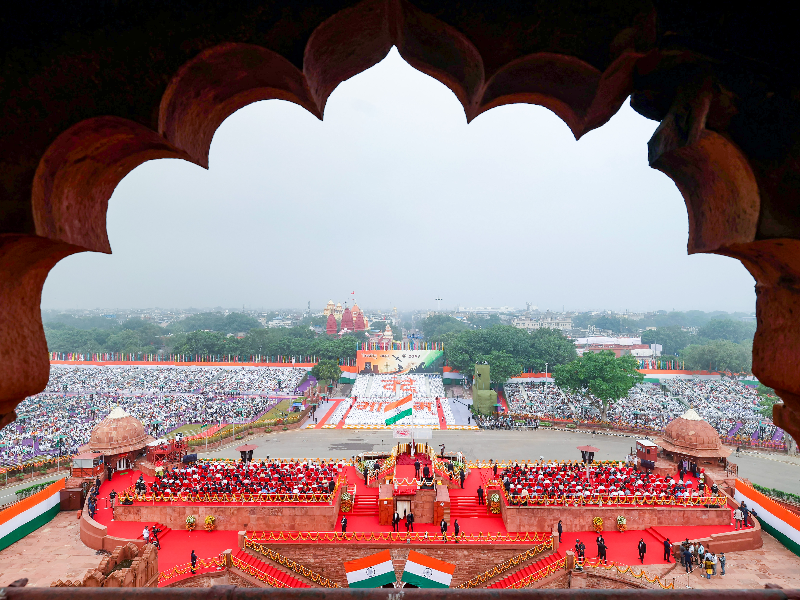
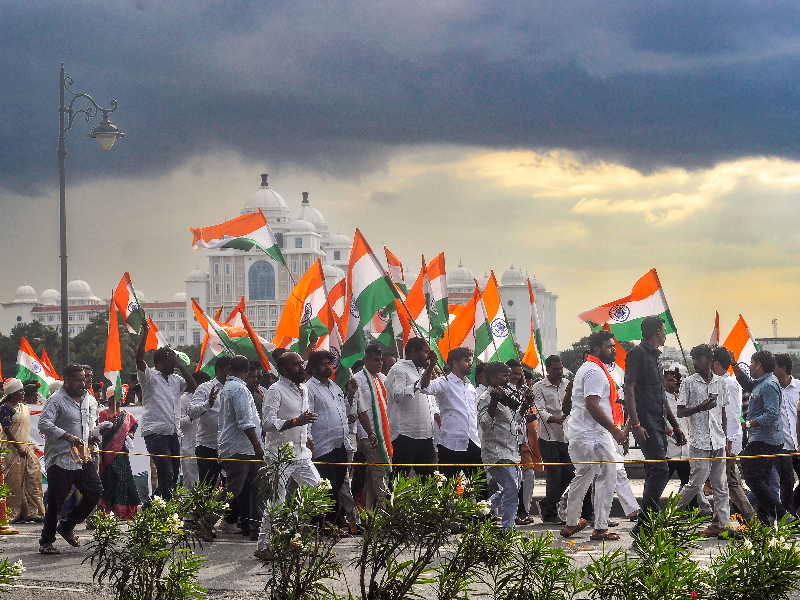 India observes 80th Independence Day / IANS
For Indians living abroad, the 80th Independence Day raises three questions when we think about communicating our pride and joy to our children: What do we owe India? What makes us proud? And what could make our children proud?
As India celebrates its 80th Independence Day, those of us who built our lives abroad have many reasons to celebrate and also to reflect.
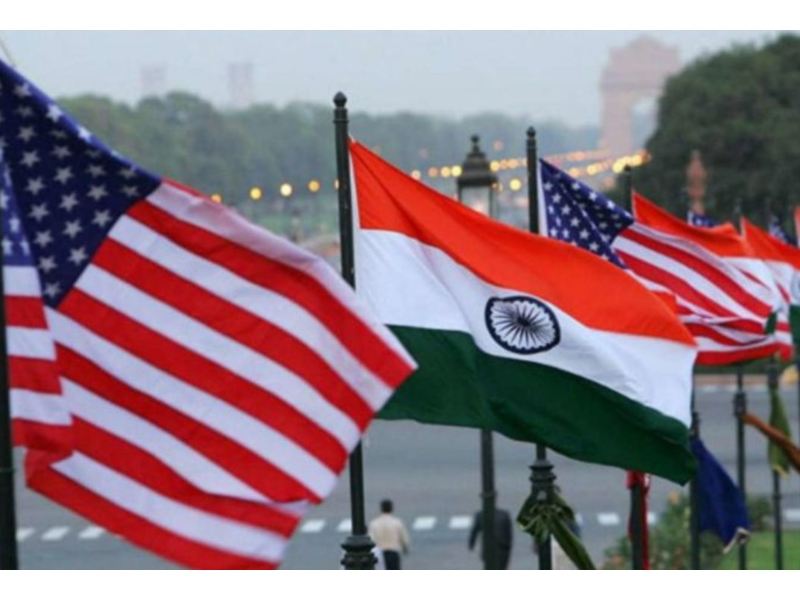
A recent Pew Research Center survey showed that, in the United States, opinions about India were mixed. Younger adults were less positive about India than older adults.
The report made me ask three personal questions: What do I owe India? What makes me proud of India? What can we communicate to our children that might make them interested enough to look into their Indian inheritance and find their own reasons to be proud?
What do I owe India?
I owe India much of what formed me: my education at IIT Madras, my quality of thinking and my confidence to confront difficult problems. I owe it Sanskrit, yoga, Vedanta, culture, food, family and exposure to many ways of understanding human life. In more ways than one, I owe India who I am.
I have lived in the United States for 45 years. Still, much of my identity, my pride and the values I live by were set in India. I am grateful.
My debt cannot be repaid through praise. Those of us living abroad need to represent India fairly, support its development, share what we have learned and help wherever we can. We do not need to defend everything India does. We can contribute to what India can become.
What makes me proud?
India did not teach me diversity through a textbook. It taught me by repeatedly making me a stranger.
When I went from one region to another, I could feel completely lost. The language was different. Food was different. Habits were different. People looked somewhat different, and their interests and ways of relating were different. I had to watch, listen, pay attention and learn.
I developed more than tolerance. I discovered that people from another culture knew things I did not know. They had music, food, customs, beliefs and ways of living that could teach me something. By moving around India and later studying at IIT Madras, I learned how to enter a setting where I was not fully comfortable and find my way.
People also looked at me not only through my talent or appearance but through my family, heritage and social background. Sometimes that gave me belonging. At other times, it led to assumptions and unfair judgments. I learned from that tension, too. It made me question structures even while I appreciated the relationships and belonging they provided. That helped develop my critical thinking.
In the 1980s, I was looking for brain models and frameworks for artificial intelligence. I went to experts such as Reuven Feuerstein in Israel, who developed mediated learning, and Lozanov, who was working with accelerated language learning in Bulgaria. I thought I was going to them to learn something new.
Instead, they pointed me back to India. They chided me for not learning enough from my own traditions while they continued to learn from them. They warned me that many Indians were looking West while people in the West were studying and mining India's intellectual treasures. That stayed with me. Sometimes we need outsiders to show us the value of what is already ours.
Competition was everywhere when I grew up, and in some ways it has become worse. Opportunities were scarce, expectations were high and capable people were numerous. It imposed real costs, but it also taught me to prepare, persist, recover from disappointment and believe that difficult things could be accomplished.
Today, India reminds me of Silicon Valley when I came there in the 1980s. It has energy, ambition, experimentation, competition and a belief that new things are possible. I see a very bright future for India.
What could make our children proud?
Second-generation Indian Americans did not experience the India that formed us. We cannot give them our memories, and we should not demand our nostalgia from them.
We took our children to India and tried to show them what we had experienced. But they saw something different. They saw gaps between what we said and what we did. They noticed things that we no longer noticed. Many parents are blind to the impressions our children carried back from those trips. We remember the India we wanted to show them. They remember the India they actually experienced.
Telling them that India had a glorious past will not be enough. Exaggerating India's greatness may make them less interested. We have to help them investigate it for themselves.
Vedanta can help them examine whether identity is larger than achievement, anxiety or an online profile. Yoga can help them pay attention in a distracted world. The Mahabharata can help them explore choices for which there are no perfect answers. Sanskrit can show them connections among language, sound and meaning. Indian music and dance can show them intelligence that is emotional, mathematical, physical and improvisational.
India's religions and philosophies can help them explore consciousness, suffering, duty, nonviolence and interdependence. Its diversity can prepare them to live in a multicultural world. Its Constitution can open discussions about liberty, equality, justice and how to sustain unity without requiring uniformity.
We can give them access to languages, traditions, family stories, ideas and visits to India. We also have to give them freedom to question, reject, reinterpret and rediscover what we give them.
We cannot require our children to proclaim that India is great. We can make them curious. We can help them discover what India learned, examine where India failed and decide what is worth carrying into the future.
That may be what we owe both India and them.
(The views and opinions expressed in this article are those of the author and do not necessarily reflect the official policy or position of New India Abroad.)
Discover more at New India Abroad.
Leave A Comment
Related


ADVERTISEMENT

ADVERTISEMENT
E Paper
Video

Comments
Start the conversation
Become a member of New India Abroad to start commenting.
Sign Up Now
Already have an account? Login