ADVERTISEMENT
ADVERTISEMENT



The World’s Oldest and Largest Democracies
The introduction of Indian spiritual practices has profoundly shaped American wellness and lifestyle culture.
-
 H S Panesar
 - Sat, 15, Aug 2026
- 03:40 EDT
- 19
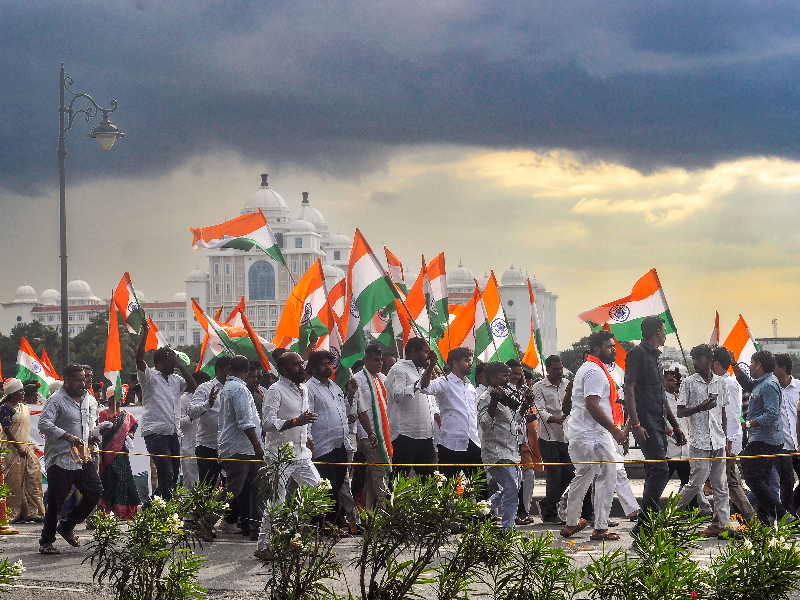
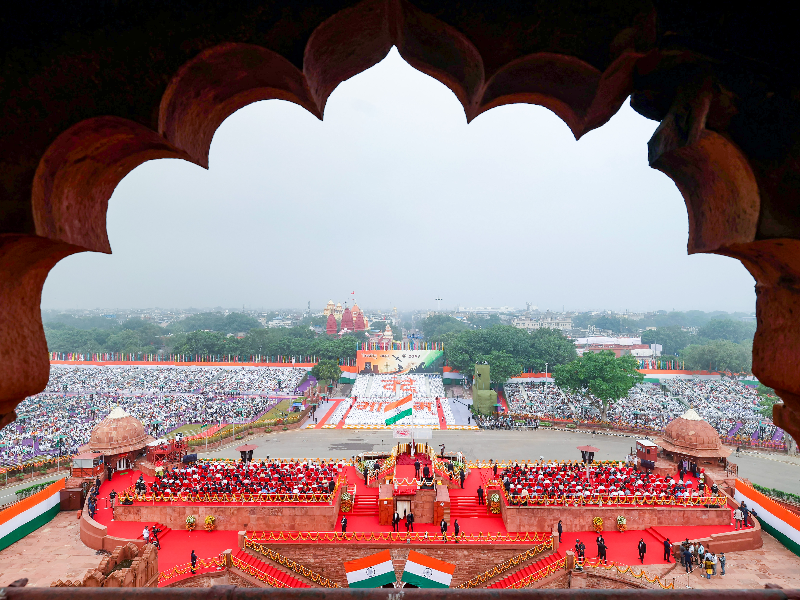 Glimpse of India’s 80th Independence Day at the Red Fort in New Delhi / IANS
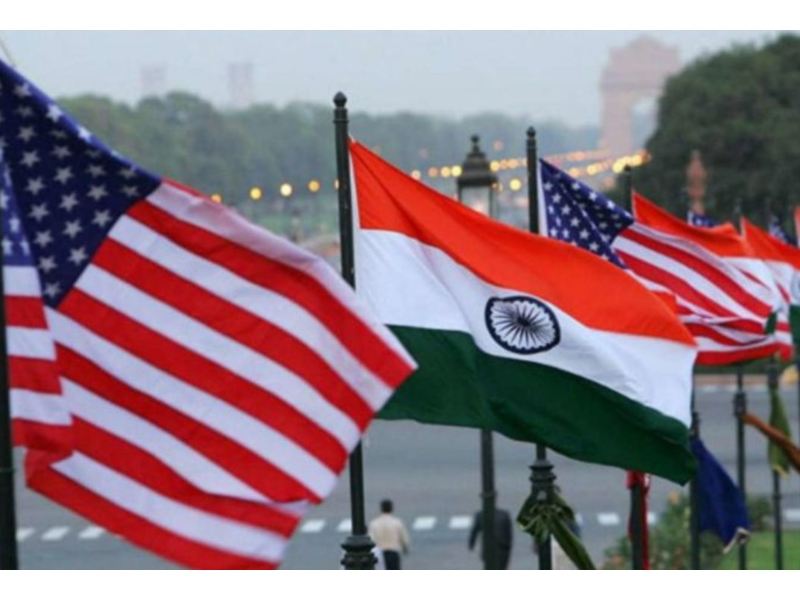
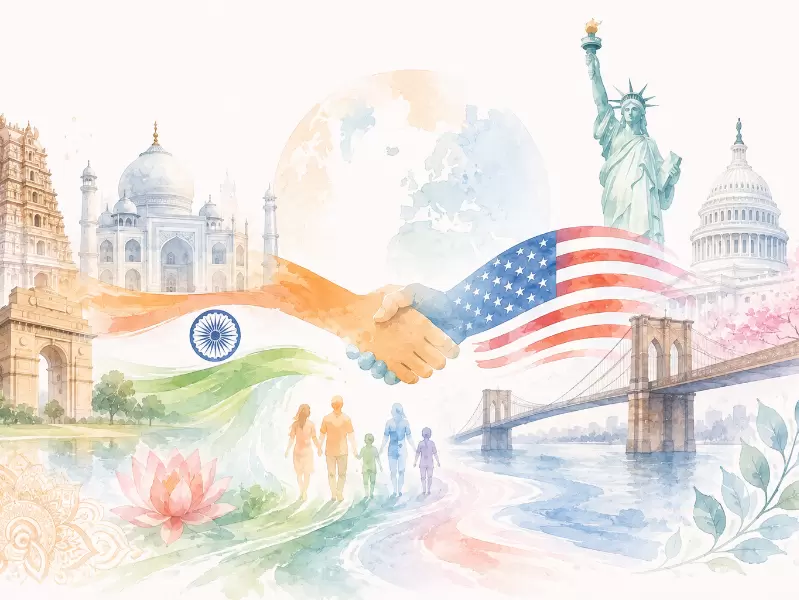
As the United States of America celebrates its Semiquincentennial, marking 250 years since the signing of the Declaration of Independence in 1776, global attention naturally turns toward the international partnerships that have shaped the democratic modern era. Chief among these is the relationship between the United States, the world's oldest continuous constitutional democracy, and India, the world's largest vibrant democracy.
While official diplomatic channels were formally established upon India’s independence in 1947, the foundational bedrock of U.S.-India ties extends back across the entire 250-year arc of American history. What originated in the late 18th century as brave maritime trade involving New England ice, spices and fine textiles has continuously transformed.
Today, it stands as an indispensable strategic, economic and cultural alliance encompassing artificial intelligence (AI), information technology (IT), pharmaceutical supply chains, STEM research, advanced medicine and a multi-tiered exchange across Hollywood, Bollywood, classical dance and universal spiritual traditions. Driven by the energy of more than 5 million Indian-Americans and a dynamic Gen Z cohort, the U.S.-India partnership represents the defining democratic nexus of the 21st century.
Historical Foundations
Early Maritime Commerce: Ice, Spices and Salem Traders
The history of U.S.-India commercial interaction predates the modern diplomatic era by more than a century. Shortly after the American Revolutionary War concluded, intrepid American merchant vessels set sail from ports such as Salem and Boston, Massachusetts, charting courses toward Kolkata (Calcutta) and Chennai (Madras). Known collectively as the "Salem Traders," these early pioneers laid the initial commercial bridges between the new American republic and the Indian subcontinent.
American markets developed an insatiable appetite for high-quality Indian textiles, indigo, cash crops and spices. In return, American entrepreneurs forged unique trade ventures. Most notable was Frederic Tudor, known as the "Ice King," who in the 1830s engineered a global logistics miracle by harvesting natural ice blocks from frozen New England lakes, insulating them in sawdust and shipping them across two oceans to tropical Indian ports. The arrival of American ice in Kolkata and Mumbai transformed medical care, food preservation and daily life in colonial India, establishing early proofs of bilateral economic ingenuity.
Philosophical Concordance: Transcendentalism and Universal Thought
Beyond physical trade goods, the mid-19th century witnessed a profound intellectual transmission from East to West. American Transcendentalist intellectuals, most prominently Ralph Waldo Emerson, Henry David Thoreau and Walt Whitman, found deep inspiration in translated Indian classical texts, including the Bhagavad Gita, the Upanishads and the Vedas.
Emerson’s essays on spiritual unity and Thoreau’s treatise on civil disobedience were deeply infused with Vedantic philosophy. Thoreau’s famous experiment at Walden Pond reflected a contemplative ideal drawing directly from Indian ascetic wisdom. In 1893, this philosophical dialogue reached a watershed moment when Swami Vivekananda delivered his historic address at the Parliament of the World’s Religions in Chicago. His message of universal tolerance, spiritual harmony and human dignity captivated the American public, creating a permanent sanctuary for Indian philosophical and spiritual thought within the American consciousness.
The Ethic of Nonviolence: Gandhi and the U.S. Civil Rights Movement
In the 20th century, the cultural and moral exchange between India and the United States produced one of the most powerful political transformations in human history. Dr. Martin Luther King Jr., while searching for an effective method to combat racial segregation in America, immersed himself in the teachings of Mahatma Gandhi and the philosophy of Ahimsa (nonviolence) and Satyagraha (truth-force).
Dr. King’s pilgrimage to India in 1959 solidified his conviction that nonviolent resistance was "the most potent weapon available to oppressed people in their struggle for freedom." The ethical alliance between Gandhi’s Indian independence movement and King’s Civil Rights Movement demonstrated how spiritual and philosophical solidarity across continents could dismantle entrenched injustice and redefine democratic society.
"India was the land where the philosophical principles of nonviolence were transformed into a massive moral movement. As I left India, I was more convinced than ever before that nonviolent resistance is the most potent weapon available to oppressed people in their struggle for freedom."
— Dr. Martin Luther King Jr., 1959
Strategic Convergence
The IT Revolution and Artificial Intelligence (AI) Frontier
The modern economic narrative between the U.S. and India underwent a seismic shift in the late 20th century with the dawn of the information technology era. Indian IT services pioneers, such as Tata Consultancy Services (TCS), Infosys, Wipro and HCL, became indispensable engineering partners for corporate America during the Y2K transition and the subsequent global digital expansion.
Today, this interaction has evolved far beyond traditional IT delivery and software maintenance into joint frontier-tech innovation. Under high-level policy frameworks such as the U.S.-India initiative on Critical and Emerging Technology (iCET), both nations collaborate closely on artificial intelligence (AI), quantum computing, semiconductor fabrication and cloud architecture. Silicon Valley’s leadership landscape, exemplified by Indian-origin chief executives leading tech giants like Satya Nadella (Microsoft), Sundar Pichai (Alphabet) and Arvind Krishna (IBM), embodies the deep integration of Indian intellect and American capital.
Life Sciences, Medicine and Global Health Security
The health care partnership between the United States and India represents a vital pillar of global public health and biosecurity. India’s status as the "Pharmacy of the World" directly underpins the stability of the U.S. health care system, providing more than 40% of all generic pharmaceuticals consumed in the United States.
This relationship extends into joint biomedical research, clinical trials and advanced medical device manufacturing. During global health emergencies, American research and biotechnology institutions have partnered with Indian vaccine manufacturing behemoths to produce lifesaving therapeutics at global scale. Together, U.S. medical innovation and Indian pharmaceutical manufacturing capacity guarantee affordable health care access for millions of Americans while safeguarding global health security.
STEM Academic Mobility and Research Leadership
Higher education in science, technology, engineering and mathematics (STEM) serves as the primary engine driving talent exchange between the two democracies. U.S. universities host more than 300,000 Indian graduate and postgraduate students, representing one of the largest foreign academic cohorts in the nation.
Indian researchers, scholars and faculty members populate premier American research institutions, national laboratories and corporate R&D hubs from Boston’s biotech corridor to Silicon Valley. This continuous academic pipeline ensures that both nations remain at the vanguard of technological discovery, patents and scientific publication.
Cultural Tapestry
Hollywood & Bollywood: Cinematic Fusion & Streaming Synergy
The creative storytelling industries of the United States and India represent two of the world's most dominant cultural forces. Hollywood, with its global distribution networks and technical mastery, and Bollywood (alongside vibrant regional film industries like Tollywood and Kollywood), with its rich narrative traditions and musical genius, have increasingly converged.
Major Hollywood blockbusters routinely utilize specialized animation, visual effects (VFX) and postproduction studios based in Mumbai, Hyderabad and Bengaluru. Concurrently, global streaming platforms such as Netflix, Amazon Prime and Disney have popularized Indian cinema across American households. Iconic cross-cultural artistic milestones, such as composer A.R. Rahman’s Academy Award triumphs and Indian actors starring in mainstream American film and television franchises, signal a new era of shared cinematic heritage.
Performing Arts: Dance, Music and Artistic Expression
Indian classical and contemporary dance forms have enriched the cultural landscape of American arts. Classical traditions such as Bharatanatyam, Kathak, Odissi and Kuchipudi are actively taught in hundreds of dance academies across the United States, preserving heritage among the diaspora while captivating non-Indian audiences.
Simultaneously, energetic folk and modern expressions, such as Bhangra and Bollywood fusion dance, have achieved widespread popularity across American high schools, universities and national dance competitions. Collaborative musical ventures blending Indian classical ragas with American jazz, hip-hop and orchestral compositions demonstrate how artistic fusion fosters cross-cultural understanding.
Religious Diversity, Yoga and Sacred Heritage
The introduction of Indian spiritual practices has profoundly shaped American wellness and lifestyle culture. Yoga and mindfulness practices, rooted in ancient Indian traditions, are practiced by more than 36 million Americans today, supporting a multibillion-dollar wellness industry focused on holistic health and mental well-being.
Furthermore, America’s commitment to religious freedom has allowed Hinduism, Sikhism, Jainism and Buddhism to flourish across the country. Magnificent temples, gurdwaras and cultural centers adorn the American landscape, while major festivals like Diwali, Holi and Vaisakhi are celebrated in civic centers, public schools and at the highest levels of government, including annual Diwali lighting ceremonies at the White House and U.S. Capitol.
Next 250 Years
Gen Z: Digital Natives Shaping Bilateral Ties
As America enters its next 250 years, the stewardship of the U.S.-India relationship transitions to Generation Z, a digitally native cohort connected through global platforms, shared social values and entrepreneurial ambitions. Gen Z Indian-Americans and their peers in urban and rural India navigate a frictionless digital world where culture, meme economics, music and social movements spread instantaneously.
This young demographic prioritizes climate change mitigation, social equity, ethical technology deployment and startup innovation. Their collaborative spirit is forging new models of cross-border entrepreneurship, where remote cross-continental teams launch fintech, climate-tech and health-tech enterprises serving global markets.
The 5.2 Million Diaspora: Civic, Corporate and Public Leadership
The Indian-American diaspora, now exceeding 5.2 million individuals, stands as one of the most educated, prosperous and civic-minded communities in the United States. Beyond their groundbreaking achievements in medicine, technology and academia, Indian-Americans have assumed vital roles in American public service, political governance, judicial appointments and community leadership.
From members of Congress serving in the Congressional Caucus on India and Indian Americans to executive leaders shaping federal agencies and state governorships, the diaspora acts as a permanent, living bridge between Washington and New Delhi, ensuring that bilateral ties remain anchored in democratic accountability and mutual respect.
Strategic Vision for the Next Quarter-Millennium
Looking ahead toward the future, the U.S.-India relationship is poised to address the premier geopolitical, environmental and technological challenges of the 21st century and beyond. Strategic frameworks such as the Quadrilateral Security Dialogue (QUAD), joint space exploration initiatives (including the NASA-ISRO Synthetic Aperture Radar / NISAR mission), defense co-production agreements and resilient supply chain corridors demonstrate that this partnership is essential for Indo-Pacific stability and global prosperity.
Conclusion
The 250-year arc of interaction between the United States and India reflects an extraordinary journey of convergence. From the early 18th-century voyages of Salem trading ships carrying ice and textiles to today's multibillion-dollar trade across AI algorithms, biopharmaceuticals, STEM research and blockbuster cinema, these two distinct democracies have forged an enduring bond.
As the world's oldest democracy commemorates its Semiquincentennial and looks toward the future, its relationship with the world's largest democracy stands as a beacon of hope, innovation and democratic resilience. Bound by shared values, artistic creativity, cutting-edge science and the unstoppable energy of youth, the United States and India are uniquely positioned to lead the global community toward a prosperous and harmonious future over the next 250 years.
Discover more at New India Abroad.
Leave A Comment
Related

ADVERTISEMENT

ADVERTISEMENT
E Paper
Video

Comments
Start the conversation
Become a member of New India Abroad to start commenting.
Sign Up Now
Already have an account? Login