ADVERTISEMENT

ADVERTISEMENT



Nirav Patel’s mission to anchor Hindu identity in America
VHPA leader Nirav Patel works to preserve Hindu identity, strengthen representation, and reconnect younger generations with their roots.
-
 Manvi Pant
 - Sun, 01, Mar 2026
- 01:51 EST
- 15
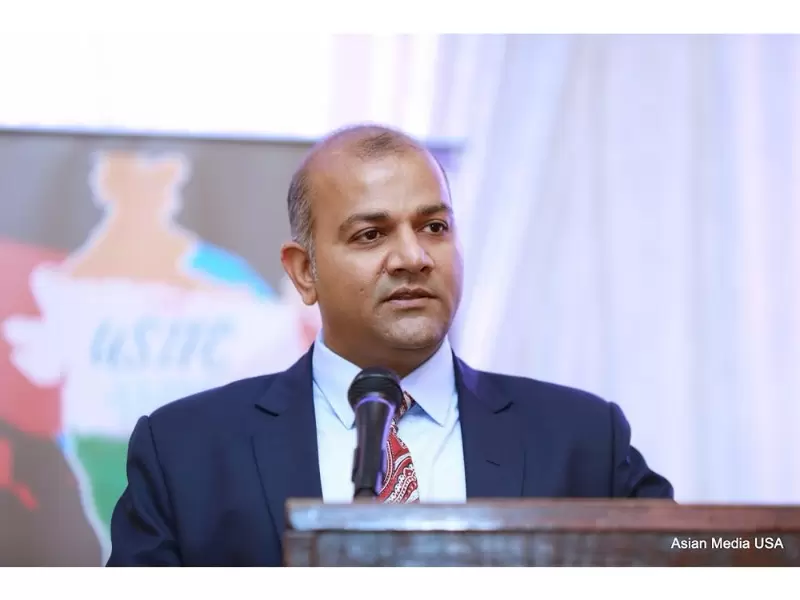 Nirav Patel / Courtesy: Asian Media USA
Nirav Patel moved to the United States in June 1998 at the tender age of 19. He did not leave India out of rebellion or personal ambition. He left because his parents decided it was time for a change. “My parents wanted to move,” he notes, and that was reason enough for him. His father was doing well in business in India, and there was no immediate financial crisis leading to their departure.
However, since the entire extended family had already settled in America, Patel recalls, “We were the only ones left.” So, we decided to go with the flow, driven by hope, proximity, and the promise of greater opportunities.
Nearly 28 years later, Patel no longer views America as foreign. Yet he also does not consider India distant. “India is always in my heart,” he says, emphasizing that a sense of belonging towards the homeland never truly left him. The first few months after moving to the States were challenging for him as he navigated new terrain.
ALSO READ: Madhavi Latha urges young Sanatani women to enter politics
Back in India, he had been a proactive student leader surrounded by people, always on a mission to achieve something. In the States, however, silence filled his days, mainly because the community was small, and the cultural familiarity was compromised. He quickly realized that packing your bags and moving to another country is not just a physical journey; it is also an emotional one.
Over the years, Patel began to observe something more intense than homesickness. He witnessed a generational shift quietly unfolding—the second-generation Hindus in America were gradually drifting away from their roots. “Our language was the first to fade, followed by the rituals and belief systems, and then, eventually, our identity got blurred.”
But as someone who never lost hope, he says, “I remained optimistic, knowing that this is temporary.” “In recent years, though,” Patel observes, “I have seen the third generation reconnecting with and returning to its spiritual roots.”
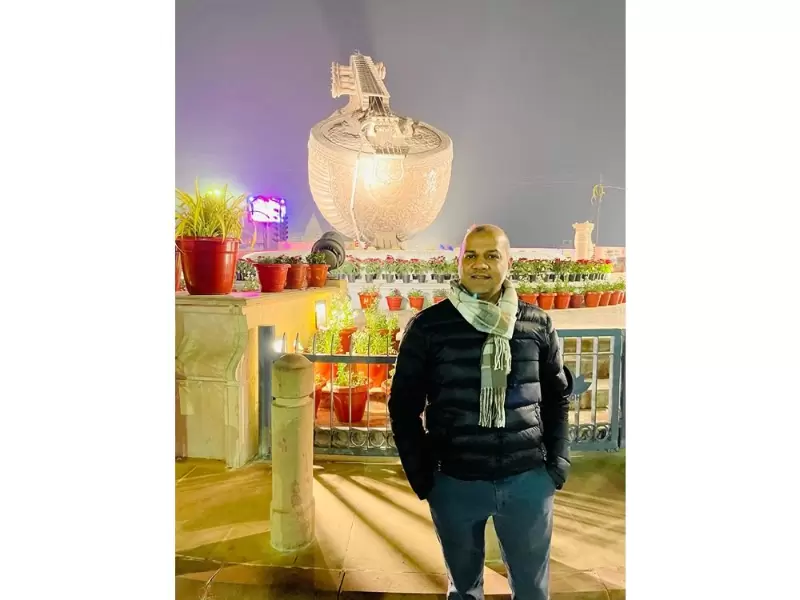 Nirav Patel in Ayodhya / Courtesy: Manvi Pant
Gen Z and even Gen Alpha children born and raised in the United States have started to become more curious about Hinduism, Dharma, their ancestral values, and their heritage; they want to know who they are and where their family values originate from beyond the label “Indian-American.”
Patel is part of the Vishwa Hindu Parishad of America (VHPA), an organization that views this moment as a turning point. Its mission is straightforward—to preserve Hindu values, safeguard cultural identity, and ensure that Hindu children grow into confident contributors to American society without losing their roots.
One of VHPA’s central initiatives is language education. These are not casual weekend classes; they are school board–certified programs that grant academic credit. The goal is not nostalgia—it is continuity. Then there is seva, or service. In times of natural disasters, earthquakes, or other crises, VHPA volunteers step forward. “We don’t ask about religion then,” Patel explains. “We talk about humanity.”
Another initiative that Patel calls is “Hindu Dvesha,” misrepresentation or hostility toward Hinduism. Often, he says, writers or institutions critique the religion without fully understanding it. Instead of reacting with outrage, VHPA responds with education. In several cases, clarifications and even apologies have followed. There is also the Hindu Mandir Executive Council, which helps temples navigate management, priest training, and community relations. Language barriers between priests from Bharat and American-born devotees often create a disconnect. VHPA works to bridge that.
Patel’s concerns are not limited to culture. He is quite candid about rising discrimination, hate, bullying in schools, attacks on temples, and narratives portraying Indians as job-diggers rather than job-creators. “We never came as refugees,” he says. “We came as qualified people. Yet this political rhetoric has fueled resentment in the hearts of the people. Imagine a painter in a small town blaming a successful Indian doctor for his own stagnation without seeing the years of hard work and sacrifice behind that success.”
One of VHPA’s top priorities in the next five years is enhancing political participation. The community leader wants the current generation to step forward and create space for themselves in city councils, state politics, and policymaking. “If we don’t have a voice,” he says, "someone else will define us.” According to reports, the Hindu community makes up roughly 2–3 percent of the U.S. population, but, in comparison, its tax contributions and professional footprint are significantly larger. “We are not asking for extra rights,” he clarifies. “Just protection of our rights.”
Patel spends much of his time meeting business owners, families, and community members, not to pressure them, but to spark awareness. “If we don’t do this work, who will?” he asks. He does not want his children to one day ask why he remained silent if discrimination escalated. He draws a stark comparison to historical racial hostility in America, suggesting that ignoring early warning signs would be a mistake.
Discover more at New India Abroad.
Related

.jpg)

ADVERTISEMENT

ADVERTISEMENT
E Paper
Video

Comments
Start the conversation
Become a member of New India Abroad to start commenting.
Sign Up Now
Already have an account? Login