ADVERTISEMENT

ADVERTISEMENT



U.S. Iran strikes unleash travel chaos as airlines cancel flights
Major regional gateways, including Dubai, Doha, and Abu Dhabi, were closed as countries across the Middle East shut their airspace following the strikes and Iran’s retaliation.
-
 Reuters
 - Sun, 01, Mar 2026
- 00:45 EST
- 13
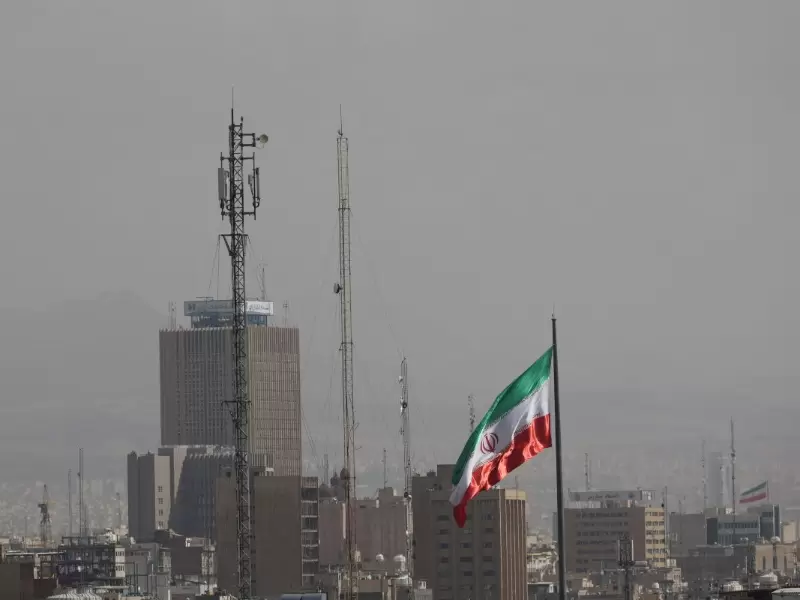 An Iranian flag flutters, as Israel and the U.S. launched strikes on Iran, in Tehran, Iran, February 28, 2026. / Majid Asgaripour/WANA (West Asia News Agency) via REUTERS
Major Middle Eastern airports, including Dubai, the world’s busiest international travel hub, were shut on Feb. 28 after U.S. and Israeli strikes on Iran and Iranian missile retaliation rippled through the region, unleashing one of the most severe disruptions to global aviation in years.
Dubai's international airport, which handles more than 1,000 flights a day, sustained damage during an overnight Iranian retaliatory attack on sites across the Arab Gulf states, while Abu Dhabi and Kuwait's international airports were also hit.
ALSO READ: Air India suspends all flights to Middle East amid ‘major combat operations’ in Iran
Major regional gateways, including Dubai, Doha, and Abu Dhabi, were closed as countries across the Middle East shut their airspace following the strikes and Iran’s retaliation. Flight maps showed skies over Iran, Iraq, Kuwait, Israel, and Bahrain virtually empty, while airlines across Europe and the Middle East announced sweeping cancellations.
Dubai and neighboring Doha sit at the crossroads of east‑west air travel, funnelling long‑haul traffic between Europe and Asia through a tightly scheduled network of connecting flights. Any prolonged shutdown of its airports ripples far beyond the region, forcing airlines worldwide to reroute or cancel services.
"The scale of these hubs today is just so enormous. You will have hundreds of thousands of people being stuck in wrong parts of the world without any certainty as to when they can move," said UK-based aviation analyst John Strickland.
"It hits at so many levels. There is the immediate issue of what happens today and the ricochet effect of how long this persists," Strickland added, noting that major Gulf airlines, like Emirates and Qatar Airways, are also among the world's biggest cargo operators.
Dubai Airports suspended all flights at Dubai International and at Al Maktoum International until further notice, urging passengers not to travel.
Airspace could be closed for 'some time'
The U.S. and Israel launched their most ambitious attack on Iran in decades on Feb. 28, killing Iran’s Supreme Leader Ayatollah Ali Khamenei and prompting Iran to retaliate with missile and drone attacks, sharply raising the risk of a broader Middle East conflict.
"Passengers and airlines can expect airspace to be shut for quite some time," said Eric Schouten, head of aviation security advisory Dyami.
Airlines cancelled about half of their flights to Qatar and Israel and about 28 percent of their flights to Kuwait on Feb. 28 after the United States and Israel launched strikes on Iran, according to preliminary Cirium data. In total, about 24 percent of flights to the Middle East were cancelled, the data showed.
The region has become more important for global aviation since the Russia-Ukraine war forced airlines to avoid both countries' airspace.
Conflict zones add to operational risks, raising fears of accidental shoot‑downs and lengthening routes, which increases fuel costs.
Passengers stranded across Europe
Students travelling from Paris to Dubai said their college trip was abandoned. "We still have some students that went there earlier, and they're stuck in Dubai, and we don't know when they’ll be able to come back," said Benjamin Gnatek.
At Charles de Gaulle Airport, Thai-bound traveler Roman Simon said his onward flight via Doha was cancelled. "Now, we’re trying to find a solution to still make our trip to Thailand," he told Reuters.
At Doha’s Hamad International Airport, gates were nearly empty as stranded passengers queued to make hotel arrangements, a Reuters witness said.
As countries in the region closed their airspace, aircraft were forced to divert around Larnaca, Jeddah, Cairo, and Riyadh. Flightradar24 briefly went down due to surging demand.
The European Union's aviation regulator, EASA, on Feb. 28 recommended its airlines stay out of the airspace affected by the ongoing military intervention.
Discover more at New India Abroad.
Related


.jpg)






ADVERTISEMENT

ADVERTISEMENT
E Paper
Video

Comments
Start the conversation
Become a member of New India Abroad to start commenting.
Sign Up Now
Already have an account? Login