ADVERTISEMENT
ADVERTISEMENT



Matt Mahan Wants to Govern California Like Silicon Valley Manages Problems
Mahan is a managerial liberal attempting to rebuild public trust through competence rather than moral theater.
-
 Ritu Marwah
 - Sat, 16, May 2026
- 16:21 EDT
- 36
 Matt Mahan / mahanforcalifornia
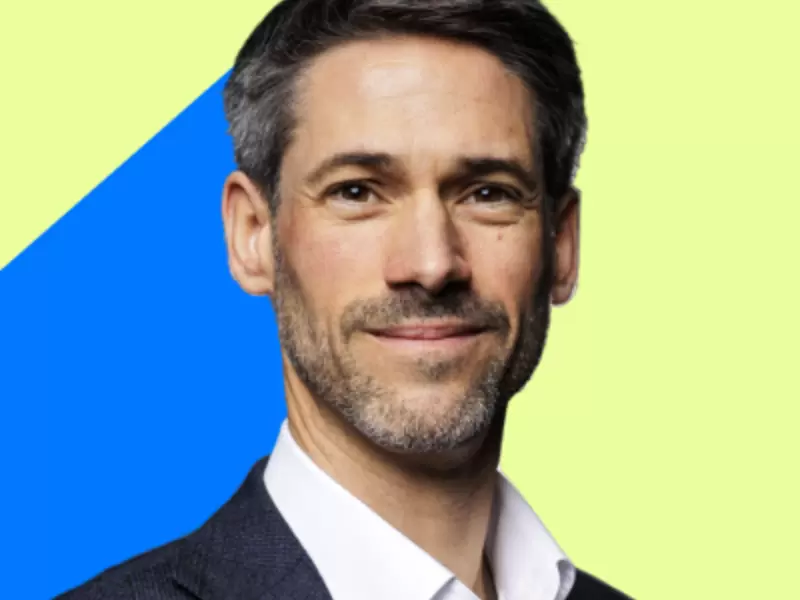
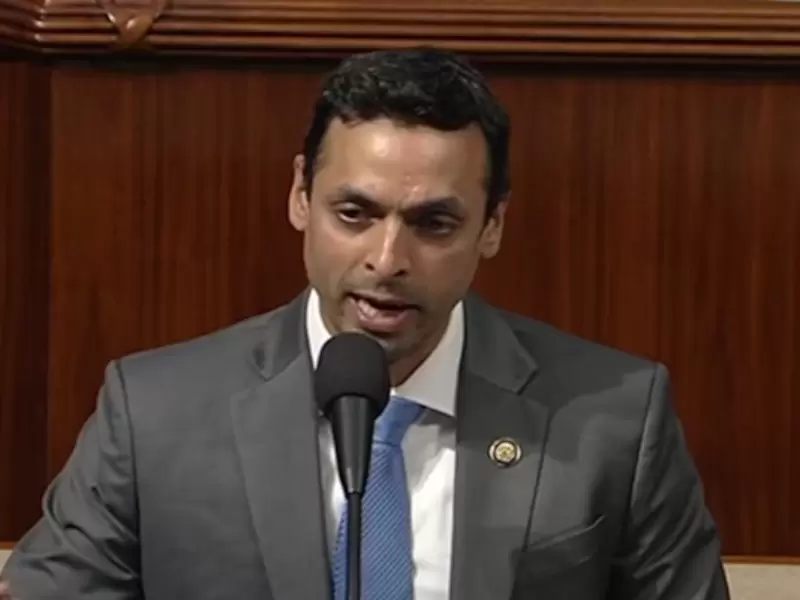
Mayor of the capital of Silicon Valley, Mahan seeks to be a managerial liberal Governor of California. In a one-on-one conversation with community media, during an American Community Media briefing, Mahan Mayor of San Jose spoke about running the government the way startup founders discuss inefficient software systems: identify friction points, remove barriers, optimize outcomes.
He emerged not a polished ideologue but a technocratic moderate trying to sound human in a time when politics rewards outrage more than practicality.
Mahan speaks the language of outcomes. Constantly. Housing units. Reduced homelessness. Faster permits. Telehealth. Workforce retraining. Equity metrics. Shared prosperity funds. He talks like a mayor who still believes spreadsheets can save democracy.
And perhaps that is precisely his political gamble.
At a moment when California feels exhausted by both right-wing grievance and progressive paralysis, Mahan is attempting to position himself as the candidate of operational government, not revolutionary government, not symbolic government, but government that simply functions.
Whether Californians still believe a functioning government is possible remains the larger question.
Immigration
The son of a working-class farming family from California’s Central Coast, Mahan repeatedly returned to the imagery of immigrant labor and agricultural towns. He described growing up alongside undocumented neighbors, “the hardest working people I’ve ever known”, and rejected the increasingly weaponized rhetoric surrounding immigration. Unlike the theatrical cruelty now dominating national politics, his answers carried a quieter recognition: that California’s economy has long depended on the labor of people the country simultaneously exploits and condemns.
His critique of both political parties was unusually direct. Democrats and Republicans alike, he argued, benefited for decades from porous borders and cheap labor while refusing to build a humane immigration system. The result is today’s political schizophrenia, an economy dependent on migrants and a politics obsessed with punishing them.
Still, Mahan carefully avoided ideological absolutism. Asked whether ICE should be abolished, he sidestepped the slogan itself, calling instead for “deep reform” and a pathway to permanent legal status and citizenship. He paired that with support for border security, presenting himself as a pragmatist rather than an activist.
For immigrant communities living under the shadow of raids, deportations, and administrative cruelty, his most forceful comments came when discussing San Jose itself. San Jose has 1 million residents of whom over 40% are foreign born.
Under his leadership, he said, the city sued the Trump administration multiple times, expanded legal defense funding for immigrants, and formally designated itself a welcoming city. Asked whether ICE agents who violated California law should be prosecuted, he answered simply: “No one is above the law.”
That sentence landed with unusual clarity in an era where the law increasingly appears selective.
People who love the state can no longer afford to remain in it.
Yet the deeper thread running through Mahan’s worldview is not immigration. It is affordability,the slow suffocation of California’s middle class.
“My sisters moved out of state,” he admitted at one point. “So many of my friends have left.”
That quiet confession may be the most politically potent sentence uttered during the briefing. Because behind California’s glittering mythology lies an uncomfortable reality: even people who love the state can no longer afford to remain in it.
Mahan’s diagnosis is aggressively structural. California, he argues, has regulated itself into scarcity. Housing fees, permitting delays, environmental litigation, construction liability laws, bureaucratic layering, all of it combines to make building nearly impossible. In his telling, affordability is not simply a market failure. It is a policy failure created over decades by governments addicted to process rather than results.
This is where Mahan begins to sound unmistakably Silicon Valley. He speaks about government the way startup founders discuss inefficient software systems: identify friction points, remove barriers, optimize outcomes.
For some voters, that will sound refreshingly sane. For others, deeply unsettling.
Because California’s crises are not merely technical. They are moral, historical, and emotional. Homelessness is not a spreadsheet problem to the people sleeping inside tents. Racial inequity cannot always be solved through efficiency metrics. Communities fearing displacement often hear “streamlining” as a euphemism for erasure.
And yet Mahan understands something many politicians avoid acknowledging publicly: scarcity radicalizes societies. When housing disappears, when healthcare collapses, when younger generations see no future, democracy itself becomes unstable.
On artificial intelligence
His comments on artificial intelligence revealed a similar tension between optimism and anxiety. As mayor of the capital of Silicon Valley, Mahan embraces AI’s potential while openly fearing mass job displacement, surveillance, and social instability. He discussed regulating AI aggressively while simultaneously taxing technology companies to fund workforce retraining, apprenticeships, and perhaps even universal basic income experiments if unemployment spikes dramatically.
“We're using AI on the one hand to speed up city buses and improve language translation, identify potholes faster, and do all kinds of cool stuff. On the other hand, we've created upskilling curricula so that our workforce doesn't get left behind. We want these tools to augment and support our workers, not replace them,” he said.
That combination, regulation plus technological acceleration, reflects California’s strange dual identity. The state creates the future and fears it at the same time.
Mahan is a managerial liberal attempting to rebuild public trust through competence rather than moral theater.
At one point, a journalist asked him directly about accusations that he is “the Silicon Valley billionaire candidate.” Mahan laughed softly before rejecting the label. San Jose, he insisted, is not Palo Alto. It is a working-class immigrant city where the workforce lives. Tech leaders support him, he argued, because they see him as effective, not because he serves their interests.
Still, the contradiction lingers.
California increasingly resembles two states occupying the same geography: one powered by extraordinary wealth and technological innovation, the other drowning in inequality, exhaustion, and rising costs. Any candidate emerging from Silicon Valley carries that tension whether they acknowledge it or not.
And yet Mahan’s appeal may lie precisely there, in his refusal to fully belong to either ideological tribe.
He is too pro-immigrant for conservatives. Too pro-policing for some progressives. Too regulatory for libertarians. Too pragmatic for activists. Too technocratic for populists.
“I want the government to work. I believe the best resistance to authoritarianism is results, I am relentless about equitable outcomes. I've been a public school teacher. I grew up in a low-income immigrant community. I've been in public service in one form or another. Even my time in tech was all about building civic tools to empower grassroots organizers. So, this is my life's work.”
Discover more at New India Abroad
Related







ADVERTISEMENT

ADVERTISEMENT
E Paper
Video

Comments
Start the conversation
Become a member of New India Abroad to start commenting.
Sign Up Now
Already have an account? Login