ADVERTISEMENT
ADVERTISEMENT


Beyond political dissent: Repeated pattern of dishonest Anti-Hindu bigotry
To understand the underlying hostility driving the current protest, one must look at the precedent set by the 2021 DGH conference supported by these coalition partners.
-
 Madhu Hebbar
 - Sat, 22, Aug 2026
- 17:17 EDT
- 58
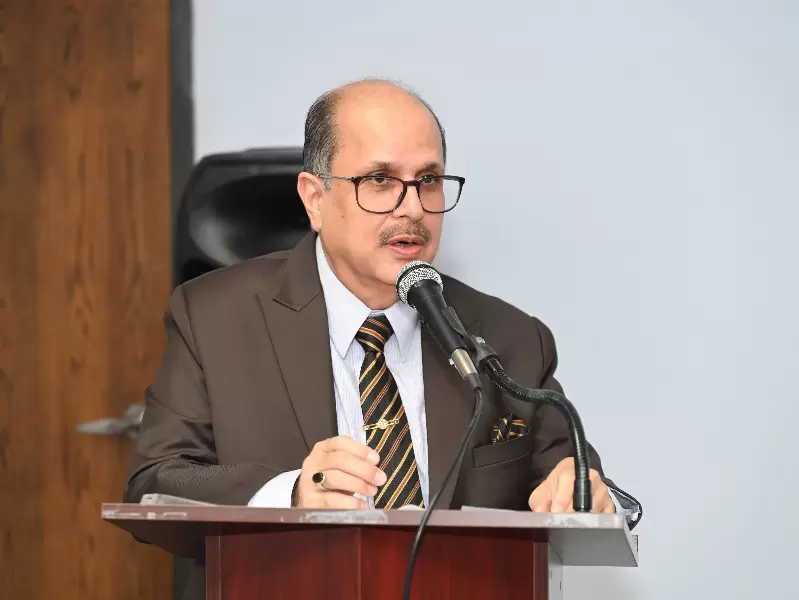
 Representative Image / Handout
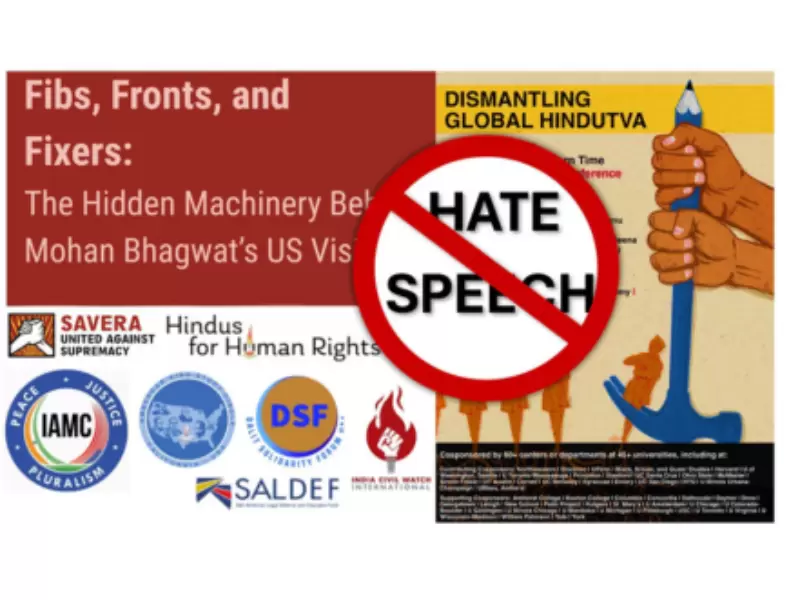
As Hindu Americans prepare for the Universal Oneness Celebration in New York, a familiar coalition of activist groups has organized to demand visa bans and public boycotts. While these activists frame their opposition as a defense of human rights, a closer look at their methods, organizational history, and core rhetoric reveals a troubling reality. The campaign against this event crosses the line from political dissent into a dishonest, and systemic campaign of anti-Hindu hostility.
The "Savera" Nexus: The Shared Infrastructure of the Opposition
The campaign to disrupt the New York gathering is spearheaded by Savera: United Against Supremacy, a coalition that brings together advocacy groups like Hindus for Human Rights, the Indian American Muslim Council, and India Civil Watch International. While presenting itself as a fresh, broad-based civil society movement, this is the exact same network of activist entities that previously backed the controversial 2021 Dismantling Global Hindutva (DGH) conference. Rather than evaluating civic gatherings on their individual merits, this network operates as a permanent lobbying front dedicated to delegitimizing Hindu public life in North America.
The 2021 Precedent: Direct Attacks on Hinduism
To understand the underlying hostility driving the current protest, one must look at the precedent set by the 2021 DGH conference supported by these coalition partners. While organizers claimed the event targeted only political nationalism, key panelists explicitly crossed into attacking the foundations of the Hindu faith itself and demanded extermination of Hinduism:
-
Declaring Faith and Nationalism Inseparable: Panelist Akanksha Mehta explicitly rejected the idea that one can separate Hinduism from Hindutva, stating unequivocally that "Hindutva is inseparable from Hinduism" and arguing against treating the faith as distinct from its political movements.
-
Targeting Scriptural Authority: Speakers like poet-activist Meena Kandasamy argued that majoritarian politics are directly rooted in Sanatana Dharma and traditional scriptures, asserting that dismantling political nationalism requires dismantling scriptural authority.
-
Framing the Faith as Unreformable: Dalit activist P. Sivakami and others argued that caste hierarchy is the bedrock of Hinduism, asserting that caste cannot be ended by reforming the religion, but only by destruction of Hinduism itself.
When an activist network repeatedly platformed arguments claiming that Hindu scriptures, traditions, and core philosophy are inherently toxic and unreformable, their opposition to the New York event becomes clear: it is not merely a critique of a visiting speaker, but an attack on the legitimacy of the faith itself.
A Propaganda Built on Disowned Texts and Historical Distortion
A central tactic of the Savera-linked groups is to smear the RSS as a "Nazi" or "Fascist" organization. To justify this claim, critics routinely cite an 80-year-old 1939 text (We or Our Nationhood Defined) attributed to M.S. Golwalkar. This argument relies on outright dishonesty and historical manipulation:
-
A Repudiated Pamphlet: The RSS officially disowned the booklet in 2006, clarifying that it was a translation of Babarao Savarkar's work and did not represent official RSS doctrine. Fixating on an 80-year-old repudiated text while ignoring decades of modern literature is a clear exercise in selective outrage.
-
Distorting the Governance Record: The political party aligned with the RSS has governed democratic India for roughly 15 years within a constitutional, multi-party framework. Equating a movement operating within a democratic electorate with 1930s European regimes that engaged in industrial genocide is historically absurd and intellectually dishonest.
-
Chronological Manipulations: As Indologist Dr. Koenraad Elst has demonstrated, 1930s European theories cited in early texts predated the Holocaust, making claims that early Hindu thinkers modeled themselves on Nazi genocide a complete chronological invention.
Erasing a 3,000-Year Tradition of Internal Reforms
To push the false claim that Hinduism must be "dismantled" to achieve equality, activist networks intentionally erase thousands of years of internal Hindu reform. From 12th-century philosopher Basaveshwara—who established an open spiritual parliament rejecting caste and gender hierarchy—to Bhakti poet-saints like Sant Ravidas and Sant Kabir, Hindu thinkers have continuously challenged caste discrimination from within the spiritual tradition. By ignoring these deep anti-caste roots, activist coalitions promote a dishonest narrative that tells practicing Hindus their faith is irredeemable.
Weaponizing Double Standards Against the Diaspora
The New York event centers on Vasudhaiva Kutumbakam ("the world is one family") and uses the festival of Raksha Bandhan to celebrate civic responsibility and global unity. Mainstream civil society routinely engages with religious and political figures holding traditional views. Yet when the Hindu-American community gathers, these activist networks demand total boycotts, visa bans, and political isolation. Labeling a peaceful civic gathering of ordinary physicians, teachers, and volunteers as a "hate rally" creates a hostile environment designed to intimidate Hindu Americans out of participating in public life.
Conclusion
Healthy democracies rely on open debate, but activism based on historical distortion, the weaponization of disowned texts, and the erasure of rich reform traditions is not genuine advocacy. The campaign orchestrated by the Savera network against the Universal Oneness Celebration is not a defense of human rights—it is another face of a coordinated, dishonest anti-Hindu campaign that the public must recognize and reject.
For an academic breakdown of how 1930s texts have been weaponized by critics against Hindu organizations, watch Exposing the Golwalkar-Nazi Lie: European Scholar Destroys 80-Year Academic Fraud Against Hindus.
This video is relevant because Indologist Dr. Koenraad Elst systematically analyzes the 1938/1939 text by Golwalkar, dismantling the chronological manipulations and academic bias used to equate early Hindu nationalist writings with European Nazism.
(The views and opinions expressed in this article are those of the author and do not necessarily reflect the official policy or position of New India Abroad.)
Discover more at New India Abroad.
Leave A Comment
Related







ADVERTISEMENT

ADVERTISEMENT
E Paper
Video

Comments
Start the conversation
Become a member of New India Abroad to start commenting.
Sign Up Now
Already have an account? Login