ADVERTISEMENT

ADVERTISEMENT


Indian Supreme Court to review scope of 'Person of Indian Origin'
The Union Government had granted an Indian citizenship to the appellant but the finer questions of law have dragged the case to the apex court.
-
 Jeffin T. Kaleekal
 - Tue, 20, Jan 2026
- 03:40 EST
- 136
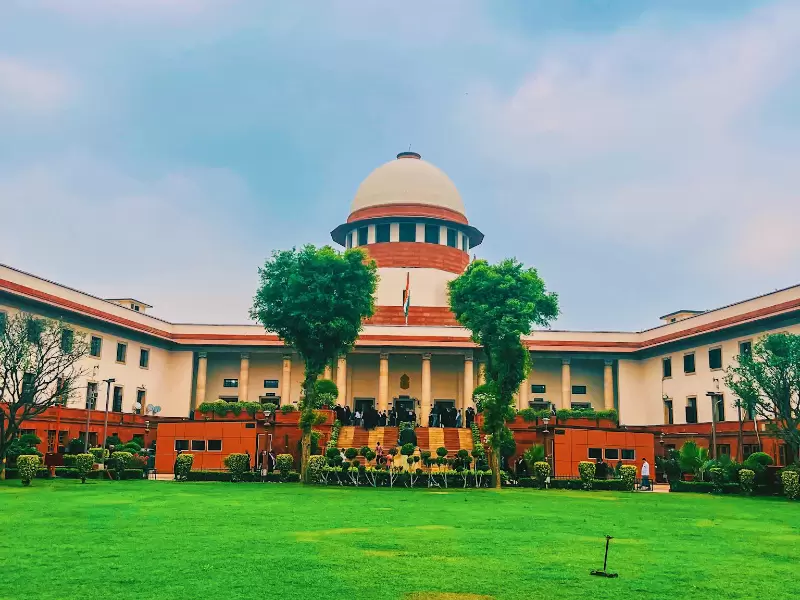 The Supreme Court of India / Supreme Court of India via Facebook
The Supreme Court of India has taken into consideration a Special Leave Petition addressing questions on the scope of the expression, 'Person of Indian Origin', under the Indian Citizenship Act, after the Delhi High Court ruled that the 18-year-old appellant cannot be classified as a Person of Indian origin.
The case originated when the girl, who was born and brought up in Andhra Pradesh, applied for an Indian citizenship but her application got entangled in questions of law. She was born to Overseas Citizen of India (OCI) cardholders parents who were Indian citizens but had given up their citizenship and acquired a U.S. citizenship but were living in India when the appellant was born.
However, Indian Citizenship Act provides birthright citizenship only to children born in India with at least one Indian parent and the other parent not being an Indian, thereby disqualifying her from birthright citizenship.
Additionally, the Office Memorandum dated October 25, 2018, states that in situations where both parents have renounced Indian citizenship at the time of birth, a minor child cannot be granted Indian citizenship and consequently ineligible to obtain an Indian passport.
ALSO READ: The debate around India’s dual citizenship
The appellant wished to pursue higher education and therefore needed an Indian passport and approached the Delhi High Court, challenging the validity of the Office Memorandum. The Single Judge Bench of the DelHi HC ruled that she has to be categorized as a Person of Indian origin and can apply for citizenship via registration. The bench also noted that she cannot be classified as an illegal immigrant.
The Union Government granted her citizenship but appealed to the division bench of the Delhi High, challenging the Single Judge Bench's order, specifically, the ruling that she cannot be considered to be an illegal immigrant.
The Union argued that Persons of Indian origin, a now discontinued legal position, are only those whose parents or grandparents were born in undivided India (before Indian independence). However, the individual does not fall under this category because her parents were born in India and therefore her situation does not provide for her categorization as a Persons of Indian origin.
The Supreme Court of India in a recent order of Jan. 8, acknowledged procedural and substantive issues in how the Division Bench of the High Court framed its judgment.
The apex court will also analyse whether the question of 'person of Indian origin' was inherent to the original suit or whether it was unnecessarily introduced by the High Court, identifying whether statutory provisions on allowing citizenship by registration were relevant to the appellant's case.
Discover more on NewIndiaAbroad.
Related









ADVERTISEMENT
ADVERTISEMENT
E Paper
Video

Comments
Start the conversation
Become a member of New India Abroad to start commenting.
Sign Up Now
Already have an account? Login