ADVERTISEMENT
ADVERTISEMENT


New study flags safety risks in fast-track drug approvals
The study finds FDA breakthrough-designated drugs linked to 1,722 additional serious adverse events annually.
-
1759163132.png) Anushka Pathak
Anushka Pathak - Tue, 20, Jan 2026
- 15:21 EST
- 98
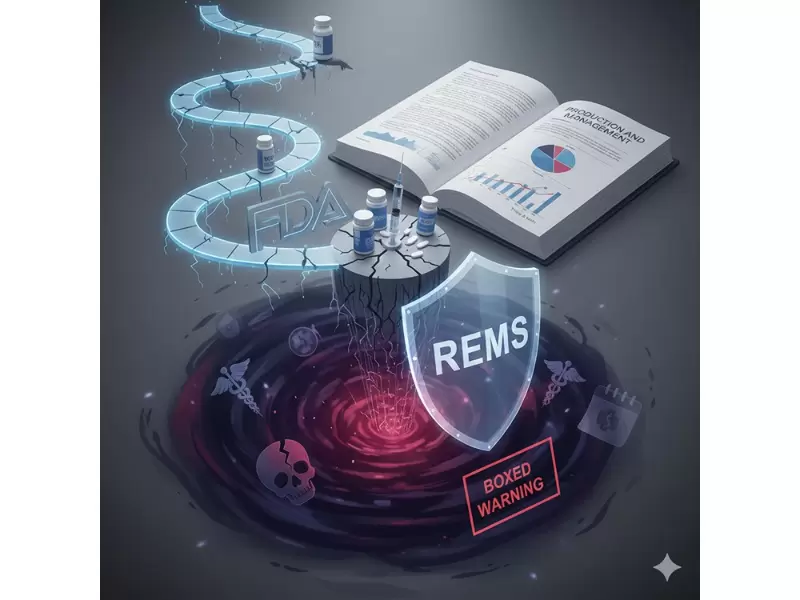 Representative Image / Courtesy: Gemini AI
A new academic study has raised concerns about patient safety linked to the U.S. Food and Drug Administration’s (FDA) Breakthrough Therapy Designation program, which accelerates approval of drugs for serious and life-threatening conditions.
The research by Indian-origin academics finds that medications approved under the expedited pathway are associated with significantly higher rates of serious adverse events after reaching the market.
ALSO READ: Hyaluronic acid may help improve gynaecological cancer treatment: Study
Published in 'Production and Operations Management,' the study analyzed more than 300 drugs approved by the U.S. Food and Drug Administration between 2012 and 2019.
It found that drugs granted Breakthrough Therapy Designation were linked to an average of 1,722 additional serious adverse events per year compared with non-designated drugs, nearly three times the average rate.
Serious adverse events include death, life-threatening conditions, hospitalization, or permanent disability, as reported through the FDA’s Adverse Event Reporting System.
A key finding highlights the role of the FDA’s Risk Evaluation and Mitigation Strategies. The authors estimate that structured safety programs reduced serious adverse events for breakthrough-designated drugs by about 875 cases per year, narrowing the safety gap by nearly half. By contrast, boxed warnings were not found to have a meaningful impact on post-market safety outcomes.
“The Breakthrough Therapy Designation is something that’s not going away because it has proven clinical benefits,” said Hanu Tyagi, lead author of the research and assistant professor at the University of Illinois Urbana-Champaign’s Gies College of Business. “It’s not without risk, but we can optimize it and make it safer, and that’s what we set out to do in this paper.”
Tyagi noted that faster access can benefit patients while also increasing post-approval uncertainty. “Faster access can deliver enormous benefits to patients, but it also increases uncertainty about safety once drugs are used more broadly in real-world settings,” he said.
Rachna Shah, a professor in the Supply Chain and Operations Department at the University of Minnesota’s Carlson School of Management, also contributed to the study as a co-author.
The authors recommend mandating Risk Evaluation and Mitigation Strategies for all drugs approved under the Breakthrough Therapy Designation program, arguing that stronger safeguards could improve patient safety without undermining the program’s goal of accelerating access to innovative treatments.
Discover more at New India Abroad.
Leave A Comment
Related












ADVERTISEMENT

ADVERTISEMENT
E Paper
Video

Comments
Start the conversation
Become a member of New India Abroad to start commenting.
Sign Up Now
Already have an account? Login