ADVERTISEMENT
ADVERTISEMENT



From success to coordinated power: Nitin Bajaj
Bajaj’s mission is clear: move the community from being a collection of high-performers to a coordinated global power.
-
 Gulshan Singh
 - Mon, 13, Apr 2026
- 09:57 EDT
- 37
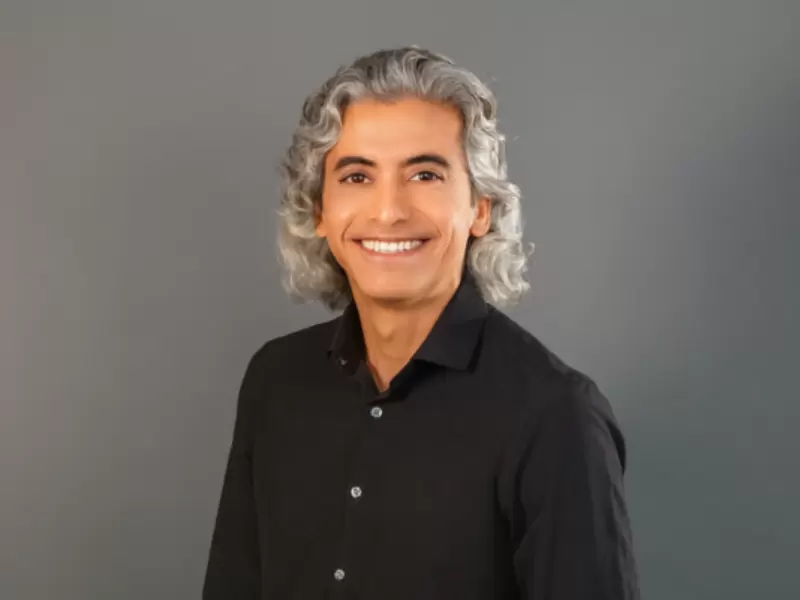 Nitin Bajaj / Courtesy Photo
Nitin Bajaj has spent much of his 25-year career observing a specific paradox within the South Asian diaspora. While the community boasts a disproportionate share of the nation’s physicians, unicorn founders, and high-tier taxpayers, these individual wins have historically remained fragmented.
Despite the staggering scale of collective achievement, the infrastructure needed to turn that success into widespread generational access—for the student, the early-stage founder, or the recent immigrant—is often missing.
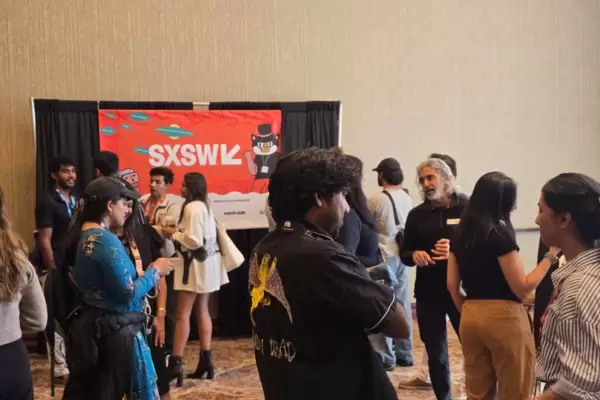
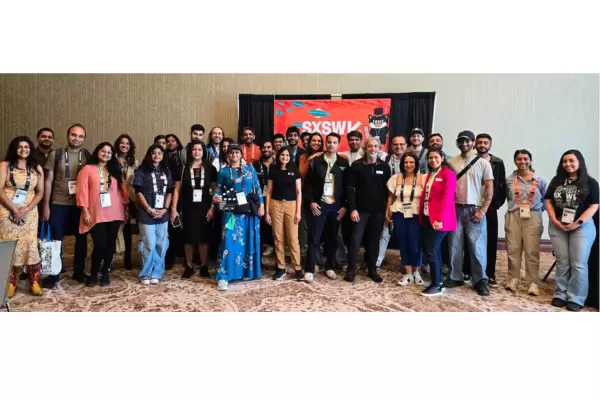
This realization, sharpened by his tenure scaling global products at IBM, Esri, and Bloomreach, became the catalyst for the American South Asian Network (ASAN). It’s a mission that resonates deeply with the "Great Recalibration" themes surfacing at SXSW 2026 this year, notably exemplified by the South Asian meetup—a vibrant gathering for those across entertainment, media, startups, and beyond.
Whether you're an artist, creative, filmmaker, standup comedian, or a founder, these spaces are designed for diaspora storytelling and cross-industry collabs where South Asian excellence meets SXSW energy.
Rather than building another app, Bajaj is prioritizing this type of real-world proximity as the missing link in the diaspora's evolution. In just one year, ASAN has hosted over 85 in-person events, creating a physical "third space" where high-achievers are no longer siloed.
Bajaj’s mission is clear: move the community from being a collection of high-performers to a coordinated global power. We caught up with him to discuss how to build systems that convert the diaspora’s interconnections into scalable opportunity.
EXCERPTS:
Q1: Building Social Health Infrastructure SXSW 2026 marked a shift from "Mental Health" apps to "Social Health" infrastructure. Having hosted 85+ ASAN events in a single year, how do you believe Indian-American entrepreneurs can lead the design of "third spaces" that use technology to facilitate—rather than replace—real-world human proximity?
Nitin Bajaj: Indian-American entrepreneurs should treat technology as a coordination layer that increases the quality and frequency of real-world interaction, not a destination.
At ASAN, this is operationalized through asanHub regions and our online community: the digital layer captures ambitions, interests, and needs, then identifies who should meet, when, and why, routing them into consistent, in-person gatherings within local networks.
Data drives invites, introductions, and post-event follow-through, while the core experience remains offline and human.
The goal is not platform engagement, but repeated proximity in curated groups where trust compounds into capital, collaboration, investments, jobs, and partnerships. Technology increases the probability of meaningful connection; value is created face-to-face.
Q2: The Era of the "Intent Engineer" We are seeing the rise of the "Intent Engineer," where technical barriers are falling. Given your background in $1B+ acquisitions and product scaling, how do you see this democratization of tech empowering the South Asian diaspora to move faster from a "cultural vibe" to a revenue-generating global platform?
NB: Our diaspora is rich in cultural signal but historically slow to productize it. South Asians don’t lack audience, distribution, or taste; we lack coordinated systems to convert that into revenue.
The rise of the Intent Engineer removes technical bottlenecks, allowing creators, founders, and operators to move from insight to product, monetization, and scale without waiting on engineering gatekeepers.
The advantage shifts to those who can define intent clearly, identify demand early, and execute quickly across community, content, and commerce. Platforms like ASAN accelerate this by aggregating signal, validating ideas in real time through networks, and routing capital, distribution, and talent into execution. The result is faster conversion of cultural energy into scalable businesses with global reach.
Q3: Scaling "Extreme Humanity" As AI agents become ubiquitous, SXSW 2026 predicts a premium on "Certified Human" experiences. How do you balance the efficiency of AI with the need to protect the "grainy," authentic human connection that makes community-building successful?
NB: AI should handle coordination, not connection. At ASAN, we use AI to remove friction, not replace humans. It runs logistics, matching, scheduling, and follow-ups so people can focus on presence, vulnerability, and trust.
We design experiences that force real interaction: small rooms, no devices, structured conversations, and repeat attendance. We standardize the system, not the people. We protect the “grainy” layer by prioritizing imperfect, unscripted dialogue over polished outputs, and we measure success by depth of relationships and real outcomes, not engagement metrics.
The balance is simple: AI drives efficiency behind the scenes, while the front-end experience remains intentionally human, high-touch, and irreplaceable.
Q4: The Future of Diaspora Entrepreneurship With the "Great Recalibration" in mind, what is the one "contrarian" trend you see emerging in the South Asian entrepreneurial landscape over the next 12 months that the broader tech world isn't paying enough attention to yet?
NB: The contrarian trend is a shift from venture-first to distribution-first entrepreneurship. Clarity, purpose, revenue, and speed will matter more than valuation optics.
The founders who win will start with distribution they already have, monetize early, and use capital as an accelerant, not a prerequisite.
Diaspora networks, when coordinated, can replace early-stage capital with immediate access to demand, talent, and trust. Platforms like ASAN accelerate this by organizing that network into a structured engine, routing founders to customers, collaborators, and capital in real time, turning community into a scalable go-to-market system.
Final Thought
"The common thread is coordination. South Asians are not lacking ambition, capital, or talent. What has been missing is infrastructure that connects these assets and compounds them across generations. The shift is from fragmented success to coordinated power. Community is no longer a byproduct; it is the engine for distribution, validation, and growth,” Bajaj concludes.
Related






ADVERTISEMENT

ADVERTISEMENT
E Paper
Video

Comments
Start the conversation
Become a member of New India Abroad to start commenting.
Sign Up Now
Already have an account? Login