ADVERTISEMENT
ADVERTISEMENT


From the library to the legislature: What VHPA’s and CoHNA’s own records reveal
On the undisclosed ties behind the Maryland cancellation and the Minnesota Hinduphobia resolution
-
 Pieter Friedrich
 - Mon, 27, Apr 2026
- 13:57 EDT
- 1183
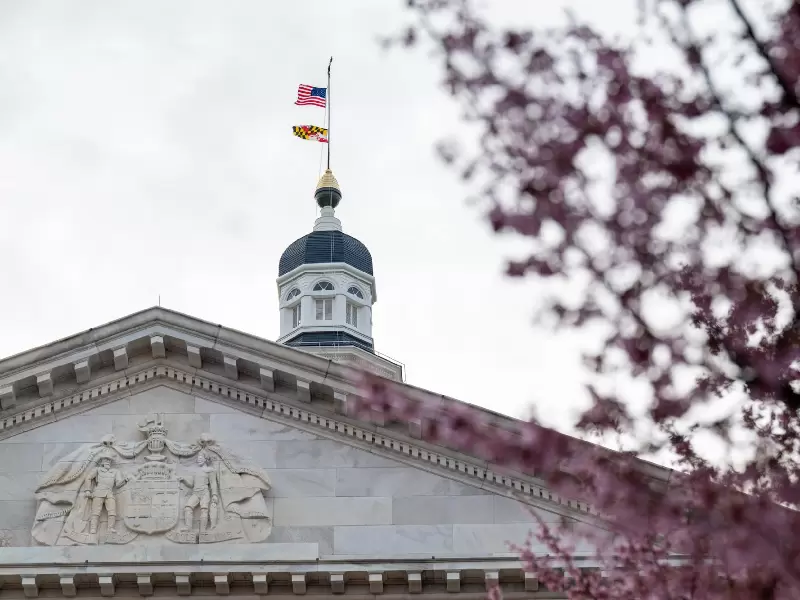 Maryland Capitol / Facebook
Two controversies are playing out in front of the Indian American community.
In Montgomery County, Maryland, a VHPA-backed event at the Germantown Library was cancelled after a coalition of civil rights organizations raised concerns about the organization’s ties to India’s Vishwa Hindu Parishad, and in Minnesota, a Hinduphobia resolution is working its way through the legislature with support from the Coalition of Hindus of North America.
A recent column in this publication, written by Vijendra Agarwal, framed both as evidence of an “anti-Hindu” campaign and named me as “hired help” and a “professional agitator.”
Before readers decide what to make of either controversy, they deserve access to a body of evidence the column did not mention.
In its 2026 annual report, the US Commission on International Religious Freedom recommended targeted sanctions on the Rashtriya Swayamsevak Sangh for its “responsibility and tolerance of severe violations of religious freedom,” and noted that “the interconnected relationship between the RSS and BJP allows for the creation and enforcement of several discriminatory pieces of legislation.”
The Savera coalition’s 2024 report, “Cut From the Same Cloth,” describes the VHP as an organization founded in 1964 by RSS leaders and VHPA as its American wing — a relationship VHPA’s own website confirms by calling itself a “sister organization” of the VHP.
The Savera report is sourced entirely from VHPA’s own publications, IRS filings, and the autobiography of VHPA’s founder, Mahesh Mehta. According to those records, Mehta was an RSS pracharak — a full-time worker — whom M.S. Golwalkar, who served as the RSS’s supreme leader and founded the VHP, dispatched to the United States.
Mehta simultaneously served as VHPA’s president and as a vice president of the VHP in India, and in his own book he refers to VHPA’s work as “activities of the VHP in the USA,” drawing no distinction between the two entities.
Also read: New Hindi-language book collection unveiled at Maryland library
Internal Sangh literature simply describes the American branch as “Parishad activities” or “VHP Overseas,” and the Savera report concluded that the distinction between the VHP and VHPA is “virtually non-existent.”
These are not allegations from outside critics but the organization’s own attestations, documented in a publicly available report any reader can verify.
This matters because the question at the heart of both controversies is whether organizations with these documented ties are the right representatives for Hindu interests in America, and Hindus themselves are asking it.
The coalition that flagged VHPA’s involvement in the Germantown Library event was led in part by Hindus for Human Rights, and Hindu residents of Montgomery County publicly opposed the event.
The concern is not with Hinduism or Hindi or cultural expression but with a specific organization whose own records reveal it to function as an extension of a network that USCIRF has recommended for sanctions, and whose American wing has toured speakers across U.S. cities whom India’s own Central Bureau of Investigation indicted for the demolition of the Babri Masjid — speakers the UK subsequently banned from entry.
Also Read: The politics of denial: Hindi on the shelf, Hindus shown the door
The column raises questions about disclosure. Agarwal’s byline identifies him as “a Ph.D. physicist from IIT Roorkee,” but CoHNA’s own website identifies him as an executive member of CoHNA’s Minnesota chapter — the organization that drafted and lobbied for the resolution he defends in the column.
Readers evaluating his arguments deserve to know that, and they deserve to know that CoHNA has co-sponsored events in Minnesota alongside the Hindu Swayamsevak Sangh, an organization that Rajiv Malhotra — a member of CoHNA’s own advisory council — publicly called “RSS’ foreign name.”
The column’s sourcing raises similar concerns. Agarwal cites DisinfoLab’s “Invisible Hands” report as the definitive exposure of an “anti-Hindu network,” but the Washington Post reported in December 2023 that DisinfoLab is run by an officer of India’s Research and Analysis Wing — the same intelligence agency USCIRF recommended for sanctions alongside the RSS — and that it combines factual research with unsubstantiated claims to target US-based critics of the Modi government. Presenting this outfit’s work as independent research without disclosing its reported intelligence ties is a disservice to the reader.
Also read: Who gets to speak for Hindu Americans? Not the far Right
None of this is to deny that Hinduphobia exists. It does, and anti-Hindu hate crimes and temple desecrations are real, and the community’s desire for recognition and protection is legitimate.
But the question of whether Hinduphobia is real and the question of whether VHPA and CoHNA are the right vehicles for addressing it are two separate questions, and asking the second one on the basis of documented evidence is not bigotry.
The Savera report is available for anyone to read, VHPA’s filings are public, Mehta’s autobiography is in print, and the USCIRF report and the Washington Post’s investigation of DisinfoLab are matters of record. What the community needs is not a manufactured consensus but complete information, and the confidence that Indian Americans can examine the evidence and draw their own conclusions.
The Writer is an investigative journalist with over 20 years of experience covering Hindu nationalist influence operations in the United States.
(The views and opinions expressed in this article are those of the author and do not necessarily reflect the official policy or position of New India Abroad.)
Discover more at New India Abroad.
Leave A Comment
Related


ADVERTISEMENT

ADVERTISEMENT
E Paper
Video

Comments
Start the conversation
Become a member of New India Abroad to start commenting.
Sign Up Now
Already have an account? Login