ADVERTISEMENT

ADVERTISEMENT

The politics of denial: Hindi on the shelf, Hindus shown the door

The books themselves remained acceptable under library standards, but the people who helped fund them were treated as a civic contamination risk.

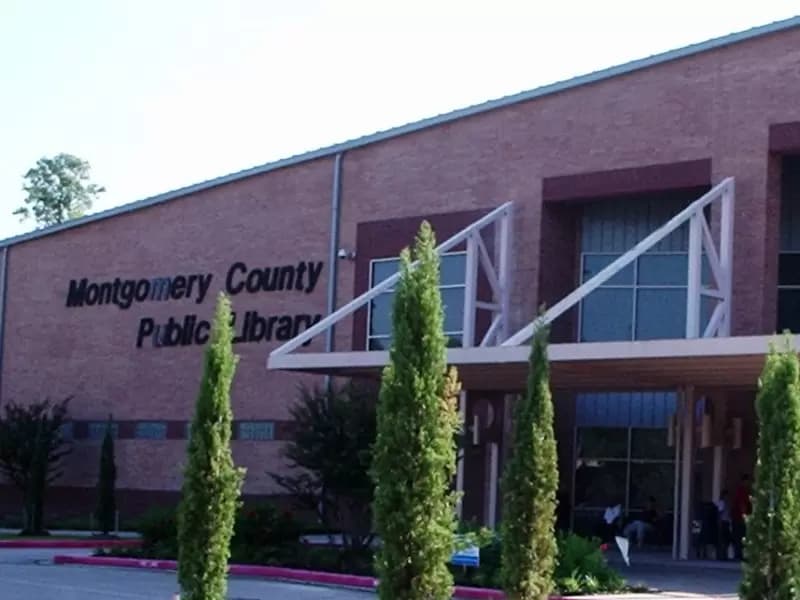
Montgomery County Public Libraries (MCPL) / Wikipedia

The easiest way to win an argument is to rename your opponents before they speak. Call them “far-right.” Call them gatekeepers. Suggest that ordinary Hindu Americans who organize, donate books, teach children Hindi, and show up in civic life are really fronts for something sinister. Once that label is glued on, you no longer have to engage with what they actually did. You can just wave away their motives, their work, and even their children.

That is the real story behind the piece claiming that Hindu Americans are not represented by the “far right.” It is not a defense of pluralism. It is an attempt to narrow the definition of acceptable Hindu participation in public life. It says, in effect, that Hindi belongs in libraries, but some Hindus do not. It praises diversity in the abstract while policing which members of a minority community may be allowed to embody it in practice. That is not moral clarity. That is ideological sorting.

Look at what actually happened in Maryland. Montgomery County Public Libraries announced a public event on April 12, 2026, at the Germantown Library to celebrate a new Hindi-language collection of more than 160 books for children, teens, and adults. The county’s own press release stated that the books were purchased with support from Balvihar Hindi School, identified as part of the Vishwa Hindu Parishad of America, along with other local community partners, and that representatives from the Hindi school were among the invited speakers. In other words, this was not a secret infiltration. It was a visible, civic, language-and-literacy initiative presented exactly as public libraries routinely present community partnerships. 

Then came the backlash. A coalition objected to Balvihar Hindi School’s involvement because of its association with VHPA, and the library canceled the event, later saying it was “reimagining” how to celebrate the Hindi-speaking community in a more “inclusive and community-centered” way. The books themselves remained acceptable under library standards, but the people who helped fund them were treated as a civic contamination risk. One report quoted the library system as having no plans to remove the books. Another quoted a donor-side spokesperson as saying, “To us, it’s about the Hindi language. It’s not about politics or anything else.”

Also Read: Montgomery library Hindi book event canceled over VHPA link

Pause there. This matters. Because this is the point the opinion piece tries to glide past.

A Hindi book does not walk itself into a library. Someone requests it. Someone raises the money. Someone organizes. Someone sits in meetings, fills out forms, sends emails, and does the exhausting, unglamorous volunteer labor that multicultural America depends on. In Germantown, the people who did that work were not thanked. They were stigmatized. Their linguistic contribution was accepted, but their public presence was rejected. Their books were allowed to sit on the shelf, but their faces were no longer fit for the room.

That is not a small insult. It is a very modern one. It tells a minority family, “Your culture is welcome only after it has been detached from you.”

Imagine being a child in that community. You grow up speaking English at school and Hindi, perhaps imperfectly, at home. Your parents or grandparents are delighted that the local library is finally making space for your language. Maybe your mother helped raise funds. Maybe your father drove boxes of books. Maybe your teacher at Balvihar spent weekends encouraging children not to lose touch with the language of their grandparents. Then the event is canceled after public agitation that effectively brands the adults around you as too tainted to stand beside the books they helped place there. The child is expected to absorb the approved lesson: your language is beautiful, but your people are suspect.

This is where the article’s rhetoric collapses into hypocrisy.

The author insists the issue was never about Hindi, never about Hindu dharma, and never about whether Hindu Americans belong in public life. But public life is not an abstraction. It is exactly this. It is libraries, schools, parades, city councils, cultural events, reading programs, and donor acknowledgments. When a coalition pressures a public institution to cancel a community event because some Hindu participants are said to belong to the wrong ideological ecosystem, that is not a theoretical dispute about extremism. It is an attempt to regulate Hindu civic legitimacy in real time. (New India Abroad opinion piece, “Who gets to speak for Hindu Americans? Not the far right,” which framed the controversy and advanced the argument being rebutted.)

Notice the asymmetry. The activists are permitted to define themselves as responsible custodians of pluralism. The Hindu participants are not granted the same presumption of good faith. Their motives are pre-labeled. Their association is treated as disqualifying. Their denials are brushed aside. Their contribution is recast as a strategy for “legitimacy.” Their presence becomes evidence against them.

That is a familiar move in diaspora politics. It is also a very ugly one. It punishes visible Hindu organizations precisely because they are visible, coherent, and effective. Many Americans celebrate minority self-advocacy in other contexts. But when Hindu Americans build institutions, support community schools, seek representation, and insist on naming anti-Hindu prejudice when they see it, they are suddenly accused of being dangerous for being organized. The line seems to be this: Hindus may exist as cuisine, dance, Diwali décor, and carefully curated spirituality. They become threatening only when they behave like citizens with memory, agency, and the nerve to defend themselves.

The Maryland episode exposed that double standard. Nobody objected to the presence of Hindi books as long as they appeared by magic, with no community fingerprints on them. The controversy began when the county publicly acknowledged who had helped bring them there. That is why the phrase “Hindi belongs in our libraries. Hindutva gatekeepers do not” is so revealing. It sounds clever. In practice, it functions as a loyalty test aimed at Hindu Americans. It tells them that participation is conditional. They may donate, but only if approved by ideological referees. They may preserve the language, but only through institutions that flatter elite political sensibilities. They may show up, but only after disowning those parts of their community that progressive gatekeepers have blacklisted. 

Also Read: Who gets to speak for Hindu Americans? Not the far Right

One need not agree with every position ever associated with every Hindu organization to see the danger here. In a liberal society, guilt by association cannot be the default criterion for deciding who may appear beside a bookshelf. If there are specific acts of incitement, illegality, or discriminatory conduct, name them, prove them, and debate them openly. But replacing evidence with smear architecture is not democratic vigilance. It is reputational warfare.

There is another reason the article fails. It assumes that Hindu Americans who reject this treatment are merely protecting power. In reality, many are protecting dignity. They are tired of a discourse in which Hindu identity is perpetually on probation. They are tired of being explained to by people who claim to defend them while treating mainstream Hindu institutions as inherently suspect. They are tired of seeing every expression of civilizational confidence cast as a menace. And they are especially tired of being told that anti-Hindu bias is imaginary, even as their community’s language celebration is canceled under political pressure.

The sharpest rebuttal to the article, then, is not theoretical. It is moral and concrete.

In Maryland, a local community helped bring Hindi books to a public library. The books were for children, families, and readers who too often have to search in vain for their own language in American public spaces. That should have been a simple, happy story. Instead, activists turned it into an ideological purge, and an opinion writer then tried to sanctify that purge as a democratic responsibility. But ordinary people can see what happened. A community offered books, and the institution accepted them while flinching from the people. That wound will not be healed by clever slogans about who gets to speak for Hindu Americans.

Hindu Americans speak for themselves. The mother who wants her child to read Hindi at the local library speaks for herself. The volunteer who raised money for those shelves speaks for himself. The Balvihar teacher who wants children to inherit language, memory, and confidence speaks for herself. They remain legitimate even if a columnist or coalition finds them ideologically inconvenient.

If American pluralism means anything, it must mean this: minority communities are not required to pass a political purity test to participate in public culture. The Maryland library episode was not a victory for inclusion. It was a warning. The people who should be ashamed are not the Hindus who brought books to the shelf. They are the ones who looked at those books and decided the real problem was the hands that carried them there.

Organizations and the ecosystem that opposed the VHPA

It is also important to name the ecosystem that made the Maryland cancellation possible, because this did not arise from a spontaneous neighborhood objection. It came from an organized advocacy network that knows how to move institutions through pressure, moral framing, and reputational risk. Reports on the library episode identified a coalition that included the Indian American Muslim Council, Hindus for Human Rights, the Sikh Coalition, Dalit Solidarity Forum USA, and Peace Action Montgomery, among others.

Their April 8 letter framed the issue not as a disagreement over a single event but as a broader warning about “political ideology entering public institutions under the guise of cultural programming.” That language was not accidental. It was crafted to make county officials feel that keeping the event on the calendar would expose them to a charge of legitimizing extremism. 

This matters because once a coalition learns that such framing works, the target is no longer a single event. The target becomes public legitimacy itself. The method is simple. First, attach a stigmatizing label to a Hindu organization. Second, insist the dispute is not about Hinduism or Hindi at all, but only about safety, inclusion, and democratic values. Third, pressure a public institution until it decides that the easiest bureaucratic choice is cancellation.

Finally, present the cancellation as proof that the institution acted responsibly. By the end of that cycle, the public sees only the final administrative action, not the political choreography that produced it. In Maryland, that choreography worked. The event was canceled, the donors were thanked in the abstract, and the community members who helped create the collection were pushed out of sight. 

The deeper problem is that this ecosystem claims the authority to decide which Hindu voices are safe for public institutions and which are not. That is a remarkable kind of power for self-appointed gatekeepers to exercise over another minority community. Organizations such as Hindus for Human Rights often present themselves as the authentic moral alternative within Hindu America, while groups such as IAMC and allied advocacy actors position themselves as civil rights watchdogs. But in practice, their intervention in this case did not expand pluralism.

It narrowed it. They did not ask for more Hindi programming with wider participation. They did not say the library should add another event featuring multiple Hindu viewpoints. They moved to delegitimize the existing partnership by making one set of Hindu actors radioactive. That is not inclusion. That is ideological veto power dressed up as inclusion. Hindus for Human Rights also publicly opposed the library partnership. In a social media post, the group said Montgomery County Library ‘should not partner with VHPA’ on the Hindi-language collection, framing VHPA as a ‘Hindutva hate group.’ 

This is why the Maryland incident should be read as part of a larger pattern rather than a one-off quarrel. Across diaspora debates, a familiar ecosystem has emerged: advocacy groups, open letters, social media amplification, selective media framing, and institutional risk aversion. Together, they create a climate in which Hindu organizations are not treated as civic participants but scanned for disqualifying associations. The standard is also uneven.

Countless ethnic, religious, and political groups in America are allowed complexity, internal contradiction, and context. Hindu groups, especially those seen as civilizationally assertive or socially influential, are more likely to be reduced to caricature. Once that happens, any collaboration becomes suspect by definition. That is not a healthy model for democratic diversity. It is a recipe for permanent suspicion directed at one community’s organized life.

Also Read: Dismantling diaspora rights: Reclaiming the Hindu voice

And this is where the opinion piece’s posture becomes especially revealing. It asks, in essence, who gets to speak for Hindu Americans. But the answer it offers is not democratic. It is curatorial. It does not trust Hindu Americans to determine their own representation through open debate, civil society, and community institutions. Instead, it invites an activist-media ecosystem to decide which Hindus are presentable and which must be excluded from civic spaces. That is not empowerment. It is supervision.

The Maryland library episode stripped away the euphemisms. A community helped bring Hindi books to a public library. Families who cared about language, literacy, and cultural continuity did the ordinary work that makes multicultural life possible. When their effort became visible, an organized pressure campaign cast that generosity as suspicious. The books were acceptable. The people behind them were not.

That is why the article’s framing warrants a forceful rebuttal. It seeks to persuade readers that this was a noble refusal to let “the far right” speak for Hindu Americans. In reality, it was an attempt to decide in advance which American Hindus are permitted to appear in public as Hindus without being morally disqualified. It was not about protecting democracy from extremism. It was about narrowing Hindu civic legitimacy to those actors approved by a particular ideological class.

The sharp truth is this. No coalition, no columnist, and no activist network gets to monopolize the definition of the American Hindu mainstream. Not when parents are trying to preserve their language. Not when volunteers are funding public bookshelves. Not when teachers and community workers are doing the patient work of keeping heritage alive for the next generation. Those people do not become illegitimate because they are accused, from a distance, of belonging to the wrong map of associations.

If pluralism is real, it must apply even when activists dislike the people doing the organizing. If inclusion is real, it must include Hindus who are not politically convenient. And if public institutions truly serve diverse communities, they cannot accept a minority’s books while shying away from that minority’s organized presence.

The Maryland case was not a triumph of inclusion. It was a warning about how easily “inclusion” can be weaponized to exclude. The right response is not to let the smear harden into common sense. The right response is to say, clearly and without apology, that Hindu Americans do not need permission from hostile gatekeepers to preserve their language, support their institutions, and stand in public beside the books they helped put on the shelf.


The writer is the Founder and Executive Chair of HinduPACT and past-President of World Hindu Council of America (VHPA)

AI Utilization Statement: This article extensively uses Dharma Universe’s custom-built HinduHateDetector platform’s SamyaTattwa app for research and framing. 


(The views and opinions expressed in this article are those of the author and do not necessarily reflect the official policy or position of New India Abroad.)

Discover more at New India Abroad.


Comments

Related

To continue...

Already have an account? Log in

Create your free account or log in