ADVERTISEMENT
ADVERTISEMENT



'Too much clinical research is moving overseas': NIH Chief Bhattacharya
The remarks came as HHS launched a department-wide initiative to accelerate medical research and drug development.
-
 Malvika Choudhary
 - Tue, 23, Jun 2026
- 15:37 EDT
- 33
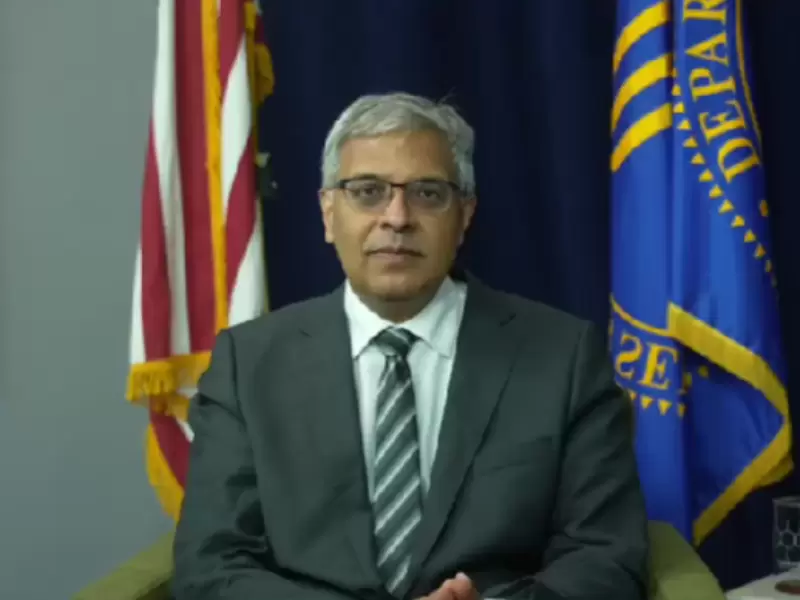 Jay Bhattacharya / X/ Jay Bhattacharya
National Institute of Health (NIH) Director Jay Bhattacharya on June 23 said the United States must act to prevent clinical research from moving overseas as the Department of Health and Human Services launched a department-wide effort to boost domestic clinical trials.
The initiative, announced by HHS on June 22, aims to accelerate the development of new therapies, reduce delays in clinical trials and expand patient access to cutting-edge treatments.
Also Read: Jay Bhattacharya unveils new NIH office to reduce animal testing
The department said the effort is intended to restore America's leadership in biomedical innovation and make the United States the preferred destination for clinical research and medical discovery.
In a video statement released alongside the announcement, Bhattacharya warned that the country was "at a crossroads" as a growing share of early-stage clinical research shifts overseas.
"America has long been the world leader in biomedical research and medical innovation. But today, too much early-stage clinical research is moving overseas, and we're at a crossroads," Bhattacharya said. "We can either let America's leadership in science slip away, or we can do something about it."
He said the National Institutes of Health (NIH) is committed to ensuring the United States remains "the gold standard for developing treatments and cures of tomorrow" through rigorous clinical research conducted domestically.
At NIH, we’re committed to ensuring America remains the gold standard for developing the treatments and cures of tomorrow. That starts with rigorous clinical research conducted right here at home.
— Jay Bhattacharya, MD, PhD (@NIHDirector_Jay) June 23, 2026
Read more https://t.co/pwrwOIP6rD pic.twitter.com/wEQ9IbJwcM
As part of the broader HHS initiative, the Food and Drug Administration (FDA) will seek public input on a pilot program designed to shorten the time from drug discovery to first-in-human Phase 1 clinical trials. The FDA has also issued guidance aimed at reducing early trial timelines and streamlining drug approvals.
The NIH, meanwhile, will strengthen support for well-powered clinical trials while advancing the use of artificial intelligence, human cell-based models, real-world data and other tools intended to improve research efficiency without compromising scientific rigor.
Bhattacharya highlighted persistent challenges facing the clinical trial system, including delays, difficulties in recruiting participants and studies that fail to adequately answer key scientific questions.
"Too often, clinical trials are delayed, they struggle to enroll participants, or they fail to answer the questions that they were designed to address," he said. "If we're going to remain the global leader in biomedical research, we need a clinical trial enterprise that is faster, more efficient, and more effective."
He said NIH would focus on innovative trial designs and new recruitment strategies to reduce delays and broaden participation, particularly among rural and underserved communities.
"We'll leverage innovative trial designs, real-world data, and new approaches to improve recruitment, to reduce delays, and expand opportunities for people in rural and underserved communities to participate in research," he said.
Other agencies participating in the initiative include NIH's National Cancer Institute, which is working to streamline cancer trial activation and enrollment, and the Advanced Research Projects Agency for Health (ARPA-H), which is developing AI-driven tools to improve trial design, predict safety outcomes and increase efficiency before patient enrollment begins.
In a post on X, Bhattacharya reiterated the agency's commitment to strengthening domestic clinical research.
"At NIH, we're committed to ensuring America remains the gold standard for developing the treatments and cures of tomorrow. That starts with rigorous clinical research conducted right here at home," he wrote.
Bhattacharya said the combined effort would help accelerate the development of new treatments while expanding access to innovative therapies for patients across the country.
"Together, we can strengthen America's leadership in science, accelerate the development of new treatments, and help ensure that patients have access to the cutting-edge therapies that they need and deserve," he said.
Discover more stories on NewIndiaAbroad
Related











ADVERTISEMENT

ADVERTISEMENT
E Paper
Video

Comments
Start the conversation
Become a member of New India Abroad to start commenting.
Sign Up Now
Already have an account? Login