ADVERTISEMENT
ADVERTISEMENT



Stanford professor Saumitra Jha among Social Science Breakthrough finalists
The Falling Walls Science Breakthrough of the Year is an international award honoring the power of world-changing ideas.
-
1759953093.png) Staff Reporter
Staff Reporter - Fri, 07, Aug 2026
- 01:11 EDT
- 17
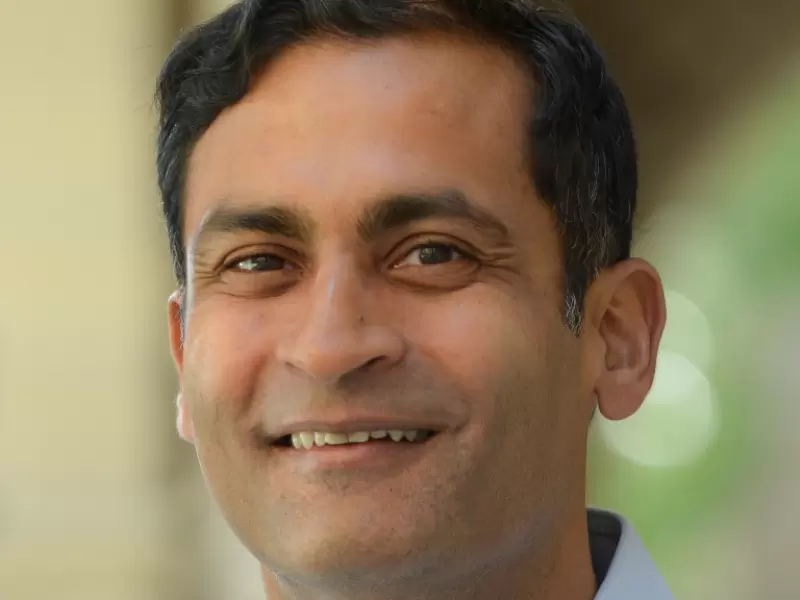 Saumitra Jha / FALLING WALLS
Indian-origin Stanford professor Saumitra Jha has been selected as a finalist for the Falling Walls Social Science Breakthrough of the Year for his research on how societies can overcome the "ethnic growth trap" and leverage the potential gains from diversity.
Jha, an associate professor of political economy at Stanford Graduate School of Business, said a key question policymakers around the world must address is how to build prosperous and peaceful societies in the face of increasing ethnic diversity.
ALSO READ: Harvard School of Health honors Indian-origin alumni
The Falling Walls Science Breakthrough of the Year is an international award presented annually in Berlin on Nov. 9, commemorating the fall of the Berlin Wall and honoring the power of world-changing ideas.
"Richer countries encounter increasingly polarized debates revolving around immigration and openness, even while poorer countries contend with managing both pre-existing and emerging ethnic differences," he said.
His research examines why many ethnically divided, poorer societies struggle to achieve economic development and peace, and how policymakers can turn diversity into an economic and social advantage.
"I provide a novel unified concept — the ethnic growth trap — and a novel unified framework both for understanding why ethnic divisions, political conflict and lack of investment lead to feedback loops that reinforce ethnic divisions and lack of development, as well as providing new policy ideas, based in large part on my own novel research, for breaking through the walls of the ethnic growth trap," he said.
These include the interethnic incubators, tailored financial exposures and institutional approaches mentioned above.
This research was commissioned by the Reducing Conflict and Improving Performance in the Economy (ReCIPE) Initiative, co-sponsored by the UK Foreign, Commonwealth and Development Office and the Center for Economic Policy Research, to provide practical new ideas for policymakers who are tackling these crucial issues and to set the agenda for future research.
Jha is an associate professor of political economy at Stanford Graduate School of Business, a senior fellow at the Freeman-Spogli Institute for International Studies, and convener of the Stanford Conflict and Polarization Lab. His research focuses on economic, financial and organizational approaches to reducing political polarization and violent conflict, drawing on historical evidence and contemporary field experiments.
For young researchers, Jha said some of the most important qualities are humility, curiosity and a willingness to learn from everyone.
He said maintaining an open mind while developing expertise can lead researchers to discover connections between ideas and approaches that may otherwise remain unseen.
Stanford Graduate School of Business congratulated Jha on his achievement.
Congratulations to Saumitra Jha (@saumjha), associate professor of political economy, on being selected as a finalist for the Social Science Breakthrough of the Year for his work on ‘Breaking through the Ethnic Growth Trap’ by the @Falling_Walls Foundation!
— Stanford Graduate School of Business (@StanfordGSB) August 6, 2026
Read Professor Jha’s…
In the same category, Divyangana Rakesh of King's College London was also named a finalist.
Rakesh's work examines how environmental adversity and economic inequality become biologically embedded in children's developing brains, shaping long-term cognitive function and mental health.
Drawing on large-scale datasets, her work spans individual, neighborhood and societal levels of analysis, from households to macroeconomic inequality, to understand how these conditions alter children's brain and behavioral development and identify factors that promote resilience in these contexts.
Rakesh's research connects neuroscience with economics, psychology and public policy to investigate how conditions ranging from family and neighborhood environments to broader economic inequality can influence brain development and mental health.
Her recent work suggests that macroeconomic inequality—not only a child's own socioeconomic circumstances—is associated with differences in brain development linked to mental health, shifting the discussion of inequality from an economic and social issue to one with potential biological and public health consequences.
Discover more at New India Abroad.
Leave A Comment
Related








ADVERTISEMENT

ADVERTISEMENT
E Paper
Video

Comments
Start the conversation
Become a member of New India Abroad to start commenting.
Sign Up Now
Already have an account? Login