ADVERTISEMENT
ADVERTISEMENT



Satya Nadella shares vision for U.S. AI leadership
Microsoft joined tech leaders in calling for open-weight AI to drive innovation and strengthen US competitiveness.
-
 Malvika Choudhary
 - Fri, 24, Jul 2026
- 13:50 EDT
- 36
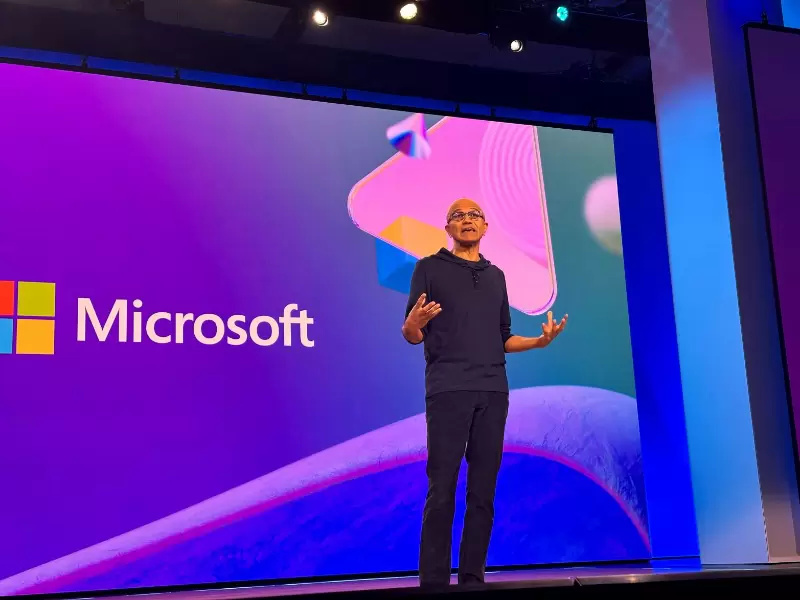 Microsoft Chief Executive Satya Nadella speaks at the company's annual developer conference in Seattle, Washington, U.S., May 21, 2024. / REUTERS/Max Cherney/File Photo
Microsoft Chairman and CEO Satya Nadella on July 24 outlined his vision for US leadership in artificial intelligence, backing open-weight AI models as key to innovation, competition and national security.
"Open-weight models are essential to a healthy AI ecosystem. Together with others across our industry, we are outlining a path for open-weight models to strengthen American competitiveness and expand economic opportunity, while protecting national security," Nadella wrote in a post on X.
Also Read: Chef Vikas Khanna backs India-US trade portal
His remarks coincided with the release of Open Weights and American AI Leadership, a joint policy paper signed by more than two dozen companies and organizations, including Microsoft, Meta, NVIDIA, IBM, Dell Technologies, Palantir, Hugging Face, Mozilla, Mistral, Perplexity, Replit, ServiceNow, Box, Andreessen Horowitz, CrowdStrike, The Linux Foundation and Y Combinator.
Open-weight models are essential to a healthy AI ecosystem. Together with others across our industry, we are outlining a path for open-weight models to strengthen American competitiveness and expand economic opportunity, while protecting national security. https://t.co/Tr0sAzAxTD pic.twitter.com/opMwEbtpoq
— Satya Nadella (@satyanadella) July 24, 2026
The coalition said open-weight AI models–whose model weights can be downloaded, inspected, modified and deployed on users' own infrastructure–would expand access to advanced AI technologies for startups, businesses, universities and public institutions.
It argued that such models lower development costs, encourage competition and give organizations greater control over their data and AI systems.
According to the paper, broader access to open-weight models would accelerate AI adoption across sectors including manufacturing, healthcare, agriculture, education and small businesses, helping spread the economic benefits of AI beyond a handful of large technology companies.
The signatories also argued that open-weight models promote competition by enabling more organizations to develop AI applications and services while reducing dependence on a small number of providers. They said the approach would strengthen innovation and make AI more economically sustainable as adoption expands.
The paper acknowledged that open-weight models present security risks because they can be modified and redistributed once released. However, it argued that restricting them would not necessarily improve safety, contending that open access allows researchers and cybersecurity professionals to identify vulnerabilities, conduct red-team testing and strengthen AI systems through greater transparency.
The coalition urged US policymakers to expand access to computing resources for startups and researchers, invest in shared AI infrastructure such as datasets, tools and evaluation frameworks, and avoid premature restrictions on open-weight models that could stifle competition or drive innovation overseas.
The paper comes as Washington debates how to regulate increasingly powerful AI systems amid growing competition with China. The Trump administration's AI Action Plan has encouraged both open-source and open-weight AI as part of its strategy to strengthen US leadership in artificial intelligence, even as policymakers continue to weigh national security concerns surrounding advanced AI models.
The paper also called on policymakers to distinguish between legitimate AI development techniques, such as model distillation, and unlawful efforts to misappropriate proprietary models, arguing that targeted legal and commercial frameworks should address misuse rather than broad restrictions on widely used AI development practices.
Discover more at New India Abroad.
Leave A Comment
Related











ADVERTISEMENT

ADVERTISEMENT
E Paper
Video

Comments
Start the conversation
Become a member of New India Abroad to start commenting.
Sign Up Now
Already have an account? Login